

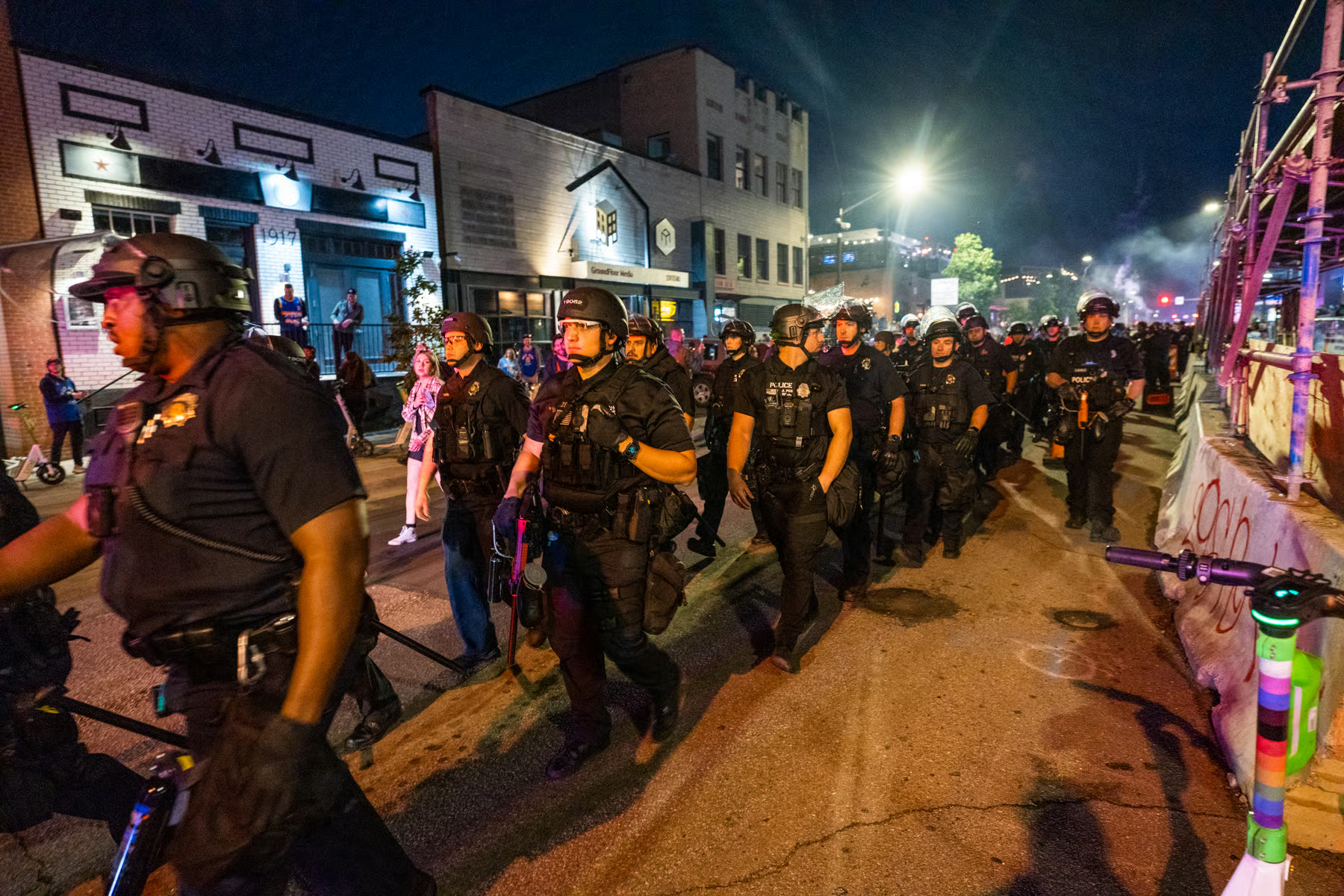
A Saturday night in Lower Downtown compresses a great deal of activity into a small area. Those nights usually end without incident. The ones that do not tend to follow a small number of recognizable patterns, and the legal picture afterward is rarely as simple as it looks at the time.
What kinds of injuries happen on a night out?
The pattern is less dramatic than people imagine. Serious harm on a weekend night usually traces back to ordinary hazards made worse by crowding, poor light, and alcohol:
- Falls on stairs, ramps, and uneven patio surfaces
- Falls on ice or spilled liquid that has gone unaddressed
- Crush and trip injuries in a doorway or a queue
- Pedestrians struck while crossing between parked vehicles
- Scooter riders colliding with a car door or a curb
- Assaults where the venue’s security arrangements come under question
Who can be held responsible when someone is hurt at a venue?
More parties than people generally expect, which is why talking with a personal injury attorney in Denver early tends to be useful. Responsibility can sit with the business operating the venue, the company that owns the building, a security contractor, a maintenance company, or another patron.
Each of those has a different insurer and a different set of records. Sorting out which of them, if any, may bear responsibility depends entirely on the facts of the night.
What does Denver expect a property owner to do?
A paying customer at a bar or restaurant is generally treated as an invitee, the classification carrying the broadest duty. That can include inspecting for hazards, correcting dangerous conditions, and warning about dangers that cannot be corrected straight away.
A social guest is generally owed a narrower duty, and someone present without permission is owed less again. Whether any duty was met depends on what the operator knew, when they knew it, and what a reasonable operator would have done about it.
How do rideshare and scooter trips complicate a claim?
Both add layers. A rideshare trip may involve the driver’s own policy and a commercial policy, and which one applies can depend on what the driver was doing at that moment. Scooter trips bring in rental agreements, app terms, and local rules about where riding is permitted.
None of this is obvious from the curb at closing time, and it is a common reason people assume no claim exists when the position may be less settled than that.
Does it matter that the injured person had been drinking?
It can matter, though rarely in the way people fear. Having had a drink is not the same thing as being at fault. Someone who fell on an unlit stairway with a broken handrail may carry some responsibility for their own footing while the condition of the stairway remains the larger part of the story.
What it does mean is that details matter more rather than less. How much someone had, over what period, what condition they appeared to be in, and what the venue’s own staff wrote down can all shape the picture.
Assuming a claim is finished because alcohol was anywhere near it is one of the more common reasons people never ask the question at all.
Why is evidence harder to collect after a night out?
Because nearly everything that would prove the case is temporary. Venue camera footage may be overwritten within days. Witnesses are often strangers who leave without exchanging details. A spill is mopped, ice is salted, and a broken step is repaired before anyone photographs it.
Alcohol complicates memory as well, including the injured person’s own. Written notes made the following morning are worth more than a recollection assembled weeks later.
What should someone do the next morning?
Seek medical attention, even where the injury seemed minor the night before. Adrenaline and alcohol both mask pain, and a delay in treatment is one of the first things an insurer will raise.
Write down the venue name, the approximate time, where in the building it happened, and who was nearby. Ask the venue in writing to preserve its camera footage. Filing deadlines in Colorado vary by claim type and can be short, and an attorney can confirm which deadlines apply to a particular situation.
If a venue offers to sort it out quietly, treat that as information rather than a resolution. Nothing said informally at the door binds an insurer afterwards.
2701 Lawrence St Ste 201, Denver, CO 80205
(720) 669-8062
