

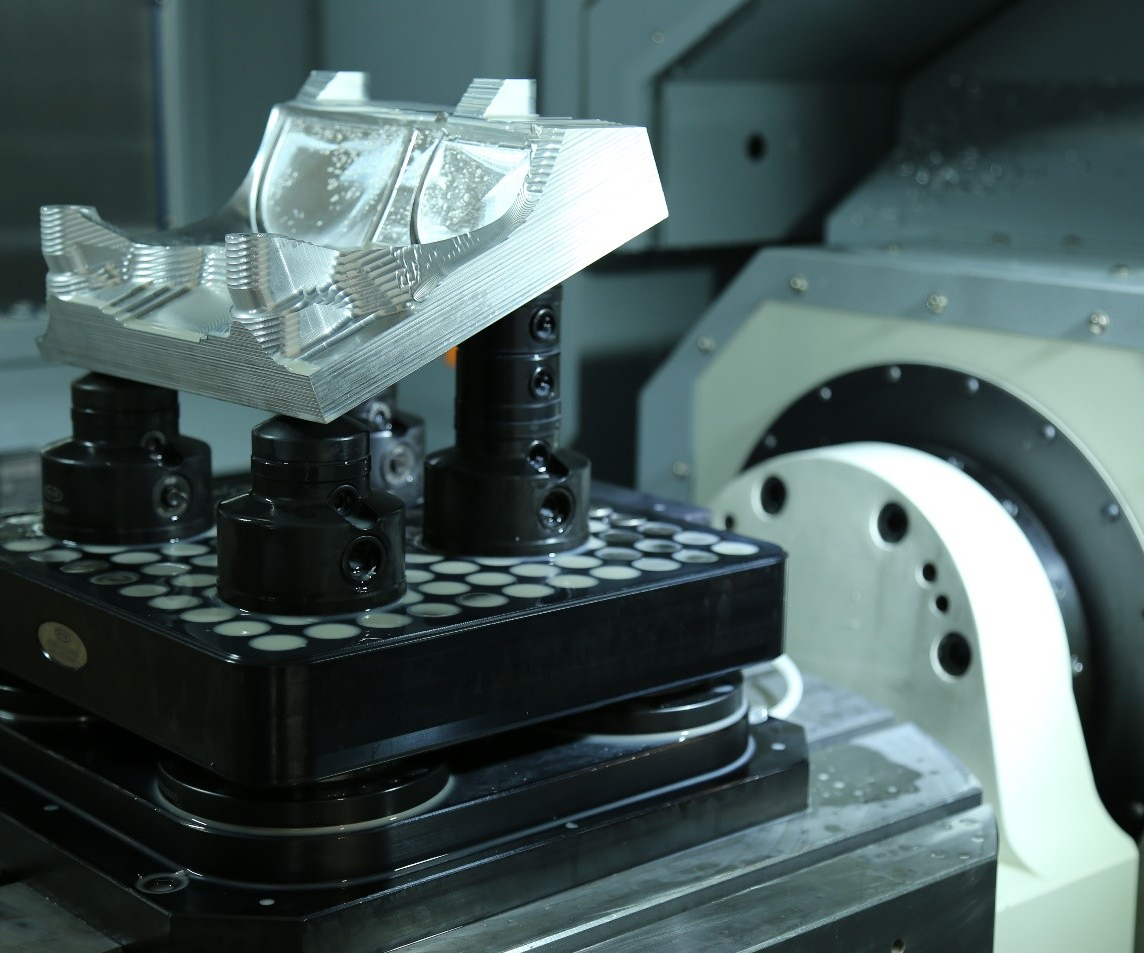
Every precision-machined part, from a tiny sensor housing to a large engine block, needs to stay perfectly still while it’s being cut, drilled, or shaped. That stillness comes from a clamping system, the unsung workhorse of manufacturing. Whether you’re running a small workshop or a fully automated production line, understanding how these systems function can help you choose the right setup for accuracy, safety, and efficiency. In this blog, we’ll break down the core clamping components, explore common clamping products, look at how clamping modules fit into modern workflows, and explain where manual clamping systems still hold their ground. By the end, you’ll have a clear, practical understanding of this essential manufacturing technology.
What Exactly Is a Clamping System and Why Does It Matter in Manufacturing?
A clamping system holds a workpiece firmly in place during machining, welding, inspection, or assembly. Without one, even the most advanced CNC machine can’t produce accurate results, because any movement during the process leads to errors, scrap, or damaged tools.
The Basic Purpose of Clamping
At its core, a manual clamping system exists to eliminate unwanted movement. It transfers force onto a workpiece so it stays fixed relative to the cutting tool, ensuring dimensional accuracy throughout the operation.
Why Precision Depends on Stability
Machining tolerances today are often measured in microns. A workpiece that shifts even slightly can ruin an entire part. Reliable clamping keeps that stability constant, run after run, part after part.
How Clamping Affects Productivity
Faster clamping and unclamping cycles directly reduce idle machine time. A well-designed system speeds up changeovers, which matters a lot in high-mix, low-volume production environments.
Safety Considerations in Clamping
Poorly secured workpieces can become dangerous, especially at high spindle speeds. Proper clamping protects operators and equipment alike, making it as much a safety measure as a productivity one.
Breaking Down the Core Clamping Components That Make Precision Possible
Every clamping setup, no matter how advanced, is built from a set of fundamental parts. Understanding these clamping components helps you troubleshoot issues and select the right configuration for your specific application and material type.
Jaws and Gripping Elements
Jaws make direct contact with the workpiece. They come in various shapes and surface finishes depending on whether you’re holding round, flat, or irregularly shaped parts securely.
Clamping Force Mechanisms
This includes hydraulic, pneumatic, mechanical, or magnetic elements that generate the actual holding force. The mechanism chosen affects speed, repeatability, and how much force can be applied safely.
Base Plates and Mounting Structures
These provide the foundation that connects the clamping device to the machine table. A rigid, well-aligned base plate is essential for maintaining accuracy during heavy cutting operations.
Sensors and Feedback Devices
Modern setups increasingly include sensors that confirm clamping pressure or detect part presence. This feedback loop reduces errors and supports automated, unattended machining processes effectively.
Exploring the Range of Clamping Products Used Across Industries
From single-part workholding to multi-station automation, clamping products vary widely depending on the industry, part geometry, and production volume. Choosing correctly often comes down to matching the product type to your specific process demands.
Vises for General Workholding
Vises remain one of the most common clamping products, valued for their simplicity and versatility. They’re used across milling, drilling, and general fabrication tasks in most workshops.
Chucks for Rotational Machining
Chucks are essential in turning operations, holding cylindrical parts securely while they rotate at high speeds. Self-centering designs improve accuracy and reduce setup time significantly.
Toe Clamps and Strap Clamps
These simpler products are often used for larger or irregularly shaped workpieces. They’re valued for their flexibility and ability to adapt to non-standard part geometries quickly.
Quick-Change Clamping Products
Designed for fast changeovers, these products allow operators to swap workpieces or fixtures within seconds, which is especially valuable in high-volume or just-in-time manufacturing environments.
Understanding Clamping Modules and Their Role in Automated Production
As manufacturing shifts toward automation, clamping modules have become central to flexible, repeatable workholding. These pre-engineered units combine multiple components into a single, standardized building block for faster system design and integration.
What Makes a Module Different from a Standalone Product
A module is typically a self-contained unit with integrated actuation, sensing, and mounting interfaces. It’s designed to be combined with other modules to build larger, customized fixturing systems.
Modular Systems for Multi-Station Setups
Modules allow manufacturers to standardize fixturing across multiple machines or workstations. This consistency reduces programming time and simplifies maintenance across an entire production line.
Integration with Robotics and Automation
Many modules are designed specifically for robotic cells, where consistent, repeatable clamping is critical. Some incorporate Magnetic clamping technology, offering fast, tool-free workholding for automated pick-and-place or machining tasks.
Scalability and Future Flexibility
Because modules are standardized, adding capacity or reconfiguring a line becomes far simpler than redesigning fixtures from scratch, giving manufacturers room to scale without major downtime.
Why Manual Clamping Systems Still Have a Place in Modern Workshops
Despite the rise of automation, manual clamping systems remain widely used, particularly in smaller shops, prototyping, and low-volume production. They offer simplicity, lower upfront cost, and flexibility that automated systems sometimes can’t match.
Cost-Effective Solutions for Small Operations
Manual systems require less investment and infrastructure. For shops running varied, low-volume jobs, this affordability often outweighs the speed advantages of fully automated clamping setups.
Simplicity and Ease of Maintenance
With fewer electronic or hydraulic components, manual clamps are generally easier to maintain and repair. Operators can often service them in-house without specialized technical support.
Best Use Cases for Manual Clamping
Manual systems work well for one-off jobs, prototyping, and applications where part geometry changes frequently, making automated reconfiguration impractical or unnecessarily expensive for the task at hand.
Combining Manual and Automated Approaches
Many facilities use a hybrid approach, applying manual clamping for low-volume work while reserving automated modules for high-repeatability production, balancing cost and efficiency across their entire operation.
A Closer Look at SCHUNK’s Expertise in Precision Clamping and Automation
SCHUNK brings deep specialization to toolholding, workholding, gripping, and automation technology. Their work spans demanding applications, processing micro-optical components as fine as a human hair, safely handling delicate items like butter cookies on fast-moving assembly lines, and milling hip implant surfaces to closely mimic natural joint contours. Beyond individual high-tech components, SCHUNK develops intelligent, complete solutions for robotic systems and diverse production environments, delivering everything from a single source tailored to each customer’s unique application. This breadth of expertise reflects how precision clamping and automation knowledge translates into real-world solutions across industries as varied as medical technology, food handling, and micro-manufacturing.
Bringing It All Together for Smarter Clamping Decisions
Choosing the right clamping setup isn’t about picking the most advanced option available; it’s about matching your process, volume, and precision needs to the right combination of components, products, and modules. Whether you rely on manual clamping systems for flexibility or automated clamping modules for high-volume consistency, understanding how each piece works together helps you make smarter, more informed decisions. As manufacturing continues evolving toward automation and tighter tolerances, having a solid grasp of clamping fundamentals will only become more valuable. Hopefully, this guide has given you a clearer, practical picture of how these systems function and where each solution fits best in your own operations.
