

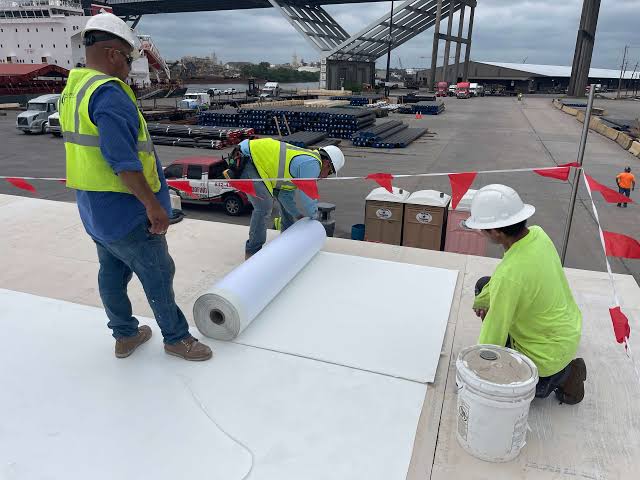
When a facility manager or property owner in Houston starts budgeting for a commercial roof replacement, the first number they receive from a contractor is rarely the number they end up paying. This gap between initial estimates and final costs is not always the result of dishonesty. More often, it reflects how roofing quotes are structured, what they include by default, and what they quietly leave out. Understanding how commercial roofing costs actually accumulate — before signing anything — is the difference between a project that stays on budget and one that creates months of financial and operational strain.
Houston’s climate adds specific pressures to this equation. Flat and low-slope commercial roofs in this region deal with sustained heat, heavy seasonal rainfall, high humidity, and periodic severe weather. These conditions are not just installation challenges — they are long-term performance variables that affect how a roof behaves over time and what it will cost to maintain. The material that has become dominant in this environment is thermoplastic polyolefin, commonly called TPO. It has earned its position through real performance characteristics, but it is also a material where cost conversations often stay shallow.
What the Base Quote Actually Covers in Commercial TPO Roofing Houston
A standard roofing quote for commercial tpo roofing houston typically reflects the cost of materials and labor for a baseline installation scenario. It accounts for the membrane itself, fasteners or adhesive, insulation if included, and the labor to install on a structurally sound, accessible, and relatively flat surface. What it rarely accounts for is the actual condition of the building it will be installed on. For businesses evaluating options, detailed resources covering the scope of TPO work in this market — such as those available through commercial tpo roofing houston — help clarify what a thorough project actually involves beyond the base layer.
The issue is not that contractors are hiding information. It is that base quotes are designed to be competitive. When every contractor quotes the same simplified scope, the lowest number wins the bid — regardless of whether that number reflects the real project.
Tear-Off and Disposal Costs Are Often Excluded
One of the most consistent sources of budget surprises is the cost of removing what is already on the roof. Many commercial buildings in Houston have existing roofing systems — sometimes multiple layers built up over decades. If a quote does not explicitly include tear-off and disposal, that cost will appear as a change order once work begins. Disposal fees for old roofing materials, especially in a large metro area with specific waste handling requirements, are not trivial. On a mid-size commercial building, this alone can represent a meaningful percentage of the total project cost.
Deck Condition and Structural Findings
Even when tear-off is included, the condition of the roof deck underneath is unknown until removal is complete. Moisture damage, rot in wood decking, rust in metal decking, or compromised insulation boards are common on older commercial properties. Some contractors note this possibility in small print. Others simply proceed with installation over damaged substrate and leave the underlying problem in place. When that concealed damage accelerates new membrane failures within a few years, the building owner absorbs the cost of a premature replacement — with no recourse against the contractor who stayed technically within the original scope.
The Difference Between TPO Membrane Grades and Why It Matters for Long-Term Cost
TPO membranes are not a single product. They exist across a spectrum of thickness, formulation quality, and manufacturer backing. The roofing industry, like most material-intensive industries, has both specification-grade products and lower-cost alternatives that appear similar during installation but perform differently over time. Contractors working on tight margins have incentives to specify lower-grade materials, particularly when the building owner is not asking the right questions about product specifications during the bid review.
Weld Quality and Long-Term Seam Performance
The seams in a TPO roof — where one membrane sheet meets another — are heat-welded on site. The quality of those welds is directly tied to the skill of the technician performing them, the calibration of the equipment, and the ambient conditions during installation. A seam that looks correct immediately after installation can develop failures within a few years if the weld was incomplete or performed outside of proper temperature ranges. In Houston’s climate, seam failures allow moisture infiltration that spreads quietly inside insulation layers before showing up as visible interior damage. By the time the problem is apparent, the repair scope is significantly larger than the original seam issue.
Warranty Language and What It Actually Protects
TPO manufacturers offer warranties, and contractors often use those warranties as a selling point. What is frequently not explained is the difference between a material-only warranty and a system warranty, or what conditions void coverage entirely. Installation by an uncertified applicator, use of incompatible accessories, or failure to register the warranty within a specific window after installation can each eliminate coverage. The National Roofing Contractors Association outlines the distinctions between warranty types that affect commercial roofing decisions, and these distinctions have real financial consequences when a claim is eventually filed.
How Houston’s Climate Creates Costs That Appear Years After Installation
Houston is not a neutral environment for any roofing system. The combination of heat, UV exposure, thermal cycling, and moisture creates stress on membranes that is more persistent than in temperate climates. These stressors do not cause immediate failures — they cause gradual material fatigue that becomes visible and costly several years into a roof’s service life. This is why two buildings that received identical installations on the same day can look very different five years later, depending on how the installation was managed and what maintenance protocols were followed.
Drainage Design and Standing Water
Flat and low-slope commercial roofs in Houston are particularly vulnerable to drainage failures. When internal drains, scuppers, or gutters are not properly designed, sized, or maintained, water accumulates on the membrane surface. Standing water accelerates membrane degradation, adds structural load to the deck, and creates conditions where biological growth eventually compromises the surface. A roofing quote that does not include a drainage assessment — or that installs TPO over an existing drainage layout without evaluating its adequacy — is not accounting for one of the primary cost drivers in this region.
The Cost of Deferred Maintenance
Once a TPO roof is installed, the assumption in many facilities is that the roof is simply handled for the next several years. In practice, the absence of any inspection or maintenance protocol is where the real long-term costs are created. Minor penetration failures around HVAC equipment, small membrane punctures from foot traffic, or clogged drains that go unnoticed each represent problems that are inexpensive to address when caught early and expensive to address once they have allowed water into the building envelope. The cost of a single significant interior moisture event — including damaged ceiling systems, flooring, inventory, or equipment — routinely exceeds the cost of years of preventive maintenance.
What a Complete and Honest Cost Comparison Should Include
When comparing multiple bids for a commercial TPO roofing project, the lowest number is almost never an apples-to-apples comparison with higher bids. A complete cost evaluation should account for the full scope of work being proposed, not just the installation of new membrane. The questions worth asking before accepting any bid go beyond price per square foot.
• Does the bid include removal and disposal of the existing roofing system, with specifics on how multiple layers are handled?
• Is there a provision for deck inspection after tear-off, and how will damaged deck sections be handled and priced if found?
• What specific TPO product is being installed, and does it qualify for a manufacturer system warranty rather than a material-only warranty?
• What are the qualifications of the installation crew, and are they certified applicators for the specified manufacturer?
• Does the scope include a drainage evaluation, or does it assume existing drainage is adequate?
• What maintenance provisions, if any, are recommended or offered to protect the warranty and extend service life?
These questions are not unreasonable. A contractor who treats them as intrusive is, in effect, signaling that their bid is built around avoiding them.
Conclusion: The Real Cost Is What You Pay Over the Roof’s Life, Not What You Pay on Day One
Commercial roofing decisions are too often made on initial cost alone. In a market like Houston, where climate conditions put sustained pressure on roofing systems year after year, that approach consistently produces outcomes that cost more over time than a higher-quality installation would have cost upfront. The contractors who build long-term relationships with commercial property owners are not always the ones with the lowest bids — they are the ones who explain exactly what they are and are not including, and why those distinctions matter to the building’s performance over its full service life.
The true cost of a commercial TPO roof in Houston is not a single number on a proposal. It is the sum of installation quality, material performance, drainage adequacy, maintenance discipline, and how quickly problems are identified and addressed when they inevitably arise. Property owners and facility managers who understand this from the beginning make better decisions at every stage of the project — and avoid the cycle of repeated remediation that turns a cost-effective material into an expensive one.
