

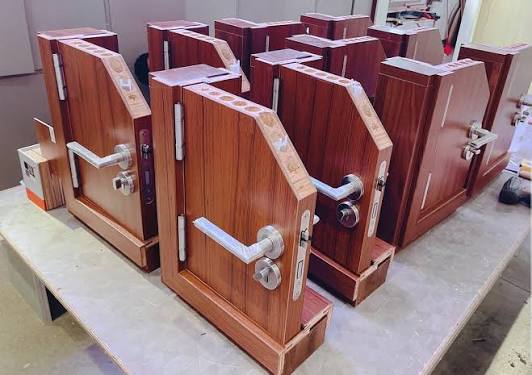
When people think about China’s manufacturing industry, electronics, machinery, and consumer products often come to mind first. However, China is also a major source of products used in construction and interior projects around the world. From tiles and sanitary ware to doors, windows, lighting, stone, cabinets, and furniture, overseas buyers can find an enormous range of products through Chinese manufacturers and suppliers.
For developers, contractors, interior designers, retailers, and homeowners, sourcing directly from China can open up access to a wide selection of designs and specifications. But successful sourcing requires more than finding a low price. Buyers need to consider quality, materials, production standards, shipping, communication, and the supplier’s ability to deliver consistently.
Why Buyers Source Construction Products From China
One of China’s biggest advantages is the depth of its manufacturing supply chain. Different industries have developed around specialized manufacturing regions, allowing factories and material suppliers to operate close to one another.
Foshan is a particularly important example. The city is known for both furniture and building-material production, with established supply chains covering products such as ceramic tiles, stone, lighting, sanitary ware, aluminum products, and furniture.
This concentration can make sourcing more convenient. Instead of searching for individual suppliers scattered across different countries, a buyer working on a large interior project may be able to source several product categories within the same region.
What Building Materials Can Be Sourced From China?
The range is much broader than many first-time buyers expect. Depending on the project, suppliers can provide products for almost every stage of interior construction and finishing.
Common categories include:
- Ceramic and porcelain tiles
- Marble and engineered stone
- Bathroom fixtures and sanitary ware
- Kitchen cabinets
- Wardrobes
- Doors and windows
- Aluminum products
- Lighting
- Flooring
- Staircases and railings
- Wall panels
- Hardware and accessories
- Outdoor materials
- Furniture and home furnishings
This broad product selection is particularly useful for hotels, villas, apartments, offices, restaurants, and commercial developments where many interior products need to work together.
The Connection Between Furniture and Building Materials
Furniture and building materials are often treated as separate industries, but modern interior projects frequently require both.
For example, someone developing a luxury villa may need flooring, kitchen cabinets, bathroom fixtures, wardrobes, doors, lighting, sofas, dining furniture, and decorative products. Finding these items from multiple countries can make project management complicated.
This is one reason Foshan has become attractive to international buyers. Its manufacturing ecosystem combines furniture with several important building-material categories. Local sourcing guides identify areas specializing in furniture, ceramics, lighting, aluminum, and other products.
A buyer interested in Foshan furniture can therefore also explore complementary products for the same project, potentially reducing the number of separate suppliers involved.
Quality Depends on the Supplier
There is a common misconception that products made in China automatically fall into either a low-quality or high-quality category. In reality, Chinese manufacturing covers a very wide range of quality levels.
Two factories can produce visually similar products while using very different materials, hardware, manufacturing processes, and quality-control procedures.
For this reason, buyers should never evaluate a supplier only by the quoted price. Ask about the material specification, thickness, finish, hardware, testing, packaging, and quality-control process.
Samples can also be valuable. A sample allows the buyer to examine the actual product before committing to a larger order.
For large projects, independent inspection before shipment may provide another layer of protection. It can help identify problems with dimensions, finishes, quantities, packaging, or visible defects before the products leave the factory.
Why Customization Matters
Construction and interior projects rarely have exactly the same requirements. A standard cabinet, door, vanity, or furniture item may not fit a particular room.
Chinese manufacturers commonly offer customization, especially for project-based orders. Buyers can often specify dimensions, colors, finishes, materials, hardware, and other details.
Customization can be particularly useful for hospitality and residential developments. A hotel, for instance, may want every room to follow the same design while still requiring furniture to fit the property’s exact measurements.
Some Foshan manufacturers have also moved toward integrated home and interior solutions rather than focusing on a single product category. The region’s manufacturing ecosystem includes companies providing furniture, cabinets, lighting, sanitary ware, tiles, and related interior products.
Understanding the Real Cost
The factory quotation is not always the final cost of importing building products.
Buyers should calculate the complete landed cost, including:
- Product price
- Packaging
- Inland transportation
- Export documentation
- Ocean or air freight
- Customs duties
- Taxes
- Port charges
- Local transportation
- Installation, where applicable
A product that looks inexpensive at the factory may become considerably more expensive after transportation and import-related costs are included.
For this reason, experienced buyers usually compare suppliers based on the total project cost rather than simply comparing the initial quotation.
Communication Is Part of Quality
Good communication can prevent many sourcing problems.
Before ordering, buyers should provide clear drawings, measurements, product specifications, preferred materials, colors, quantities, and delivery requirements. If something is unclear, it should be resolved before production begins.
It is also useful to establish exactly what is included in the quotation. For example, does the price include specific hardware? Is installation included? Does packaging protect the product for long-distance shipping?
Written specifications help both sides understand what is being ordered and reduce the possibility of misunderstandings.
Choosing Between a Factory and a Trading Company
International buyers may encounter factories, trading companies, showrooms, sourcing agents, and companies that combine several of these roles.
A factory may offer direct manufacturing access, while a trading company may provide a broader range of products from multiple suppliers. Neither model automatically guarantees better results.
For a large project, the most important question is whether the supplier can reliably provide the required products, quality, documentation, and service.
Buyers should verify the company’s business information and understand whether it manufactures the products itself or sources them from partner factories. This distinction becomes particularly important when purchasing multiple categories under one contract.
China’s Growing Role in Global Construction Supply
China’s manufacturing ecosystem continues to adapt to international demand. Recent reporting shows Chinese manufacturers are increasingly looking toward overseas markets, particularly as companies diversify beyond traditional markets. The country’s advantages include established supply chains, manufacturing capacity, and production efficiency.
For international construction buyers, this creates a wide range of sourcing opportunities. However, global trade also involves changing tariffs, shipping costs, regulations, and product-compliance requirements. Buyers should therefore check the import requirements of their destination country before placing large orders.
Final Thoughts
Sourcing building materials from China can be a practical option for construction companies, property developers, interior designers, and private buyers who need a broad selection of products at different price and quality levels.
The real advantage is not simply the possibility of finding cheaper products. China’s strength lies in its enormous manufacturing ecosystem, product variety, customization capabilities, and specialized industrial clusters.
Foshan is a strong example of this model. Its combination of furniture manufacturing and building-material industries makes it particularly relevant to buyers working on complete interior projects.
However, successful sourcing still depends on careful supplier selection. Buyers should compare specifications, inspect samples, confirm certifications where required, calculate total landed costs, and clearly communicate project requirements.
When these steps are handled properly, Chinese suppliers can become valuable partners for projects ranging from individual homes to large hotels, residential developments, offices, and commercial spaces. The key is to focus not simply on where a product is manufactured, but on whether the supplier can consistently deliver the right quality, specifications, quantity, and service for the project.
