

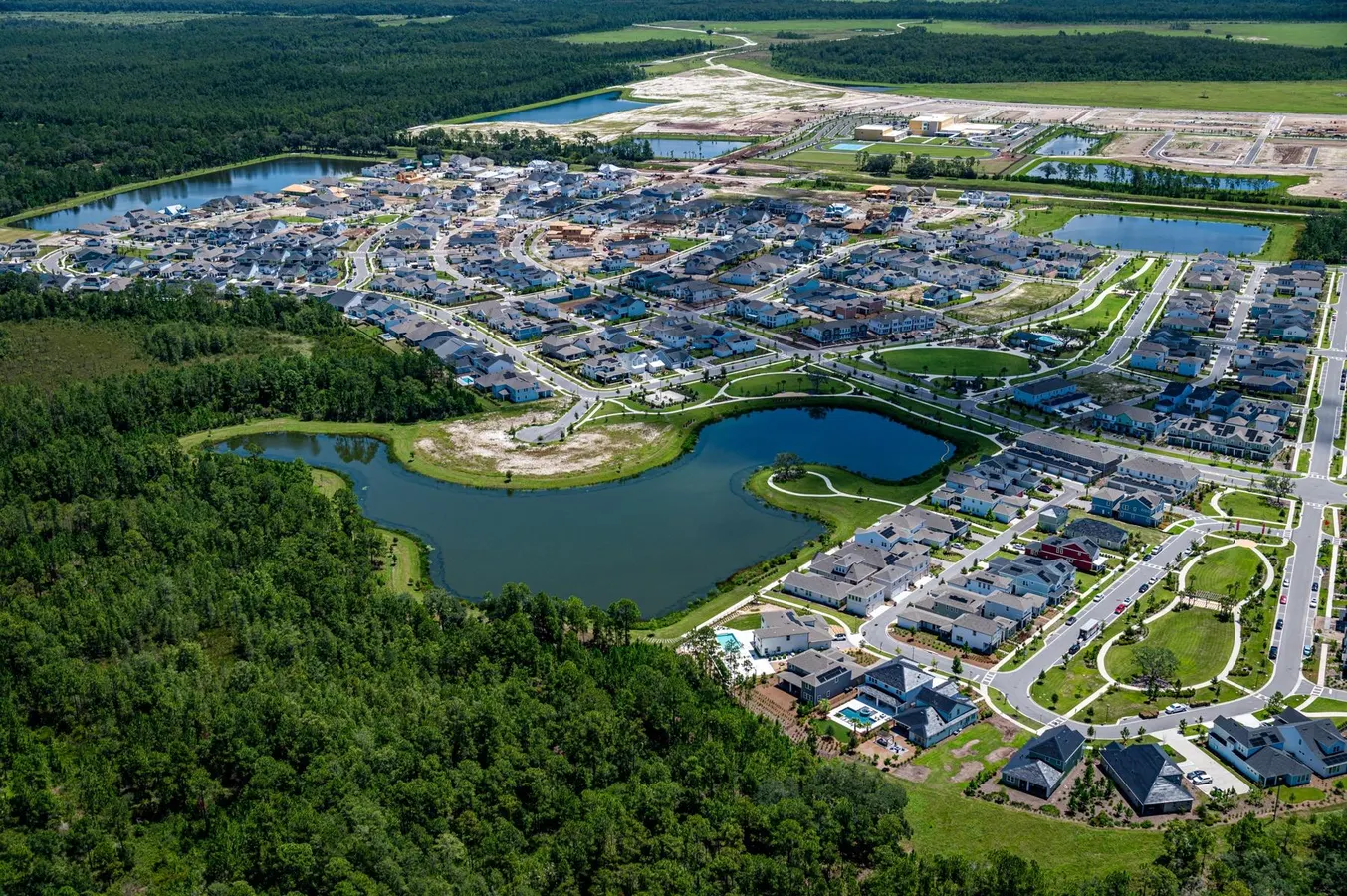
Master-planned communities have become an increasingly popular choice for homebuyers who want more than a property alone. Instead of purchasing a home in isolation, buyers are choosing communities designed with homes, green spaces, parks, pathways, schools, recreation, and everyday conveniences considered as part of a broader plan. This approach can create a stronger sense of place while giving residents access to amenities that may take years to develop in a conventional neighbourhood.
One example of this approach is Bridgelands Woodbridge, a new master-planned community planned around Weston Road and Teston Road. The development is being created by ARISTA Homes, DECO Homes, and OPUS Homes, with the official project website describing a community of towns and detached homes alongside parks, pathways, recreation, and everyday conveniences.
What Makes a Master-Planned Community Different?
The biggest difference between a master-planned community and a typical residential development is the broader approach to planning. A conventional project may focus primarily on individual homes, while a master-planned community considers how those homes will function together over time. Streets, public spaces, landscaping, pedestrian connections, recreation areas, and commercial conveniences can all be considered within the overall vision.
For homebuyers, this can make the process of evaluating a property more comprehensive. Instead of asking only about the size of a home or the number of bedrooms, buyers can consider how the surrounding environment may support their daily routines. A nearby park can provide space for children to play, while connected pathways can make short walks or cycling trips more practical. Well-planned streets and public areas can also contribute to a neighbourhood that feels cohesive as additional phases are completed.
This broader planning can be particularly appealing to families who expect their housing needs to evolve. A home may be important at the time of purchase, but the surrounding environment can have an equally significant effect on how comfortable the property feels several years later. Buyers who are planning to stay in one location for an extended period may therefore want to look beyond the individual lot and understand what is planned around it.
The Importance of Green Space and Connectivity
Green space is one of the features that can distinguish a thoughtfully planned community. Parks, landscaped areas, trails, and pedestrian routes can provide residents with opportunities to spend time outdoors without having to travel far from home. These spaces can also create natural gathering points and help break up large residential areas.
Connectivity is another important consideration. A community can be attractive on paper, but its practical value depends partly on how easily residents can reach the places they use regularly. Master planning can incorporate connections between residential streets, parks, pathways, schools, commercial areas, and major transportation routes.
For buyers researching a new community, it is worth examining both what is already available and what is planned for future phases. Development timelines can change, and proposed amenities should not automatically be treated as completed facilities. Reviewing official project information and municipal planning documents can help buyers distinguish between existing features and future plans.
This is also where location research becomes particularly important. A master-planned community may offer internal amenities and green space, but buyers should still understand its relationship to established shopping areas, schools, healthcare, recreation, employment centres, and transportation infrastructure. The surrounding neighbourhood remains an important part of the ownership experience.
Choosing a Home Within a Larger Community
Another advantage of master-planned developments is the potential variety of housing options. Different home types can serve different stages of life, allowing buyers to focus on the property that best fits their circumstances rather than choosing from a single format.
For example, some buyers may prefer a townhome because it provides more space than a condominium while requiring less exterior maintenance than a detached property. Others may prioritize a detached home with additional outdoor space and room for a growing family. The availability of multiple housing types can make a community appealing to a broader range of residents.
However, buyers should avoid assuming that every home within a master-planned community will offer the same experience. Lot position, orientation, proximity to parks, street traffic, home layout, backyard exposure, and access to planned amenities can all influence the suitability of a particular property.
When reviewing new-home opportunities, it is useful to compare floor plans carefully rather than selecting a property based solely on exterior appearance or advertised square footage. The arrangement of bedrooms, living areas, storage, entrances, kitchens, and outdoor spaces can have a substantial impact on how efficiently a home works for everyday life.
Buyers should also examine the details surrounding ownership costs. Purchase price is only one part of the financial picture. Property taxes, maintenance, insurance, utilities, upgrades, and potential future expenses should all be considered before committing to a property. Those researching communities in the Greater Toronto Area can also use resources such as GTA-Homes to compare new developments and understand the broader range of opportunities available.
Why Community Planning Matters for Long-Term Buyers
One of the strongest reasons people consider master-planned communities is the potential for a more complete neighbourhood experience. When residents move into a newly developing area, some surrounding amenities may not yet be finished. The long-term appeal therefore depends partly on the quality and execution of the overall plan.
Buyers should take time to understand the development timeline and identify which elements are confirmed. Builder websites, municipal planning information, site plans, and official project materials can provide useful context. It is also worth considering how construction could affect daily life during the early stages. New communities may experience ongoing construction activity, changing traffic patterns, and phased infrastructure work before reaching completion.
At the same time, buying during an earlier stage can allow homeowners to become part of a community from the beginning. New residents may have an opportunity to establish relationships with neighbours as the area develops, while future parks and amenities can gradually become part of the neighbourhood’s identity.
The surrounding area should also be evaluated independently of the development itself. Established communities nearby can provide clues about access to schools, recreation, shopping, restaurants, and other services. A new development does not exist in isolation, and its relationship with the surrounding municipality can be just as important as its internal features.
Ultimately, the appeal of a master-planned community comes from the combination of individual housing and thoughtful neighbourhood design. Buyers can evaluate the home itself while also considering the streets, parks, pathways, amenities, transportation connections, and future plans that may shape everyday life. Taking this wider perspective can help people make decisions based on how they actually want to live rather than focusing exclusively on a property’s size, appearance, or initial price.
