

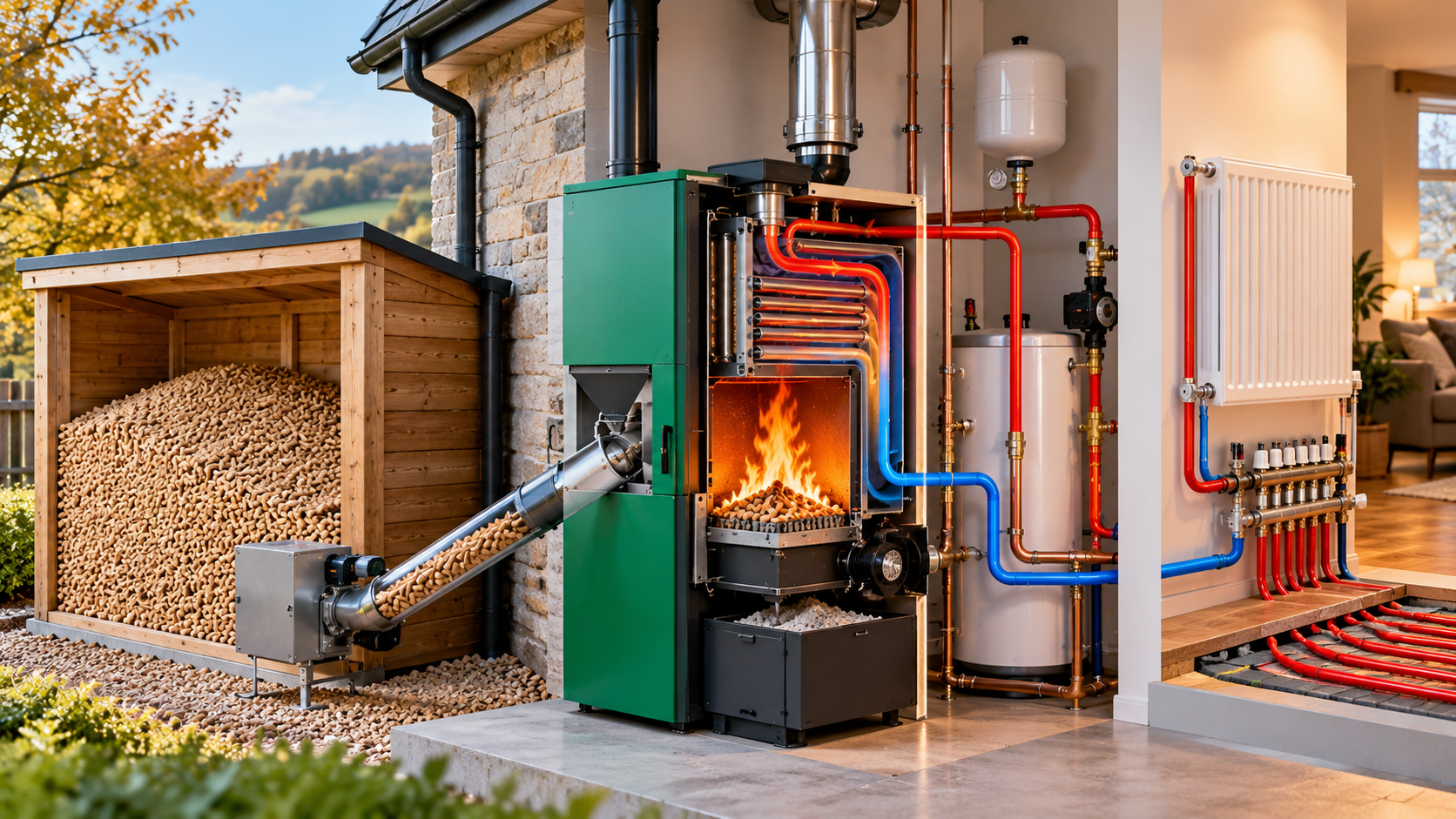
If you have been exploring ways to heat your home more sustainably — or simply cut your energy bills — you have probably come across the term biomass boiler. It sounds technical, but the idea behind it is remarkably simple: instead of burning fossil fuels like gas or oil, a biomass boiler burns organic material to produce heat and hot water.
In this guide, we will walk you through everything you need to know about biomass boiler technology, the different fuel types available, and where this kind of heating system fits into the broader picture of UK home energy. No engineering degree required.
What Exactly Is a Biomass Boiler?
A biomass boiler is a heating system that burns renewable organic fuel — most commonly wood in one form or another — to generate heat for your radiators, underfloor heating, and domestic hot water. Think of it as a modern, highly efficient replacement for a traditional gas or oil boiler, but one that runs on a fuel source that can be regrown.
The word “biomass” simply refers to biological material derived from living or recently living organisms. In the context of home heating, that almost always means wood. However, some larger commercial biomass boiler systems can also run on agricultural residues, energy crops like miscanthus, or even certain types of organic waste.
Biomass boilers come in a range of sizes, from compact units designed for a single family home to industrial-scale systems that heat entire housing estates, schools, or hospitals. For most UK homeowners, the relevant category is the domestic biomass boiler, which typically has an output somewhere between 15 kW and 45 kW.
How Does a Biomass Boiler Work?
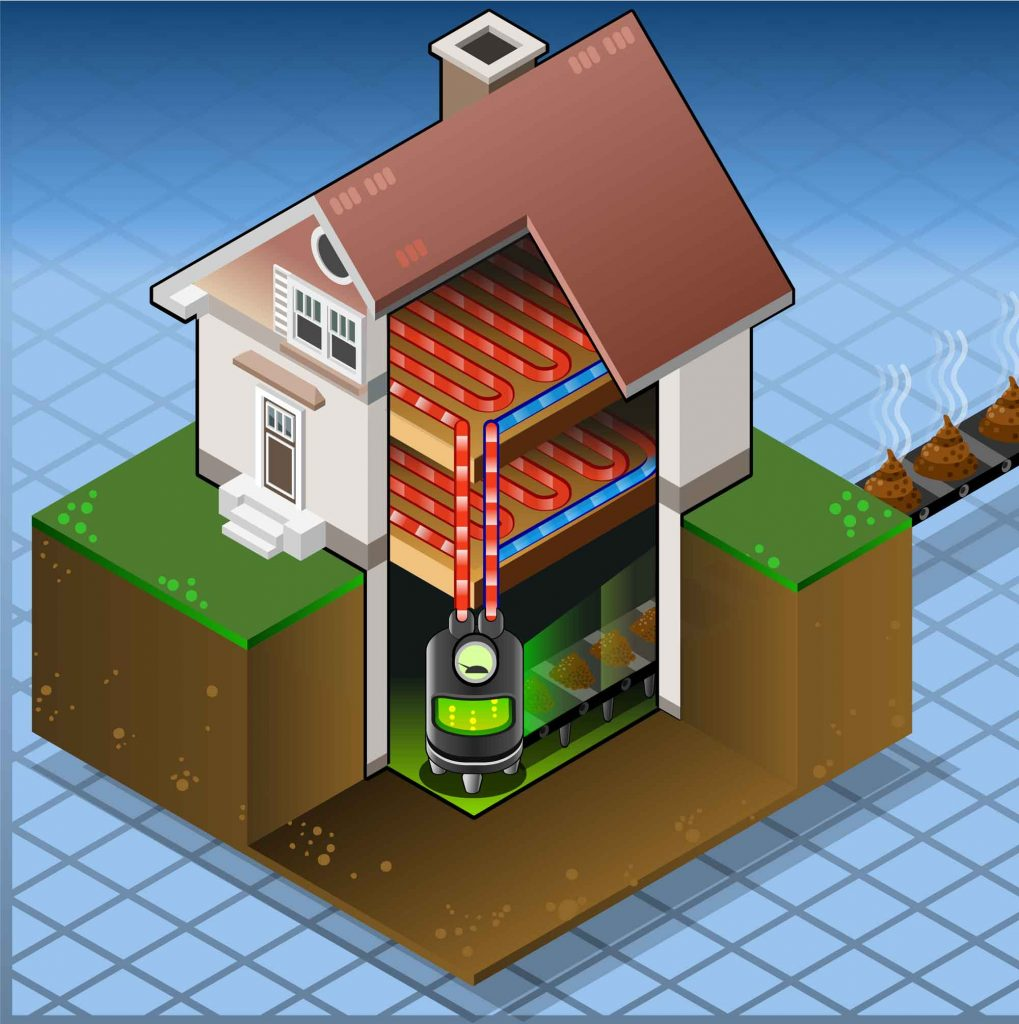
The basic principle is straightforward: fuel goes in, fire happens, heat comes out. But modern biomass boiler technology is far more sophisticated than tossing a log on an open fire. Here is a step-by-step breakdown of what happens inside the system.
1. Fuel Storage and Feeding
The process starts with fuel storage. Depending on the type of biomass boiler you choose, the fuel will be kept in a hopper, a silo, or a dedicated fuel store. In a fully automated system — which is the most common setup for pellet-fired boilers — an auger or vacuum feed mechanism delivers fuel from the storage area into the combustion chamber at a controlled rate. This means you do not have to manually load the boiler every few hours.
Log-fed biomass boilers, by contrast, require manual loading, much like a traditional wood-burning stove, though they are still far more efficient than an open fire.
2. Combustion
Once the fuel enters the combustion chamber, it is ignited — usually by an automatic electric ignition element. The boiler carefully controls the amount of air flowing into the chamber to ensure the fuel burns as completely and cleanly as possible. Many modern biomass boiler models use a two-stage combustion process. In the first stage, the wood is heated until it releases combustible gases. In the second stage, those gases are burned at very high temperatures, squeezing out as much energy as possible and dramatically reducing smoke and particulate emissions.
3. Heat Exchange
The hot gases produced by combustion pass over a heat exchanger — essentially a series of metal tubes or plates surrounded by water. The heat transfers from the gases into the water, which is then pumped around your central heating system in exactly the same way that a conventional gas boiler would circulate hot water to your radiators and taps.
4. Exhaust and Ash Removal
After giving up their heat, the combustion gases are vented outside through a flue, much like a standard boiler flue. Modern biomass boiler systems are fitted with filters and cyclone separators that capture fine particulates before they leave the chimney, keeping emissions well within UK and EU air quality standards.
As for the solid residue, burning wood produces a small amount of ash — typically around one per cent of the original fuel volume. This ash collects in an ash pan at the bottom of the combustion chamber and needs to be emptied periodically. The good news is that wood ash is an excellent garden fertiliser, rich in potassium and other minerals, so nothing goes to waste.
The Three Main Biomass Fuel Types
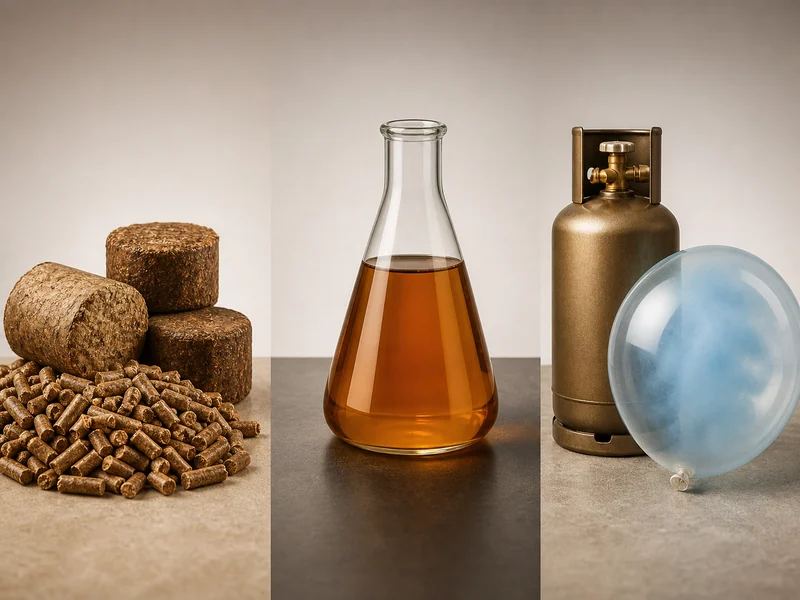
Not all biomass boiler systems use the same fuel. The three most common options for UK homeowners are wood pellets, wood chips, and logs. Each has its own advantages, drawbacks, and ideal use cases.
Wood Pellets
Wood pellets are small, cylindrical pieces of compressed sawdust and wood shavings, typically around 6 mm in diameter and 10–30 mm long. They are the most popular fuel for domestic biomass boiler installations in the UK, and for good reason.
Pellets have a very low moisture content — usually below 10 per cent — which means they burn extremely efficiently and produce a high, consistent heat output. Their uniform size and shape make them ideal for automated feed systems, so a pellet-fired biomass boiler can run almost entirely hands-free. You simply arrange for regular pellet deliveries, and the system takes care of the rest.
The main downside is cost. Pellets are the most processed of the three fuel types, so they tend to be more expensive per kilowatt-hour than chips or logs. You will also need a dry, indoor storage space — a large hopper or a dedicated room — to keep the pellets in good condition.
Wood Chips
Wood chips are exactly what they sound like: small pieces of wood produced by running timber through a mechanical chipper. They are less processed than pellets and therefore cheaper to buy, but they are also bulkier and have a higher moisture content, typically ranging from 20 to 40 per cent depending on how well they have been seasoned.
Because of their variable size and moisture levels, wood chips are better suited to larger biomass boiler systems — think farmhouses, small estates, or community heating schemes — where there is plenty of space for a big fuel store and the higher output of a chip-burning boiler can be fully utilised. That said, some medium-sized domestic biomass boiler models are designed to handle chips, so it is worth exploring this option if you have access to a local supply of affordable wood chip.
Logs
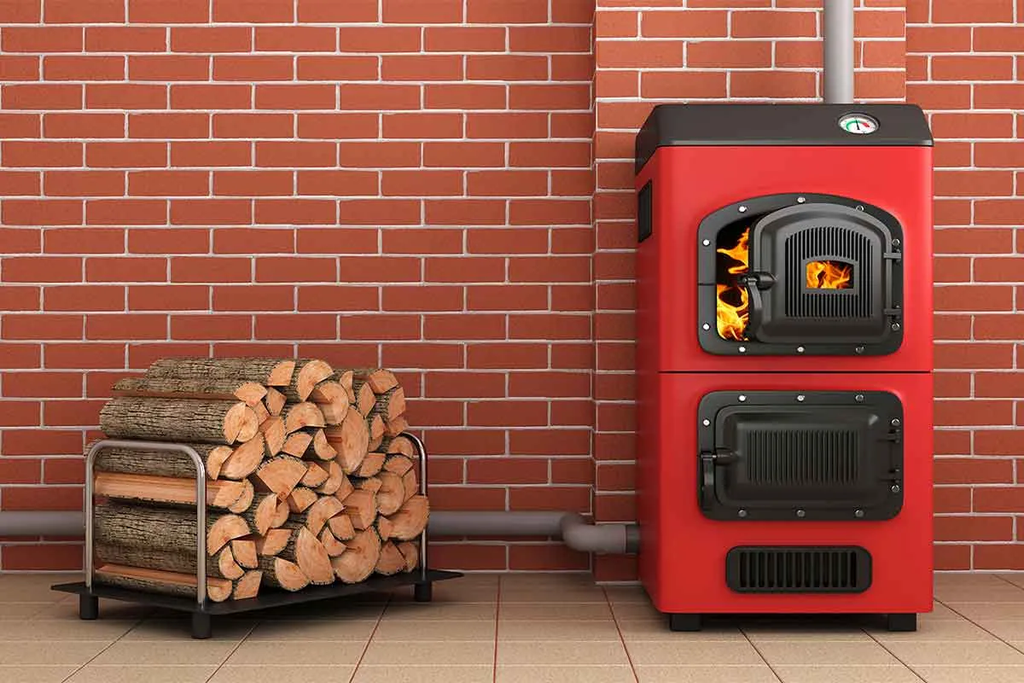
Logs are the most traditional and least processed biomass fuel. A log-fed biomass boiler — sometimes called a batch boiler — requires you to load large pieces of seasoned hardwood or softwood into a large combustion chamber by hand, usually once or twice a day.
The appeal of logs is their low cost, especially if you have your own woodland or a reliable local source of firewood. However, the trade-off is labour. You will need to split, season, and store the logs yourself, and you will be physically loading the boiler on a regular basis throughout the heating season. Log boilers also tend to be less automated than pellet or chip systems, though many modern models still feature advanced combustion controls and can integrate with thermal stores to provide heat on demand.
Where Does Biomass Fit in UK Heating?
The UK heating landscape is in the middle of a significant transition. With the government’s target to reach net zero carbon emissions by 2050, and the planned phase-out of new gas boiler installations in the coming years, homeowners are actively looking for low-carbon alternatives. So where does the biomass boiler fit into this picture?
A Proven, Renewable Technology
Unlike some emerging green technologies, biomass heating is well established. Wood has been used for warmth for millennia, and modern biomass boiler systems have been widely deployed across Europe — particularly in Austria, Germany, and Scandinavia — for decades. In the UK, thousands of homes, farms, and public buildings already rely on biomass boiler installations for their primary heating.
Ideal for Off-Grid Properties
One of the strongest use cases for a biomass boiler in the UK is the off-grid home. Roughly four million UK properties are not connected to the mains gas network, and many of these currently rely on expensive and carbon-intensive heating oil or LPG. For these homeowners, switching to a biomass boiler can deliver substantial savings on fuel costs while dramatically cutting carbon emissions. A biomass boiler running on sustainably sourced wood pellets typically produces around 90 per cent less CO₂ than an oil-fired system.
Complementing Heat Pumps
Air source and ground source heat pumps have received a lot of attention in recent years, and they are an excellent solution for well-insulated, modern homes. However, heat pumps work best in properties with low heat demand and large radiator surfaces or underfloor heating. For older, draughtier homes — which make up a large proportion of the UK housing stock — a heat pump may struggle to deliver the high flow temperatures needed on the coldest days of winter.
A biomass boiler can fill this gap. Some homeowners opt for a hybrid system that pairs a heat pump with a biomass boiler, using the heat pump for the majority of the year and firing up the biomass boiler during peak winter demand. This approach combines the efficiency of a heat pump with the high-temperature output of a biomass boiler, ensuring comfort year-round.
Government Support and Incentives
The UK government has historically supported biomass heating through the Renewable Heat Incentive (RHI), which paid homeowners a quarterly tariff for every kilowatt-hour of renewable heat they generated. Although the domestic RHI scheme closed to new applicants in March 2022, it has been succeeded by the Boiler Upgrade Scheme (BUS), which offers upfront grants towards the installation of low-carbon heating systems. While the BUS currently focuses primarily on heat pumps, biomass boiler installations may still qualify under certain conditions — particularly for properties that are not suitable for a heat pump. It is always worth checking the latest government guidance or speaking with an MCS-certified installer to understand what support is available.
Pros and Cons at a Glance
Pros:
- Uses renewable, locally sourced fuel
- Significant carbon savings compared to oil, LPG, or electric heating
- Well-suited to off-grid and rural properties
- Can provide high-temperature heat for older, poorly insulated homes
- Wood ash can be recycled as garden fertiliser
- Fuel costs can be lower than heating oil, especially with logs or chips
Cons:
- Higher upfront installation cost than a conventional gas boiler
- Requires significant storage space for fuel
- Needs regular maintenance, including ash removal and annual servicing
- Pellet and chip supply chains can vary by region
- Not ideal for small urban homes with limited space
Is a Biomass Boiler Right for You?
A biomass boiler is not a one-size-fits-all solution, but for the right property it can be a game-changer. If you live in a rural or off-grid home, have access to affordable wood fuel, and have the space for a fuel store and a slightly larger plant room, a biomass boiler could significantly reduce both your heating bills and your carbon footprint.
The best next step is to arrange a survey with an MCS-certified biomass boiler installer. They will assess your property’s heat demand, available space, and local fuel supply to recommend the right system size and fuel type for your circumstances.
Final Thoughts
The biomass boiler may not grab headlines the way heat pumps and hydrogen boilers do, but it remains one of the most practical and proven low-carbon heating options available to UK homeowners today. Whether you choose pellets for convenience, chips for economy, or logs for self-sufficiency, a well-installed biomass boiler can keep your home warm, your bills manageable, and your conscience clear for decades to come.
As the UK continues its journey towards net zero, biomass heating will remain an important piece of the puzzle — especially for the millions of homes that are harder to heat and harder to decarbonise. If you have been wondering whether a biomass boiler could work for your property, now is the perfect time to find out.
