

Wedding invitations have always been more than just a piece of paper.
For many Malaysian families, receiving a wedding invitation still carries a certain feeling. There is something special about holding a beautifully printed card, looking through the couple’s photos and keeping it as a small reminder of the occasion.
But the way people communicate has changed. Today, a wedding invitation can arrive through WhatsApp in seconds. Guests can open it on their phones, check the wedding location, confirm their attendance, save the date and even send their blessings without ever receiving a physical card.
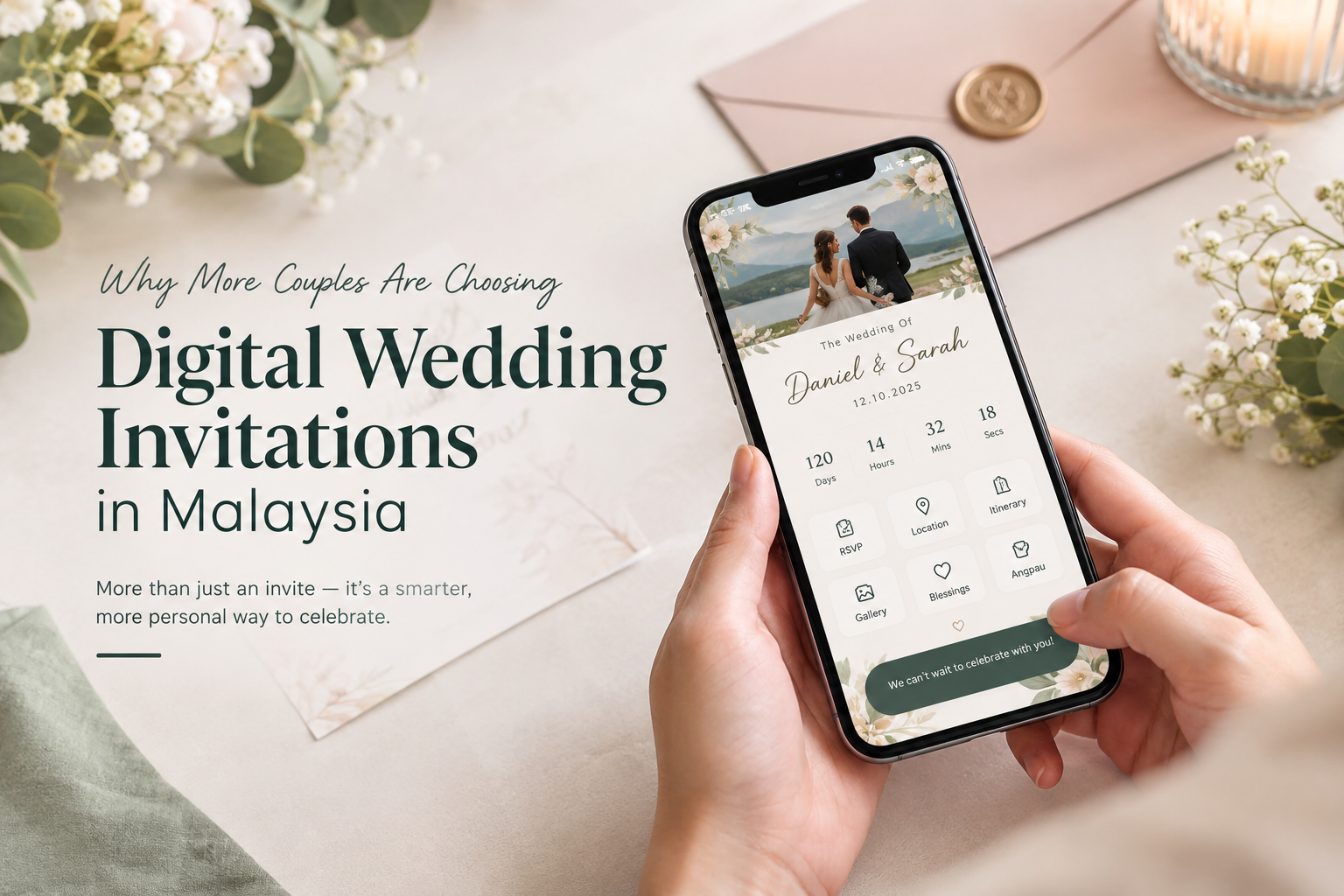
This is why digital wedding invitation Malaysia services are starting to attract attention, particularly among younger couples who want something more convenient, interactive and less traditional. Instead of simply sending a static image, couples can create an invitation that works more like a small digital wedding page, complete with RSVP, venue directions, countdowns, photographs and other useful features.
For couples curious about what this format can look like, digital wedding invitation Malaysia is one example of how the traditional wedding invitation can be reimagined for a more digital-first audience.
From a Wedding Card to a Complete Digital Invitation
A printed invitation generally does one job: it tells someone when and where the wedding is happening.
A digital invitation can do considerably more.
Instead of simply displaying the wedding details, an interactive invitation can include a countdown to the big day, a photo gallery, wedding itinerary, Google Maps, music or video, dress code and an RSVP function.
Guests can confirm their attendance directly from the invitation rather than replying to the couple through a separate WhatsApp message.
That small difference can become surprisingly useful when a couple is trying to keep track of dozens or even hundreds of guests.
There is also the personal side.
Guests can leave their blessings or messages for the couple, turning the invitation into something that feels more like a small digital wedding page than a simple announcement.
For couples who are collecting angpau digitally, the invitation can also provide a convenient way for guests to send their monetary gifts.
In other words, the invitation doesn’t necessarily end after someone reads it. It can become part of the entire wedding experience.
Why Younger Malaysian Couples Are Looking at Digital Invitations
One reason is simply convenience.
Most people already spend a large part of their day on their phones. WhatsApp has become one of the easiest ways for Malaysians to communicate with family, friends and colleagues, so sending a wedding invitation through the same platform feels natural.
There is also less pressure around distribution.
With physical cards, couples have to decide how many to print, organise the cards and make sure they reach everyone. Last-minute changes can be especially troublesome. If the venue changes or there is an error in the printed details, the problem is no longer something that can be fixed with a quick edit.
Digital invitations remove much of that friction.
A couple can share the invitation with friends and family almost instantly, whether they are living nearby or overseas.
And for younger couples who are already comfortable handling most of their lives digitally, a wedding invitation doesn’t necessarily need to be different.
The Environmental Appeal Is Another Part of the Story
The original idea behind going paperless is fairly straightforward: use less paper where it isn’t necessary.
A wedding can involve a surprisingly large amount of printed material. Invitations are only one part of it, alongside menus, programmes, thank-you cards, signage and other stationery.
Going digital doesn’t mean couples have to completely abandon traditional wedding elements. A beautifully printed invitation can still have its place, especially for close family members or guests who appreciate something tangible.
But for the wider guest list, a digital alternative can reduce unnecessary printing while making distribution considerably easier.
This is one of the ideas that inspired Paperlesscard. Taking something as familiar as an event invitation and giving it a more modern, paperless format.
The concept has already become fairly familiar in some other countries, including China, while adoption in Malaysia is still developing.
That creates an interesting opportunity for Malaysian couples who want something different without making their wedding unnecessarily complicated.
It Can Be More Personal Than a Printed Card
There is a common assumption that digital means less personal.
In reality, it depends on how the invitation is designed.
A digital wedding invitation can include the couple’s own photographs, their story, preferred music, videos and personalised messages. Rather than choosing a single printed card and sending the same thing to everyone, couples can create an experience that feels much more closely connected to their personalities.
For a younger couple, a minimalist design with photographs and subtle animations may feel more appropriate.
For a traditional Chinese wedding, the invitation can incorporate elements that reflect the couple’s culture and celebration.
The format is flexible because it isn’t restricted by the physical dimensions of a piece of paper.
What About the Guests Who Are Not Tech-Savvy?
This is probably one of the biggest concerns for couples considering digital invitations.
The good news is that guests generally don’t need to install an app or learn anything complicated.
If the invitation is designed properly, it can simply be opened through a link on a phone.
From there, the guest can browse the wedding details, check the venue, RSVP and interact with the available features.
For older family members who may be less comfortable with technology, the couple can still communicate with them directly through WhatsApp or provide a traditional invitation if necessary.
Going digital doesn’t have to mean going 100% digital for everyone.
A More Affordable Option for Couples
Cost is another reason digital invitations are attracting attention.
Wedding expenses can add up quickly, and invitation cards are one area where couples may prefer to keep things simple.
Printing hundreds of cards, especially when additional delivery or design costs are involved, can become another expense on an already long wedding checklist.
Digital invitations offer an alternative without requiring couples to sacrifice presentation.
For example, Paperlesscard currently keeps many of its services below RM100, making the concept accessible to couples who want a more modern invitation without adding a significant cost to their wedding budget.
The important point is that couples aren’t simply paying for a digital version of a printed card. They can also get features such as RSVP, maps, countdowns, galleries, guest messages and digital angpau collection depending on what they need.
How the Process Works
For couples who have never created a digital invitation before, the process can be surprisingly straightforward.
The usual process with Paperlesscard starts when the customer gets in touch and chooses a suitable template.
The couple then provides their wedding details, including the date, venue, schedule and other information they want included.
A consultation follows so the invitation can be shaped around what the couple actually wants rather than simply filling in a generic template.
Once the design is prepared, the couple can review it and request revisions before the final invitation is sent to their guests.
That one-to-one approach is particularly useful for couples who have a specific idea in mind but aren’t sure how to turn it into a digital invitation.
It Doesn’t Have to Stop at Weddings
Although weddings are one of the biggest uses for digital invitations, the concept isn’t limited to them.
The same approach can work for birthday parties, full moon celebrations, Valentine’s Day events, corporate functions and other occasions where people need an attractive way to share event information.
This is where digital invitations become more interesting.
Instead of thinking of them as simply an “online wedding card”, it may be more useful to think of them as a digital event page that can be customised around different occasions.
For businesses, it could contain event information, registration details and directions.
For a birthday celebration, it could include photographs, a countdown and RSVP.
For a wedding, it could bring together almost everything guests need before the big day.
Is a Digital Wedding Invitation Right for You?
There isn’t one correct way to invite people to a wedding.
Some couples will always prefer beautifully printed cards, and there is nothing wrong with that. Traditional invitations have sentimental value, particularly for parents and older family members.
But for couples who are looking for something more convenient, affordable and interactive, a digital wedding invitation is worth considering.
It reduces the hassle of printing and distribution, makes it easier to manage RSVPs and gives couples considerably more room to personalise the invitation.
Most importantly, it reflects the way people communicate today.
For Malaysian couples planning a wedding, a digital invitation doesn’t have to replace tradition completely. It can simply be another way of bringing the wedding experience into the digital world.
And as more couples become comfortable with the idea, the humble wedding invitation may eventually become less about the piece of paper and more about the experience it creates.
