

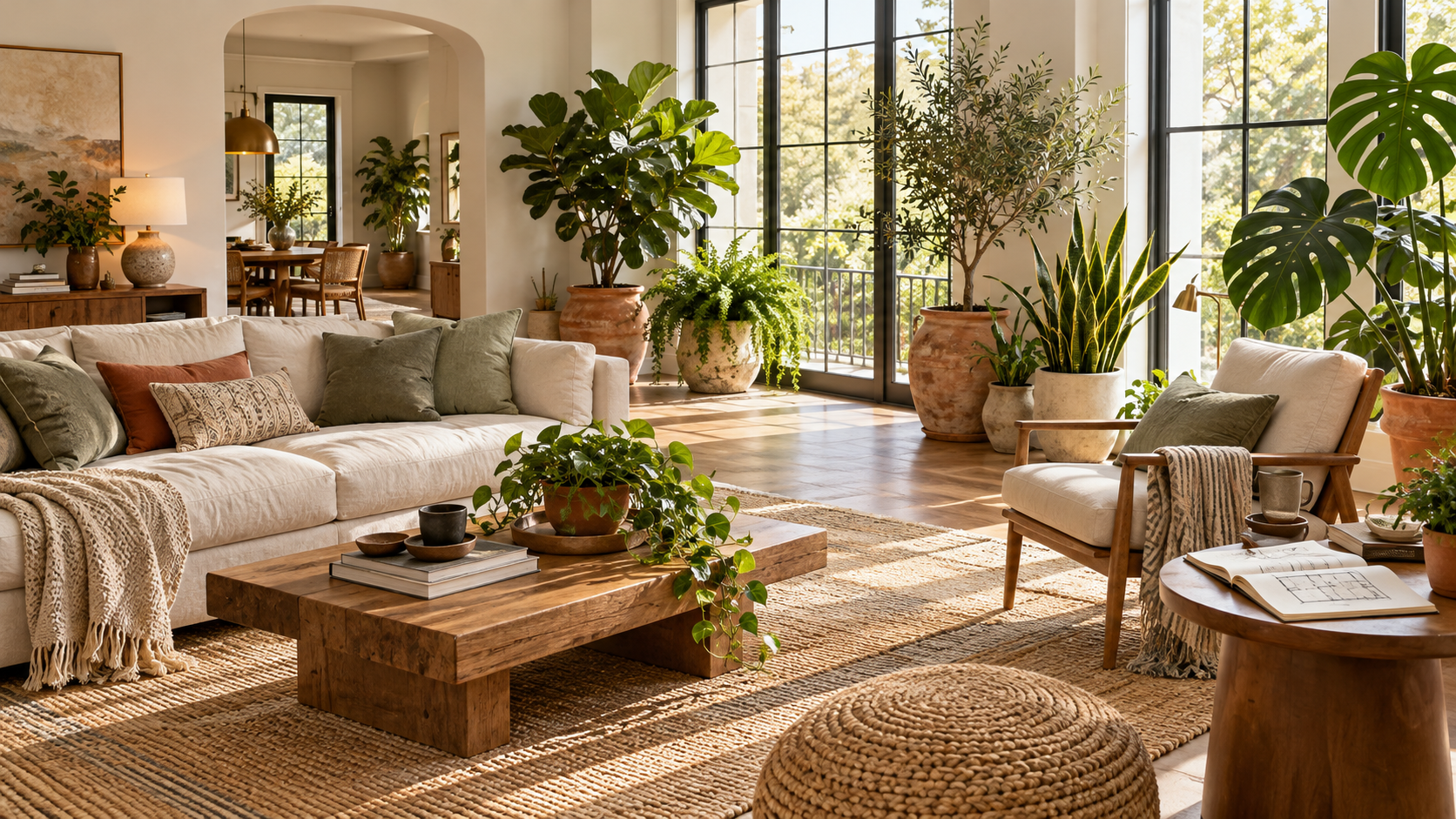
One plant on the windowsill became three, and three became a room where opening the curtains required negotiations with a leaf. A greener home can feel inviting, but plants still occupy real space and need regular attention. The most satisfying arrangements begin with the room’s light, the plants’ needs, and the way people move. Choose those relationships carefully, and your collection can become part of the home rather than an obstacle course in attractive pots.
Plan for Living Things, Not Decorative Placeholders
Observe the Room Before Arranging the Pots
Before using a floor planner, spend time observing where daylight reaches the room and how that changes during the day. Record the position of windows, curtains, large furniture, and existing plants. A sunny-looking photograph is a poor substitute for knowing the conditions where a plant will live. Floor Planner can help you develop the room arrangement, while your observations and species-specific care information guide plant placement. Keep those roles distinct. The software can support spatial decisions; it does not determine whether a particular plant receives suitable light. A useful plan begins with that information, rather than guessing it from the drawing.
Allow for the Plant You Will Have Later
A young plant occupies its pot politely. An established one may spread into the chair beside it or lean across a passage. Consider the expected mature shape of each plant you intend to keep, checking reliable care guidance when necessary. Use the floor planner to reserve an approximate area for that future growth. You do not need a perfect botanical model; a clearly understood placeholder can still help you assess the space. Include stands and supports where relevant. A tall, narrow pot with a wide canopy needs a different kind of room from a compact plant sitting neatly on a shelf.
Keep Greenery Connected to Daily Life
Protect the Routes People Actually Use
A large plant beside the sofa can soften the room beautifully. If its leaves brush everyone walking to the balcony, it may become a source of irritation surprisingly quickly. Use the floor planner to examine the routes between doors, seating, storage, and windows. Consider what happens when furniture is in use, including dining chairs pulled back from the table. Grouping plants can create a stronger visual effect while leaving other areas clear, provided the grouping suits their individual care needs. Avoid assuming every empty corner needs greenery. Some empty space earns its place by making the room comfortable to move through.
Make Watering and Cleaning Part of the Design
The arrangement that looks effortless on Sunday may be much less charming when five heavy pots need attention on Tuesday. Think about how you reach each plant, protect surrounding surfaces, and inspect for problems. Use the floor planner to look for awkward access around furniture and stands. Keep windows, curtains, and the floor beneath the collection reachable. Consider the equipment you use for care and where it can be stored conveniently. Plant care is a recurring household task, and a layout that supports it is easier to maintain. This is the unglamorous part of a beautiful room. It is also the part that keeps it beautiful.
Explore the Room Before Buying Another Stand
Generate a Layout Around the Existing Collection
Write a room brief that includes both human activities and the collection you already own. Mention the seating you want to retain, the access you need, and the areas your observations suggest are suitable for plants. Floor Planner can generate an initial arrangement from that description. Evaluate the floor planner output against the real room, keeping light requirements and plant sizes in view. AI-generated furniture placement is a starting proposal, not a horticultural recommendation. If an attractive result puts greenery somewhere unsuitable, revise the arrangement. The goal is a room where plants and people can both occupy sensible places.
Use Targeted Revisions and Manual Adjustments Together
When most of the room works, a local change may be enough. Floor Planner supports uploading a plan for AI editing, allowing you to explore a different seating arrangement or reconsider a crowded corner. Ask for one clear improvement while stating the constraints you want preserved. Use the floor planner editor for subsequent manual refinement, representing plant groups with clearly understood footprints where appropriate. Check the physical room before buying furniture or stands. A temporary placement trial can reveal whether a promising arrangement blocks access to the curtains or makes a familiar reading spot feel enclosed. That feedback is worth more than another decorative purchase.
Connect Your Visual Idea with a Practical Drawing
Reuse a Room Plan Without Treating It as Infallible
An existing plan image can give your project a head start, particularly when the room is part of a larger renovation. Confirm its important dimensions and note any changes since it was drawn. These details help connect your floor planner concept to the existing space. If a designer needs a CAD drawing for further work, the image to dwg tool provides a route from an image to DWG format. Inspect the converted result before using it as a design base. Plant positions are still planning decisions to develop around the verified space. A change of file format will not resolve an unclear measurement or establish how much usable daylight reaches a particular corner.
Edit Until the Collection Feels Like Part of the Home
Before calling the arrangement finished, use the floor planner to revisit the room’s main jobs. Can you sit comfortably, open the windows, reach storage, and care for the collection without relocating half the furniture? Consider household-specific issues, including stable placement and appropriate species choices where children or animals share the space. Floor Planner connects initial generation, AI editing, manual refinement, and image or CAD conversion, helping you move from a loose idea toward a clearer room plan. Start with the plants you have. Give them suitable places, protect the activities that make the room useful, and let the next purchase wait until it has somewhere convincing to go.
