


Introduction
Technology news helps people understand the latest developments in artificial intelligence, smartphones, computers, software, cybersecurity, and digital innovation. From new AI tools and mobile phone launches to online security threats and business technology, staying informed can help readers make smarter decisions in their personal and professional lives.
Technology is changing how people communicate, study, work, shop, and manage everyday activities. New applications are making some tasks easier, businesses are adopting digital systems, and researchers are exploring technologies that could transform entire industries. At the same time, these developments raise important questions about privacy, security, reliability, cost, and the future of work.
This comprehensive guide to technology news explains the major technology trends, how new innovations work, which developments deserve attention, and how readers can distinguish reliable information from rumours. Whether you are a beginner, student, business owner, or technology enthusiast, you will find practical explanations to help you understand the digital world.
What Is Technology News?
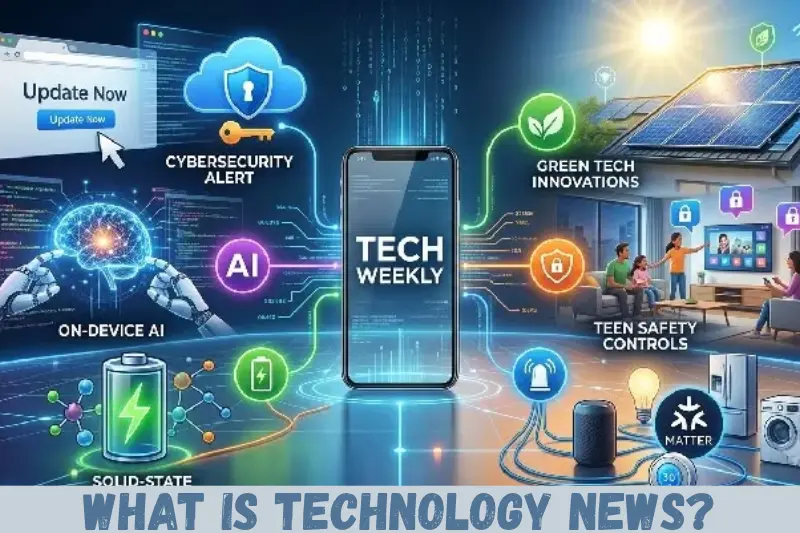
Technology news is reporting about new digital products, scientific developments, software releases, technology companies, cybersecurity incidents, and innovations that affect people and businesses.
It includes breaking announcements, product reviews, research developments, industry analysis, and practical guides. Some stories focus on consumer products such as smartphones and laptops, while others cover artificial intelligence, cloud computing, robotics, digital payments, and enterprise software.
For example, when a company announces a new smartphone, a useful technology news report explains its features, expected availability, software support, and potential benefits. When researchers discover a security vulnerability, responsible coverage explains the affected systems, the possible risks, and the recommended protective measures.
Technology reporting is most valuable when it answers three basic questions:
- What happened?
- Why does it matter?
- How could it affect the reader?
A headline may attract attention, but clear explanations and trustworthy evidence help readers understand the real significance of a development.
Why Is Technology News Important?
Following technology news can help people understand changes that affect their devices, careers, businesses, education, and online safety.
Technology develops quickly, and information that was accurate several months ago may no longer apply. Software features change, security vulnerabilities are discovered, new devices become available, and companies introduce different services.
Here are some important reasons to stay informed.
Make Better Technology Buying Decisions
Before buying a smartphone, laptop, tablet, or other electronic device, readers can use technology updates and independent reviews to compare features, performance, prices, and software support.
A phone with the most expensive camera may not be the best option for someone who mainly needs reliable communication and long battery life. Similarly, a student who uses office applications and a browser may not need a high-performance gaming laptop.
Understanding product developments helps consumers choose devices that match their actual requirements.
Improve Digital Security
Technology news can alert readers to phishing campaigns, software vulnerabilities, fraudulent applications, and data breaches.
Learning about these risks encourages safer habits, such as enabling multifactor authentication, installing security updates, using unique passwords, and verifying suspicious messages.
Discover Useful Digital Tools
New applications and online services can help people organise documents, manage projects, communicate with customers, edit media, and automate repetitive work.
Following relevant developments allows users to discover tools that may save time or improve productivity. However, every tool should be evaluated for cost, privacy, reliability, and ease of use.
Understand Changes in the Workplace
Automation, artificial intelligence, cloud computing, and data analysis are changing many professional activities.
Technology news helps workers understand which skills are becoming useful, how industries are adapting, and where additional training may be valuable.
The goal is not to chase every new trend. It is to understand developments that could meaningfully affect your work or future plans.
Latest Technology News Trends to Watch
The technology industry includes many areas of innovation, and not every announcement has the same level of importance. Some developments are ready for everyday use, while others are still being tested.
Understanding the major categories can help readers identify which technology news deserves their attention.
Artificial Intelligence and Generative AI
Artificial intelligence (AI) allows computer systems to perform tasks that commonly require human abilities, such as recognising patterns, interpreting language, and generating content.
Generative AI is a branch of AI that can produce text, images, audio, video, and computer code in response to instructions.
Businesses use AI tools for customer support, document summarisation, data analysis, marketing assistance, and software development. Students may use them to explain difficult topics, generate practice questions, or organise revision plans.
However, AI tools can also generate incorrect information, reproduce biases, or expose sensitive data if used carelessly. Their output should be checked before it is used for important decisions.
When reading AI technology news, look for information about:
- What the system can actually do.
- Whether the feature is available or still experimental.
- Which devices, countries, or subscriptions support it.
- How the company handles user data.
- What limitations have been identified.
- Whether independent testing supports the claims.
The most useful AI reporting explains practical applications rather than relying entirely on impressive demonstrations or marketing promises.
Smartphone Launches and Mobile Technology
Smartphones continue to combine communication, photography, navigation, entertainment, digital payments, and productivity in one device.
Mobile technology news often covers new phone releases, processor improvements, camera systems, battery performance, operating system updates, and security features.
When comparing smartphones, readers should consider more than headline specifications. A higher megapixel count does not automatically mean a better camera, and a larger battery does not guarantee longer battery life under every usage pattern.
Other important considerations include software support, repair options, screen quality, storage, connectivity, and total cost.
For buyers in Pakistan and other markets where device pricing can vary substantially, local availability, warranty coverage, network compatibility, and any applicable import-related costs may also matter.
Before purchasing a new phone, compare independent reviews with the manufacturer’s specifications. This makes it easier to distinguish meaningful improvements from features that may not benefit your particular needs.
Cybersecurity and Digital Privacy
Cybersecurity is becoming an increasingly important part of technology reporting because people rely on online accounts for communication, banking, shopping, education, and business.
Security news can cover newly discovered software weaknesses, phishing attacks, ransomware, data breaches, fraudulent applications, and changes to security recommendations.
A useful report should explain the nature of the risk, identify the affected products where known, and describe the steps recommended by trusted security professionals or software vendors.
Readers should take the following precautions:
- Use a different strong password for every important account.
- Enable multifactor authentication whenever possible.
- Keep devices, browsers, and applications updated.
- Verify unexpected requests for passwords or payments.
- Avoid installing unknown software from untrusted websites.
- Maintain backups of important documents and photographs.
- Review account sessions and remove unfamiliar devices.
Not every security headline means every user is in immediate danger. Check the details before taking action, and use official security advisories when determining whether a particular device or service is affected.
Software Updates and Productivity Tools
Software developments can improve how people create documents, manage projects, communicate with teams, and organise their daily work.
Technology news frequently reports on new operating system features, browser changes, office applications, cloud platforms, and developer tools.
Before installing a major update, review compatibility requirements and back up important files. For security updates, follow trusted vendor guidance and avoid delaying essential fixes unnecessarily.
When evaluating a new productivity tool, ask whether it solves a real problem, works with your existing applications, protects your data, and offers acceptable pricing.
A tool that automates one task may be useful, but adopting several overlapping subscriptions can increase costs without providing equivalent benefits.
Cloud Computing and Data Centres
Cloud computing allows organisations and individuals to access computing power, software, and storage over a network.
It supports website hosting, online document editing, business applications, data analysis, and collaboration between people working in different locations.
Cloud technology news also covers data centres, which provide the computing infrastructure behind many online services. These facilities require hardware, networking, electricity, cooling, and security systems.
For businesses, the cloud can reduce the need to maintain all computing infrastructure themselves. However, costs can grow as storage, data transfer, and processing requirements increase.
Organisations should consider data protection, access controls, backup plans, service availability, and the difficulty of moving between providers.
The key question is not simply whether cloud computing is modern. It is whether a particular service offers the right balance of cost, security, flexibility, and reliability.
Robotics, Automation, and Smart Devices
Robotics and automation allow machines and software to perform tasks with less manual intervention.
Industrial robots can assist with manufacturing and inspection. Automated software can process routine administrative work. Connected devices can help monitor homes, workplaces, and industrial equipment.
These technologies may improve consistency and productivity, but they also require maintenance, appropriate safeguards, and human oversight.
Smart devices deserve particular attention because cameras, speakers, appliances, and sensors may collect information about users or their surroundings.
Before purchasing a connected product, check how long it receives software updates, whether it requires an online account, what data it collects, and how its security settings work.
Reliable technology news should explain these practical considerations alongside the potential benefits.
Electric Vehicles and Emerging Transportation
Electric vehicles, battery systems, driver assistance features, and charging infrastructure are important subjects in transportation technology.
Readers following this area should look at real-world driving range, charging access, battery warranties, repair costs, and local infrastructure rather than relying on a single headline specification.
It is also important to distinguish driver assistance from fully autonomous operation. A feature that helps a driver maintain speed or position does not necessarily make a vehicle capable of driving independently in all conditions.
Technology reporting can help consumers understand new capabilities without confusing future ambitions with currently available products.
How to Identify Reliable Technology News
The internet makes it easy to access information, but it also makes it easy for rumours and misleading claims to spread.
Reliable technology news should provide enough evidence for readers to understand where information came from and how confidently it can be interpreted.
Check the Original Announcement
When a story concerns a product release, software feature, or security issue, look for the original announcement or technical documentation.
Official sources are useful for confirming what an organisation says it has launched. Independent reporting can help evaluate whether the announcement’s claims are supported by evidence.
Review the Publication Date
Technology changes quickly. An old article may describe a feature that has since changed, a device that no longer receives updates, or pricing that is no longer accurate.
Check the publication date and look for meaningful updates, particularly when a story affects purchasing decisions or digital security.
Separate Confirmed Facts From Speculation
A company confirming a product announcement is different from a journalist reporting an unconfirmed rumour about its next product.
Responsible coverage makes uncertainty clear. Readers should be cautious when an article presents predictions, anonymous claims, or unofficial images as established facts.
Be Careful With Sensational Headlines
Headlines claiming that a technology will replace every worker, solve every problem, or completely change the world may overstate the evidence.
Read the full article and examine the actual results, limitations, and conditions. A laboratory success does not necessarily mean a product is affordable or ready for widespread use.
Check Images and Videos
Screenshots, photographs, and videos can be edited or generated. A realistic image is not proof that an event occurred.
Look for the original source, consistent context, and independent confirmation. When a claim could affect someone’s reputation, finances, or safety, use particular care before sharing it.
How to Follow Technology News Step by Step
A simple routine can help you remain informed without spending the entire day reading updates.
Step 1: Choose relevant subjects. Focus on a few areas, such as AI, smartphones, cybersecurity, business software, or computer hardware.
Step 2: Select trustworthy publications. Use established technology reporting, specialist sources, and official documentation where appropriate.
Step 3: Set a realistic schedule. A short daily review or a weekly roundup may be enough for general readers. People responsible for IT security may need more frequent alerts.
Step 4: Read beyond the headline. Check the evidence, publication date, limitations, and practical consequences of the story.
Step 5: Apply useful information. Update a vulnerable device, improve account security, compare a product before buying, or learn a skill relevant to your work.
Step 6: Recheck important claims. If a story affects a major purchase, business decision, or security response, verify it through appropriate primary sources.
This approach makes technology news a practical learning resource instead of an endless stream of headlines.
How Technology News Helps Students, Professionals, and Businesses
Technology developments affect people differently depending on their goals. Understanding those differences helps readers focus on the information that provides the most value.
Technology News for Students
Students can follow educational software, AI learning tools, online courses, digital libraries, and cybersecurity developments.
For example, a student preparing for an examination may use a digital learning platform to practise questions and identify weak subjects. However, important facts should be verified, and students should follow their institution’s rules about AI assistance and academic integrity.
Technology news can also help students discover career opportunities in software development, data analysis, digital design, cloud computing, and information security.
Technology News for Business Owners
Businesses can use technology updates to discover tools for accounting, customer support, document management, marketing, and project coordination.
Before adopting a new system, business owners should compare subscription costs, training requirements, privacy protections, and compatibility with their current workflow.
A practical evaluation should answer three questions:
- Will the tool solve a real business problem?
- Is the expected benefit worth the total cost?
- Can employees use it securely and effectively?
The best technology investment is not necessarily the newest product. It is the one that provides measurable value for the organisation.
Technology News for Professionals
Professionals can use technology reporting to identify emerging skills, understand industry changes, and keep their knowledge current.
Developers may follow programming tools and software releases. IT administrators may prioritise security advisories. Designers may monitor new creative applications and accessibility features.
Rather than trying to learn everything, choose developments that align with your responsibilities and long-term career goals.
What Is the Future of Technology News?
The future of technology news will depend on both technological progress and the quality of information available to the public.
Artificial intelligence is likely to remain a major subject, alongside cybersecurity, automation, cloud computing, digital infrastructure, and scientific research. Reporting will also need to address the social effects of technology, including privacy, accessibility, employment, and environmental impact.
For readers, the main challenge will be identifying which developments represent meaningful progress and which are primarily promotional claims.
For publishers, the opportunity is to combine timely reporting with practical explanations. A technology website can serve readers through breaking news, beginner-friendly guides, security advice, product comparisons, and detailed explanations of emerging innovations.
For Kongotech.org, this means focusing on accurate information, clear language, useful examples, and transparent sourcing. Publishing more articles is not enough on its own; each article should offer readers a clear reason to read it and a useful takeaway.
Frequently Asked Questions About Technology News
1. What is technology news?
Technology news covers developments in artificial intelligence, smartphones, computers, software, cybersecurity, robotics, and other digital innovations. It helps readers understand new products, industry announcements, scientific research, and online risks. Good reporting explains what happened, why it matters, and how the development may affect individuals or businesses.
2. Why is technology news important?
Technology news helps people make informed purchasing decisions, protect their online accounts, discover useful digital tools, and understand changes in the workplace. It can also help students identify relevant skills and businesses evaluate new software. Following reliable sources makes it easier to understand important developments without relying on rumours or exaggerated claims.
3. How can I find reliable technology news?
Choose established publications with clear editorial practices and evidence supporting their claims. Check the publication date, read beyond the headline, and compare important stories with official announcements or independent reporting. Be cautious when an article presents an unverified rumour as a fact or makes dramatic claims without providing supporting evidence.
4. What are the most important technology trends?
Important areas include artificial intelligence, cybersecurity, cloud computing, mobile technology, robotics, connected devices, and emerging scientific research. Their relevance depends on your interests and industry. Focus on developments that offer practical benefits, introduce meaningful risks, or could influence your work, education, digital security, or purchasing decisions.
5. How does artificial intelligence affect technology news?
Artificial intelligence is influencing software development, business operations, research, digital content, and online security. Technology news helps readers understand new AI capabilities, potential applications, limitations, and risks. Because AI systems can generate incorrect information, important claims should be checked against reliable evidence rather than accepted simply because they sound convincing.
6. How often should I follow technology news?
General readers may find a daily summary or weekly roundup sufficient. People working in cybersecurity, software development, or IT operations may need more frequent updates relevant to their responsibilities. The ideal schedule depends on your needs. A focused routine helps you stay informed without spending unnecessary time following every announcement.
7. Can technology news help me choose a smartphone?
Yes. Smartphone coverage can help you compare processors, cameras, battery performance, software support, security features, and prices. Consider your actual requirements before purchasing a device, and verify local availability and warranty conditions. Independent reviews are particularly useful for understanding how advertised specifications translate into everyday performance.
8. What is the difference between technology news and technology reviews?
Technology news reports developments such as product launches, software releases, company decisions, and security incidents. Technology reviews evaluate products or services, often through testing and comparison. News explains what happened, while reviews examine usability, performance, value, and limitations. Some articles combine both approaches, but their factual reporting and opinions should remain distinguishable.
9. How can I avoid fake technology news?
Check the original source, publication date, evidence, and independent confirmation. Be cautious with sensational headlines, suspicious screenshots, fabricated quotations, and unsupported claims. Avoid forwarding stories simply because they are popular on social media. For security-related reports, consult the relevant software vendor or trusted security advisory before taking action.
10. Is technology news useful for beginners?
Yes. Beginner-friendly technology news can explain unfamiliar concepts, introduce useful applications, and help readers understand online safety and new devices. Start with clear guides that define technical terms and provide practical examples. As your knowledge grows, you can explore specialist reporting and technical documentation for more detailed information.
Conclusion
Technology news is an important resource for understanding the digital changes shaping everyday life, education, business, and communication. From artificial intelligence and smartphone launches to software updates, cybersecurity, and emerging innovations, reliable reporting helps readers make informed decisions.
The most effective way to stay informed is to follow trustworthy sources, verify important claims, understand the limitations of new products, and focus on developments that have practical value. You do not need to follow every headline to benefit from technology.
For Kongotech.org, a strong technology content strategy should combine current reporting with evergreen guides, useful examples, beginner-friendly explanations, and accurate information. By prioritising reader needs and editorial quality, the website can build a useful resource for people who want to understand technology and use it more confidently.
