

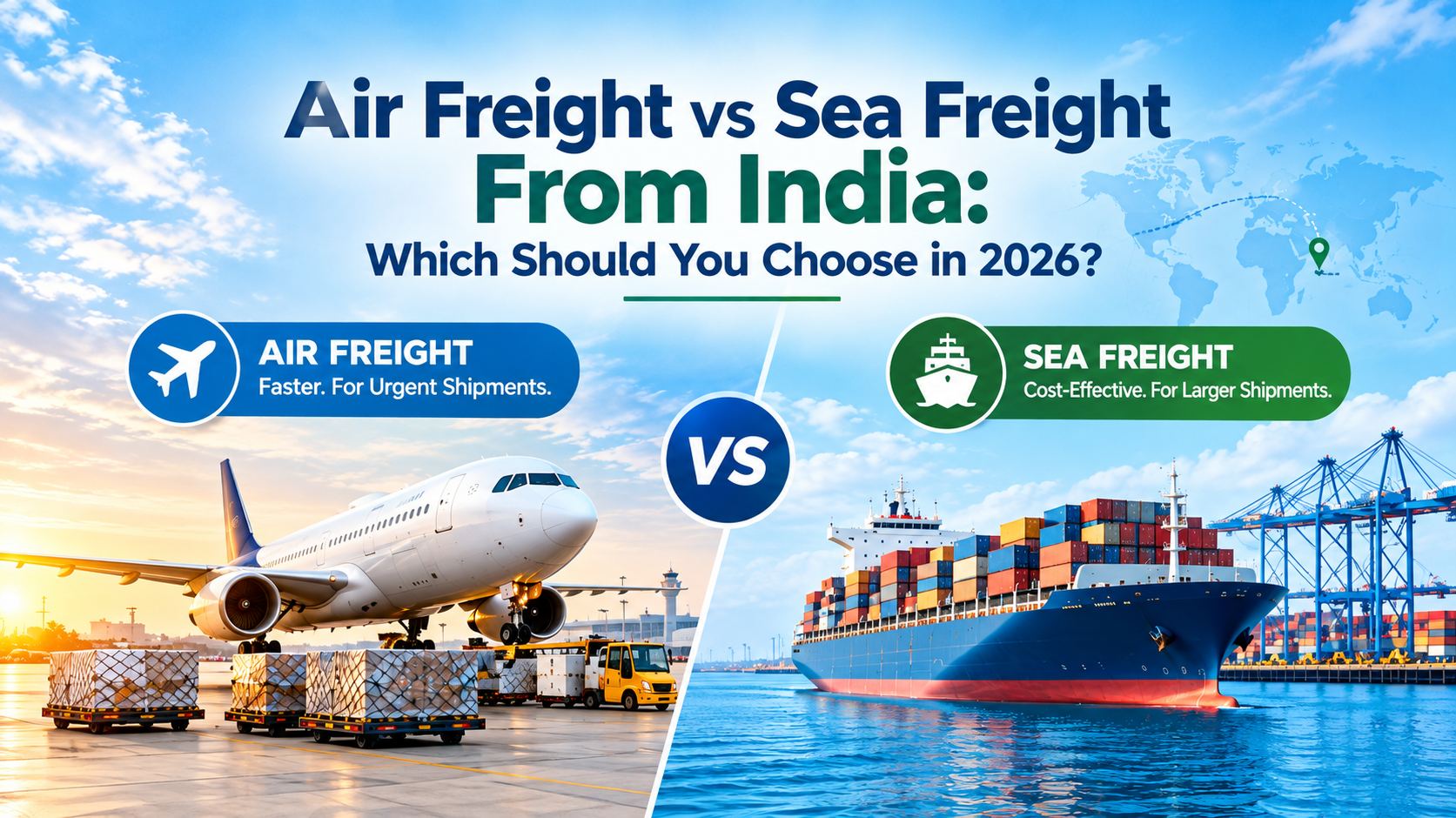
If you are shipping goods out of India this year, the first real decision you face is speed versus cost. Air Freight Services in India move your cargo in days, while ocean shipments take weeks but cost far less per kilo. Neither option is universally better. The right call depends on what you are shipping, how fast you need it there, and what your budget can absorb. This guide breaks down both modes so you can pick with confidence instead of guessing.
Air Freight: Built for Speed and Urgency
Air freight gets your cargo to most international destinations within two to seven days, depending on customs and the route. That speed comes at a price. You are typically paying three to six times more per kilo than you would by sea. Still, for certain shipments, the extra cost is worth it.
Air makes sense when:
- Your goods are perishable, like fresh produce or pharmaceuticals
- You are shipping high-value items where storage time equals risk
- A customer or business deadline cannot slip
- The shipment is light but urgent, such as samples, spare parts, or documents
Airlines also handle cargo with tighter security checks and fewer handling touchpoints than sea routes. Fewer touchpoints usually means less damage and fewer lost parcels. If you have ever had a shipment sit in a customs queue for three extra weeks, you already know why some businesses just pay for air and move on.
Sea Freight: Built for Volume and Budget
Sea freight services exist for one simple reason: they are cheap when you are moving a lot. Ocean shipping from India typically takes anywhere from 20 to 45 days depending on the destination port, but the cost per kilo drops dramatically compared to air. If you are shipping furniture, machinery, bulk textiles, or anything heavy and non-urgent, sea freight is usually the smarter financial choice.
Sea works well when:
- You are shipping in bulk (full container loads or less-than-container loads)
- Your goods are not time-sensitive
- The shipment is heavy or oversized
- You are running a business where predictable, recurring shipping cycles matter more than speed
One thing shippers often forget is that sea freight also demands more planning. Port congestion, vessel schedules, and documentation delays can stretch a 30-day estimate into 45 without warning. Build in buffer time. Do not promise your customer a delivery date based on the best-case scenario.
Comparing the Two Directly
Here is the honest breakdown, without the sales pitch.
Cost. Sea freight wins by a wide margin for heavy or bulky shipments. Air freight only makes financial sense for lightweight, high-value, or urgent cargo.
Speed. Air is measured in days. Sea is measured in weeks. There is no real competition here, only trade-offs.
Reliability. Both hold up fine with a courier partner who knows the route. Air just has fewer things that can go wrong along the way, since it skips most of the weather delays and port bottlenecks sea freight deals with.
Documentation. Full container loads come with a lot more paperwork, and customs at the port can drag it out further. Air shipments usually clear faster too, mostly because a flight’s cargo volume is a fraction of what a ship carries.
Environmental impact. Sea freight is the clear winner here if your business is watching its carbon footprint. Flying cargo simply burns a lot more fuel per kilo than shipping it does.
You don’t have to lock into one or the other either. A lot of Fastway’s regular exporters fly out the urgent stuff and let the rest come by ship whenever it’s ready. It’s more work to manage two schedules, but it keeps a customer happy on Monday without doubling your freight bill for the whole quarter.
Cargo Freight International: What Businesses Should Actually Weigh
For businesses handling cargo freight international shipments regularly, the decision is rarely a one-time choice. Exporters and importers often run both modes side by side depending on the product line. A garment exporter, for example, might send new season samples by air to hit a buyer’s deadline, then ship the bulk order by sea once confirmed. Getting this mix right takes experience, and it is exactly where a logistics partner adds value beyond just booking a shipment.
Customs clearance, accurate HS codes, and proper packaging documentation matter just as much as the transport mode itself. A shipment can be booked correctly and still get held up at the port because of a paperwork mismatch. This is where working with a courier company that understands both freight types, not just one, saves real time and money.
How to Choose Between Air and Sea Freight
This isn’t really an air versus sea decision so much as a question of what your shipment needs. Something urgent, light, or perishable belongs in the air. Something heavy, bulky, or not in a rush belongs on a ship. Most businesses end up using both at different points, and that’s fine. The mistake is picking out of habit instead of looking at what’s in the box and when it needs to land.
This is where a good courier partner earns their keep, and it’s worth saying plainly since it’s the business behind this post: Fastway India has handled international shipments out of India since 2005, across air freight, sea freight, and everything from documents to household goods. Our team looks at your shipment type, timeline, and budget before recommending a mode, rather than pushing whichever service is easier for us to book. We handle customs documentation, offer free pick-up and packaging, and keep you posted with live tracking, so you’re never left wondering where a consignment is.
If you move commercial cargo regularly, we can also help you plan a mixed strategy, air for urgent stock, sea for bulk, so you’re not overpaying on one end or missing deadlines on the other.
Frequently Asked Questions
1. Is air freight always faster than sea freight?
Ans. Almost always, yes. Air freight typically takes a matter of days, while sea freight can take a month or more depending on the port and destination country.
2. Which is cheaper for small parcels, air or sea?
Ans. For small, lightweight parcels, air freight is often more practical since minimum sea freight charges can make tiny shipments not worth the paperwork.
3. Does Fastway handle both air and sea freight from India?
Ans. Yes, we do both, to over 200 countries, plus customs support and door-to-door delivery so you’re not chasing down a separate agent at either end.
4. What documents do I need for international cargo shipping?
Ans. An invoice and a packing list, at minimum. Some countries want product-specific certificates on top of that, and honestly the requirements shift often enough that it’s worth just asking our team before you pack anything.
5. Is sea freight worth it for a one-time shipment?
Ans. It depends on volume. A few hundred kilos or less, and the minimum charges on a sea shipment eat up whatever you’d have saved. Air or a regular courier tends to work out cheaper for a one-off like that.
