

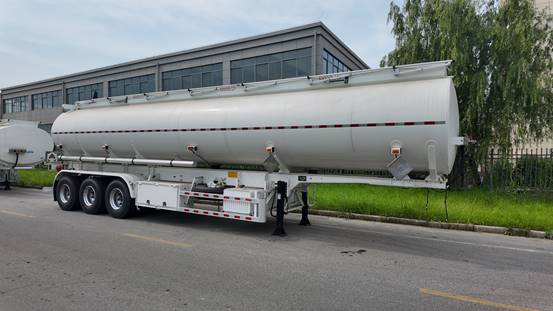
When purchasing a Fuel Tanker Semi Trailer , buyers usually pay close attention to tank capacity, axle configuration, suspension, and overall price. However, one decision that can have a lasting effect on transportation costs is the material used to build the tank.
Aluminum alloy and carbon steel are two widely used materials in tanker trailer manufacturing. Both have been used in the transportation industry for years, but they serve slightly different needs.
For companies transporting diesel, gasoline, and other liquid products, choosing between an aluminum alloy tanker semi-trailer and a carbon steel tanker semi-trailer often comes down to payload requirements, operating conditions, maintenance costs, and the available purchasing budget.
Aluminum Alloy Fuel Tanker Semi Trailers: A Practical Choice for Weight Reduction
Aluminum alloy Fuel tanker semi trailers are commonly considered by transport companies looking to reduce the overall weight of their vehicles.
The biggest difference is weight. Aluminum has a much lower density than carbon steel, allowing manufacturers to build relatively lightweight tank structures. The actual weight reduction depends on the alloy, tank thickness, structural design, and manufacturing process.
For operators who transport fuel over long distances, this difference can be important. A lighter trailer may leave more room for cargo within the permitted gross vehicle weight and axle-load limits.
Another reason buyers consider aluminum is its natural corrosion resistance. Aluminum forms a thin oxide layer when exposed to air, helping protect the surface from corrosion. This can be useful for tanker trailers working in humid environments or operating on roads where moisture exposure is frequent.
There are, however, some points worth considering before choosing an aluminum tanker.
The purchase price is generally higher than that of a comparable carbon steel model. Aluminum fabrication also requires suitable welding equipment and experienced technicians. In some regions, finding a workshop familiar with aluminum tanker repairs may take more effort.
For businesses that operate their tankers frequently and cover long distances, the potential weight advantage may justify the higher initial investment. For occasional transportation, the financial benefit may be less significant.
Carbon Steel Tanker Semi Trailers: Strength and Cost Matter
Carbon steel remains a familiar material in the commercial vehicle industry. Many tanker manufacturers use it because of its mechanical properties, availability, and relatively straightforward manufacturing process.
One of its main advantages is its strength and rigidity. When properly designed and manufactured, a carbon steel tank can handle the demands of regular heavy-duty transportation.
Cost is another important factor. Carbon steel tanker semi trailers generally have a lower purchase price than aluminum alloy alternatives. This makes them worth considering for fleet operators who need to control their initial investment, particularly when purchasing several units at once.
Maintenance is also relatively convenient in many markets. Steel welding, surface treatment, and repair services are widely available, so operators may find it easier to arrange routine maintenance without relying on specialized aluminum repair facilities.
The main drawback is weight. Carbon steel is considerably heavier than aluminum, which can affect the available payload under local weight regulations.
Corrosion also requires attention. Unlike aluminum, ordinary carbon steel does not naturally provide the same level of surface protection. Tank exteriors usually need suitable coatings or paint systems, while the internal surface may require additional protection depending on the transported product.
Regular inspections are important, especially when a tanker operates in coastal areas, humid climates, or environments where the protective coating may be damaged.
Aluminum vs. Carbon Steel: What Are the Main Differences?
Although both materials can be used to manufacture fuel tanker semi trailers, their performance and operating costs are not identical.
| Factor | Aluminum Alloy | Carbon Steel |
| Material Weight | Relatively lightweight | Relatively heavy |
| Purchase Price | Usually higher | Usually lower |
| Corrosion Resistance | Naturally corrosion resistant | Requires suitable protection |
| Structural Properties | Depends on alloy and design | Good strength and rigidity |
| Repair Requirements | Specialized welding may be needed | More widely available repair services |
| Payload Potential | Offers greater weight-saving potential | Higher tare weight may limit payload |
| Common Advantage | Lower vehicle weight | Lower initial investment |
It is worth remembering that material alone does not determine the quality of a tanker trailer. Tank wall thickness, welding quality, structural reinforcement, compartment design, and manufacturing standards are equally important.
A poorly manufactured aluminum tanker is not automatically a better investment than a well-built steel tanker.
Which Material Is Better for Fuel Transportation?
The answer depends largely on how the tanker will be used.
For long-distance diesel and gasoline transportation, aluminum alloy is often an attractive option. Reducing the tanker’s tare weight can help operators make better use of their permitted payload capacity. Over thousands of kilometers, even a relatively small improvement in operating efficiency may become worthwhile.
Carbon steel is still a sensible choice for companies that prioritize purchase price and convenient maintenance. It is particularly worth considering in markets where local repair facilities are more familiar with steel structures.
For gasoline transportation, buyers should pay attention to more than the tank material. Sealing systems, loading and unloading equipment, emergency shut-off valves, vapor control requirements, and applicable safety standards all need to be considered.
Chemical transportation requires an even more careful approach. Not every aluminum alloy or carbon steel grade is suitable for every chemical. Material compatibility, internal coatings, and tank lining requirements should be confirmed before ordering.
What Should You Check Before Buying a Tanker Trailer?
Before making a decision, it is useful to look beyond the difference in material price.
1. Check the Type of Cargo
Start with the liquid being transported. Diesel, gasoline, edible oils, and industrial chemicals may have different requirements for tank construction and internal protection.
2. Consider Local Weight Regulations
A lightweight tanker can offer a payload advantage, but only within the legal gross vehicle weight and axle-load limits of the destination country. Buyers should check local transportation regulations before choosing the tank configuration.
3. Look at Long-Term Operating Costs
A lower purchase price does not always mean lower overall costs. Fuel consumption, maintenance frequency, coating repairs, expected service life, and resale value should all be included in the comparison.
4. Check the Manufacturing Details
Ask the manufacturer about the tank material grade, shell thickness, welding process, pressure or leak testing requirements, and quality inspection procedures. These details provide a better indication of product quality than appearance alone.
5. Consider Local Maintenance Conditions
A tanker trailer may operate for many years, so access to spare parts and qualified repair technicians should not be overlooked. This is especially important for companies operating in remote areas or across multiple countries.
Final Thoughts
There is no single material that suits every tanker trailer application.
Aluminum alloy tanker semi-trailers are worth considering when vehicle weight and payload efficiency are major priorities. Carbon steel tanker semi-trailers remain a practical option for buyers who want a lower purchase cost, solid structural performance, and convenient maintenance.
The best choice depends on the cargo, transportation distance, local regulations, and expected operating life of the vehicle.
For buyers looking for more information about tanker semi-trailers, manufacturing capabilities, and commercial vehicle solutions, CIMC VEHICLES provides further information about its product range.
Rather than choosing a tanker based on material or price alone, buyers should compare the complete vehicle configuration and manufacturing quality. A suitable tanker semi-trailer is one that performs reliably under actual working conditions while keeping transportation costs under control.
