

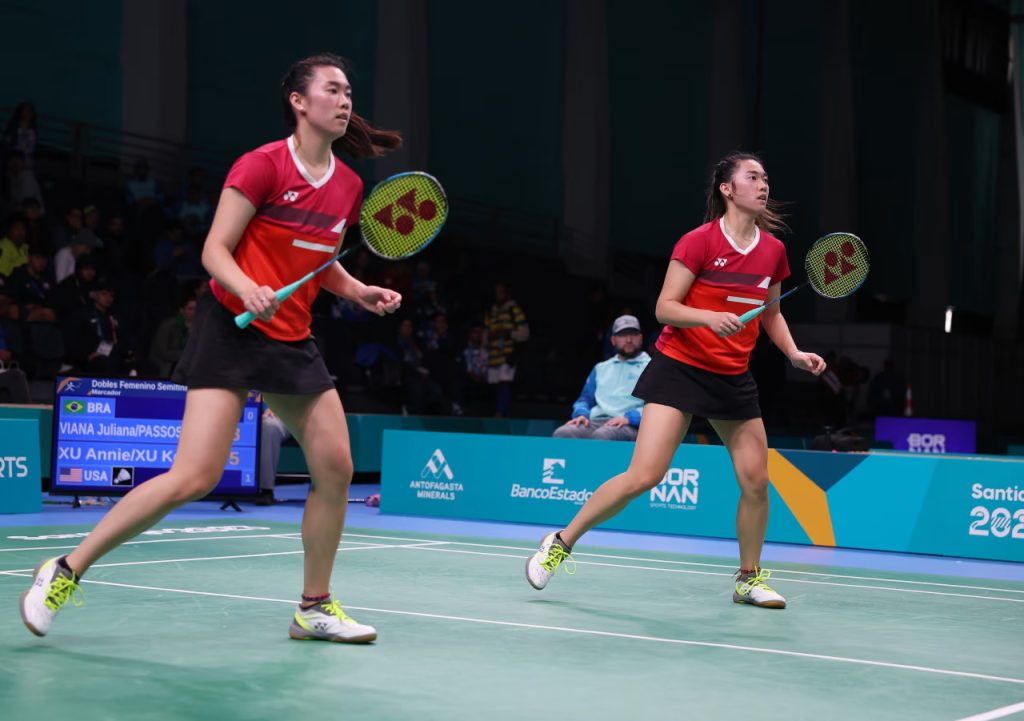
In elite badminton doubles, matches are played in formats of 2–3 games to 21 points, and rallies often last between 10 and 25 shots, which leaves almost no time for independent decision-making. The dominance of Kevin Sanjaya Sukamuljo and Marcus Fernaldi Gideon between 2017 and 2019 was built not on raw power but on synchronized movement. Their ability to control the net produced 6–10 direct points per set, which in a race to 21 is often the difference between winning and losing. When coordination between partners determines rally control, using 1xBet IPL game gives access to match winner and set betting markets.
Between 2014 and 2015, they reached 10 finals and converted 6 of them into titles, often winning in straight games. Their defensive organization reduced opponent smash efficiency to below 40%, while the tour average stayed around 50–55%. Over matches lasting 40–60 minutes, that gap translated into a consistent advantage of 8–12 points. As teamwork defines point construction in doubles, entering through ipl game 1xBet allows quick access to current match odds.
Why coordination defines outcomes in doubles matches
In doubles badminton, spacing between partners usually ranges from 2 to 4 meters depending on whether the pair is attacking or defending, and even a 0.5-meter error can open space for a winning shot. That difference alone can flip a set that ends 21–19 or 22–20. Reaction time also plays a critical role, with elite pairs consistently responding within 0.3–0.4 seconds during fast exchanges near the net.
The structure behind high-level doubles performance can be broken down into clear measurable elements:
- Rotational positioning completed within 1–2 seconds after each shot
- Smash-follow-up efficiency above 65% in attacking phases
- Defensive retrieval rates exceeding 70% against sustained pressure
- Communication reducing hesitation to under 0.4 seconds per decision
- Net dominance generating 6–10 points per set through interceptions
In rallies exceeding 20 shots, they maintained structure and avoided positional errors, which directly translated into points. In matches decided by 2–3 points, that level of coordination becomes decisive. Another clear example is Mohammad Ahsan and Hendra Setiawan at the All England Open 2019. Both players were over 30, yet across 5 matches they lost only 2 sets and maintained rally control above 60%. Their game was built on positioning, anticipation, and precise rotation rather than speed. Over an entire tournament, that approach proved more stable and efficient than relying on physical intensity alone.
