

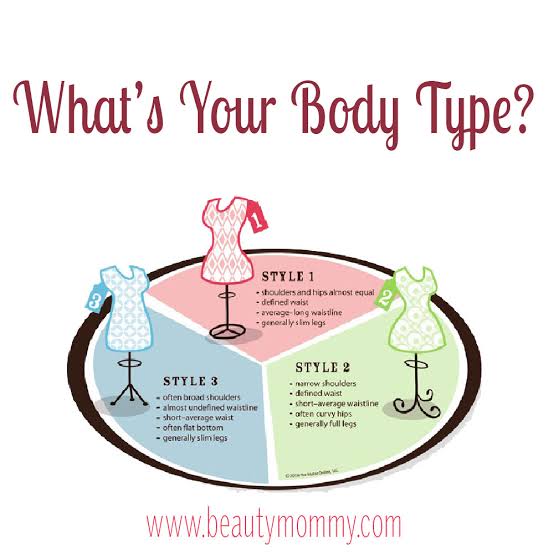
“What body shape am I?” and “What’s my body type?” sound like the same question, and people use the two phrases interchangeably all the time. But they describe slightly different things — and knowing which is which makes it far easier to dress well, train smart, and understand your own proportions. This guide clears up the difference, walks through how to find each one from a few simple measurements, and explains why both are worth knowing.
Body Shape vs. Body Type — What’s the Difference?
Your body shape describes your silhouette — the proportional relationship between your bust, waist, and hips. It answers the question “where am I widest, and how defined is my waist?” and sorts you into a recognizable figure category like hourglass, pear, apple, or rectangle. Shape is about ratios, not weight; two people of very different sizes can share the exact same shape.
Body type is the broader term. It usually covers the same figure categories, but many people also use it to describe overall build — how naturally lean, muscular, or soft-set your frame is. Either way, both are determined the same practical way: by comparing a handful of measurements rather than by stepping on a scale. Neither has anything to do with your worth or health on its own — they’re simply descriptive tools.
How to Find Your Body Shape
Body shape comes down to four measurements: bust, waist, high hip (about 7 cm below the waist), and the fullest part of the hips. The ratios between them place you into a shape. If your bust and hips are close in size with a clearly smaller waist, you lean hourglass. If your hips are noticeably wider than your bust, you’re in pear territory. Broader on top than the bottom points to an inverted triangle (apple), and near-equal measurements all the way down suggest a rectangle. Adding the high-hip measurement unlocks finer categories like spoon and the top and bottom hourglass variations.
Rather than working out every ratio yourself, you can discover your body shape in seconds — enter your four measurements and it returns your exact figure category along with styling guidance built around your proportions.
How to Find Your Body Type
Body type follows the same measurement-first idea but is often framed a little more broadly, taking in your overall frame alongside your proportions. It’s the classification most people reach for when they want a quick, big-picture read on their figure — useful for everything from choosing flattering cuts to setting realistic fitness goals for how your body naturally carries and builds.
The simplest route is to find your body type with a calculator that does the classification for you — you plug in your measurements and get your result instantly, without having to memorize any of the cutoffs.
Why Knowing Both Actually Helps
This isn’t just curiosity — your shape and type genuinely change how you approach three everyday things:
- Dressing well. Style advice built around your proportions works far better than generic tips. The same guidance for a pear shape applies whether you wear a size 6 or a size 20, because it’s based on ratios, not size.
- Training smart. Knowing where you naturally carry width helps you set realistic goals and target the areas you actually want to develop — building shoulders or glutes can genuinely shift your proportions over time.
- Understanding health signals. Your waist-to-hip ratio — a by-product of the same measurements — is a useful indicator of where you store fat, which research links to health more closely than weight alone. It’s a screening cue, not a diagnosis.
A Few Tips for Accurate Measurements
Because both classifications rest entirely on your numbers, measuring well is what makes the result trustworthy. Use a flexible fabric tape, not a rigid ruler. Wear minimal or form-fitting clothing, stand straight with your feet together, and breathe normally — don’t suck in or hold your breath. Measure your waist at its narrowest point (usually about an inch above the belly button), keep the tape parallel to the floor at every point, and use the same unit throughout. For the best accuracy, measure twice and take the average, ideally in the morning.
The Bottom Line
Body shape is your silhouette from the ratios of bust, waist, and hips; body type is the broader read on your figure and frame. Both come from the same quick set of measurements, and both are far more useful than a number on a scale when it comes to dressing well and training with purpose. Measure carefully, find your shape and type, and use them as the practical, judgment-free tools they’re meant to be — every shape and type is completely normal.
