

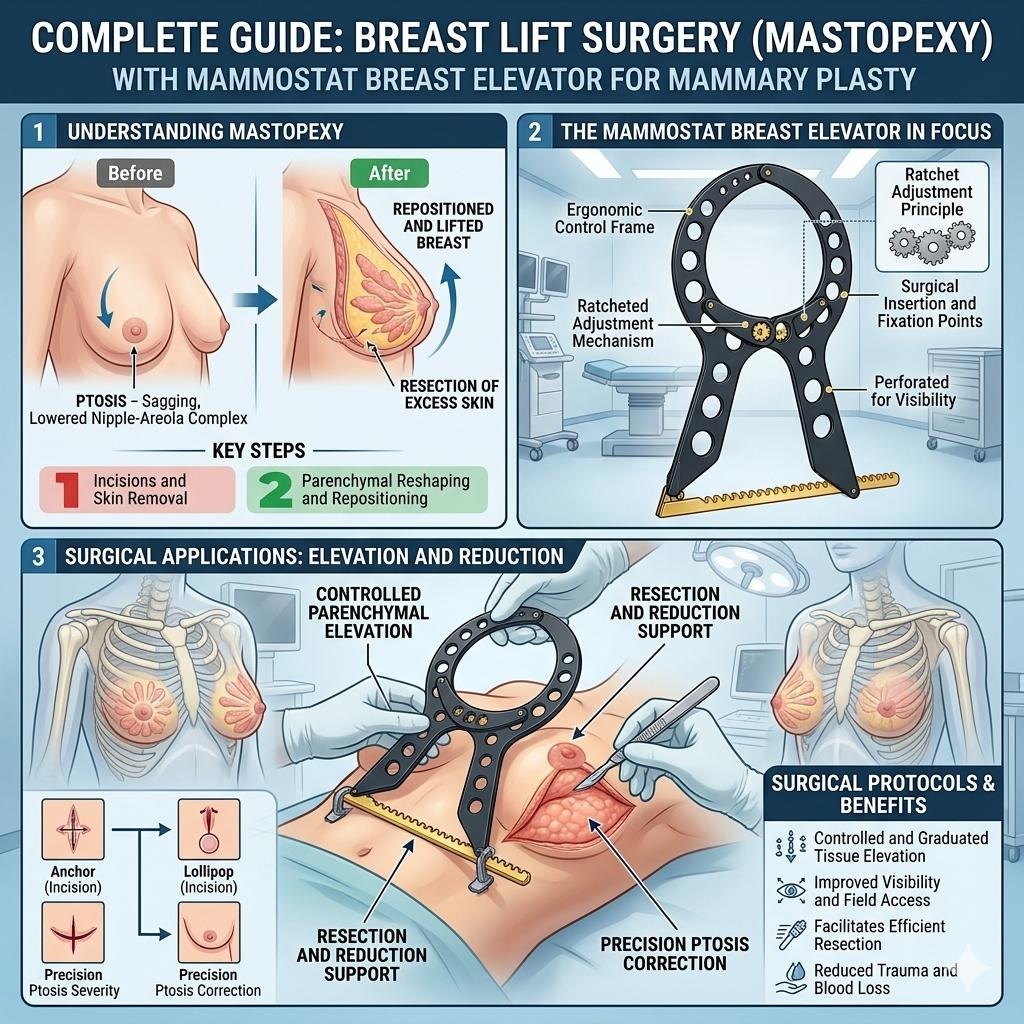
Quick Definition
Breast lift surgery (mastopexy) is a breast ptosis correction surgery designed to elevate and reshape sagging breasts by removing excess skin and repositioning tissue. A Mammostat Breast Elevator for Mammary Plasty is a specialized instrument used to support, stabilize, and elevate breast tissue—ensuring precise shaping, symmetry, and controlled soft tissue positioning during mastopexy procedures.
Overview of Breast Lift Surgery (Mastopexy)
What is Mastopexy?
Mastopexy is a form of cosmetic breast surgery focused on restoring breast shape and position without significantly altering volume. It addresses sagging caused by aging, pregnancy, weight fluctuations, and reduced skin elasticity. The procedure involves repositioning the nipple-areola complex, tightening skin, and reshaping internal tissue for a more youthful contour.
Even minor asymmetry in tissue positioning can become visually significant, especially in aesthetic procedures where balance and proportion are critical. This is why surgeons rely on advanced cosmetic breast surgery instruments to maintain control during tissue manipulation.
Why Precision Matters in Breast Surgery
Precision in mastopexy is not just about appearance—it directly affects long-term outcomes. Inaccurate tissue handling can lead to uneven contours, asymmetry, or recurrence of sagging. Maintaining consistent positioning throughout the procedure requires controlled elevation and stabilization of soft tissue.
Specialized soft tissue elevation tools such as the Mammostat Breast Elevator for Mammary Plasty allow surgeons to maintain visibility and control while reshaping the breast structure. This level of precision ensures predictable and reproducible results.
Indications for Breast Lift Surgery
Breast lift surgery is typically indicated for patients experiencing:
- Breast ptosis due to aging or gravity
- Loss of firmness following pregnancy or breastfeeding
- Downward displacement of the nipple-areola complex
- Asymmetry in breast position or contour
Patient selection is critical, as anatomical variations and skin quality influence both technique and outcome. Proper evaluation ensures that the procedure aligns with patient expectations and clinical feasibility.
Surgical Techniques in Mastopexy
Crescent Lift
This technique involves a minimal incision along the upper areolar border and is suitable for mild ptosis. It provides subtle elevation while preserving natural contours.
Periareolar Lift (Donut Lift)
A circular incision around the areola allows moderate lifting and reshaping. It is commonly used for mild to moderate cases.
Vertical Lift (Lollipop Technique)
This approach uses a vertical incision to allow more significant tissue reshaping and repositioning. It is effective for moderate ptosis.
Anchor Lift
The anchor technique is used in severe cases and involves multiple incisions. It provides maximum correction and reshaping capability.
Role of Mammostat Breast Elevator in Mammary Plasty
Design and Functional Features
The Mammostat Breast Elevator for Mammary Plasty is engineered to provide stable elevation and support of breast tissue during surgery. Its structure allows surgeons to maintain consistent positioning while performing reshaping and suturing.
Manufactured from high-grade surgical materials, it offers durability and resistance to corrosion. Its ergonomic design ensures precise handling, reducing fatigue during prolonged procedures.
Clinical Advantages
The instrument enhances surgical control by stabilizing tissue during critical phases of mastopexy. This improves visibility and allows accurate contouring of the breast.
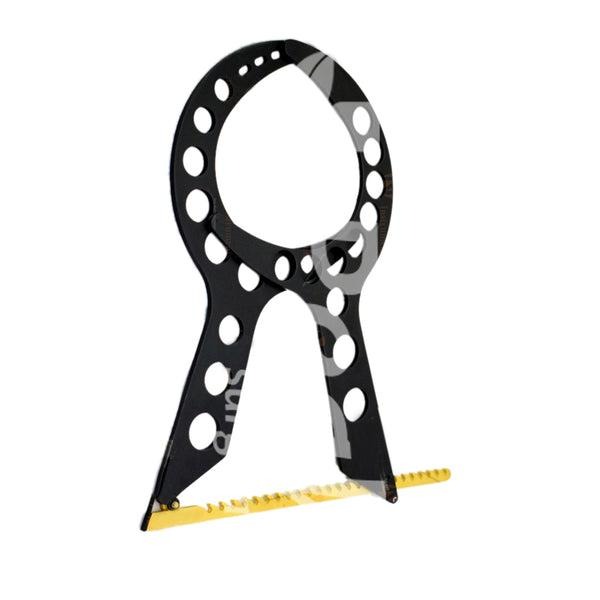
Clinics using a high-quality Mammostat Breast Elevator for Mammary Plasty can achieve more consistent tissue positioning and improved surgical predictability.
Surgical Workflow in Breast Lift Procedures
Mastopexy follows a structured workflow to ensure accuracy and consistency:
- Preoperative marking and planning
- Incision and exposure of tissue
- Tissue reshaping and repositioning
- Use of soft tissue elevation tools for stabilization
- Suturing and closure
Each stage requires precise execution. The use of advanced cosmetic breast surgery instruments ensures controlled manipulation of tissue throughout the procedure.
Tissue Tension and Symmetry Control in Mastopexy (Advanced Insight)
Achieving long-term symmetry in mastopexy depends on controlling tissue tension during repositioning. Uneven tension distribution can lead to postoperative asymmetry or early recurrence of ptosis. Surgeons must balance skin tightening with internal tissue support to maintain shape over time.
Inadequate tension control may result in distortion of the breast contour or compromised structural support. Instruments that provide stable elevation during this phase help ensure consistent contour and reduce variability in outcomes. This is where the Mammostat Breast Elevator for Mammary Plasty plays a critical role by maintaining controlled positioning during tissue adjustment.
Mammostat Breast Elevator vs General Plastic Surgery Instruments
FeatureMammostat Breast Elevator General Plastic Surgery Instruments
Tissue Support High, procedure-specific Limited
Precision Designed for mammary plasty Generalized
Stability Consistent elevation control Variable
Clinical Outcome Predictable symmetry Less consistent
General instruments lack the specialized design required for effective breast tissue support. Dedicated tools provide better control and improved outcomes.
Surgical Challenges in Mastopexy (Expert Insight)
Mastopexy presents several technical challenges related to tissue handling and symmetry. Variations in skin elasticity, glandular volume, and breast anatomy can complicate repositioning. Maintaining consistent contour while avoiding excessive tension requires both skill and appropriate instrumentation.
Inadequate tissue support during reshaping can compromise the final contour, increasing the likelihood of revision procedures. This highlights the importance of combining surgical expertise with high-quality soft tissue elevation tools.
Risks of Improper Instrument Use
Improper use of surgical instruments can result in tissue damage, asymmetry, and suboptimal aesthetic outcomes. Low-quality tools may fail to provide consistent support, affecting precision during critical مراحل of the procedure.
Poorly manufactured instruments can compromise tissue stability, directly impacting surgical accuracy and long-term results. This underscores the importance of using reliable cosmetic breast surgery instruments.
Materials and Manufacturing Standards
High-quality breast surgery instruments are made from surgical-grade stainless steel, ensuring durability and resistance to corrosion. Precision manufacturing ensures consistent performance across procedures.
Sterilization and Maintenance Protocols
Proper sterilization is essential to prevent infection and maintain instrument integrity. Instruments must be cleaned, sterilized, and inspected after each use to ensure optimal functionality.
Cost and Procurement Considerations
The cost of a Mammostat Breast Elevator for Mammary Plasty depends on material quality, design, and manufacturing standards. Investing in high-quality instruments ensures long-term reliability and consistent surgical performance.
Conclusion
Breast lift surgery (mastopexy) requires a combination of surgical expertise and precision instrumentation to achieve optimal outcomes. The Mammostat Breast Elevator for Mammary Plasty plays a vital role in supporting tissue positioning and maintaining symmetry throughout the procedure. By enabling controlled soft tissue elevation and stabilization, it significantly enhances surgical accuracy and patient satisfaction.
FAQs
1. What is mastopexy?
It is a surgical procedure to lift and reshape sagging breasts.
2. What does a Mammostat Breast Elevator do?
It supports and stabilizes breast tissue during surgery.
3. Is breast lift surgery safe?
Yes, when performed by qualified surgeons using proper techniques.
4. How long does recovery take?
Recovery typically takes a few weeks, depending on the procedure.
5. Why are specialized instruments important?
They ensure precision, symmetry, and consistent surgical outcomes.
