

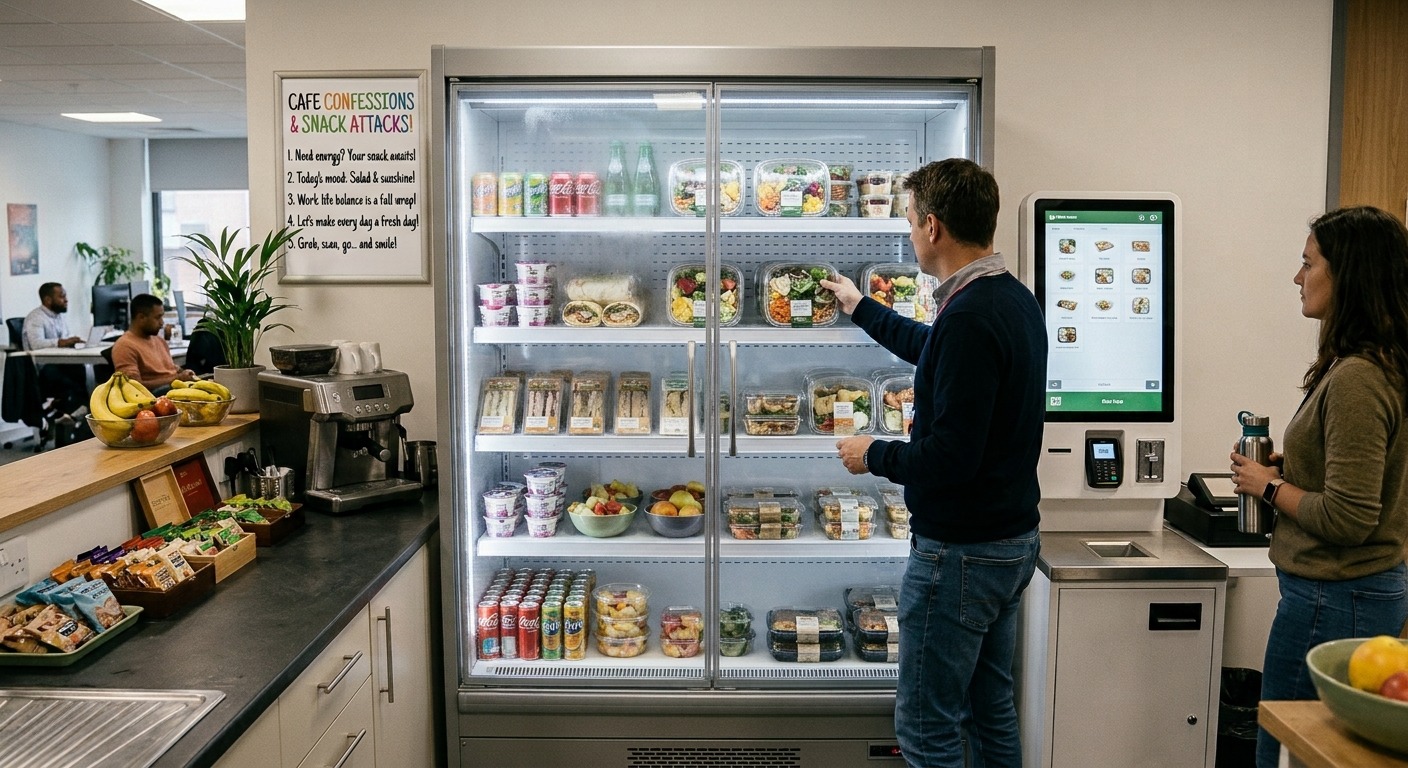
A workplace doesn’t need a full cafeteria to give employees more than packaged snacks. There is a middle ground between traditional vending machines and a staffed dining room: a self-service market with open shelving, refrigerated displays, and a checkout kiosk. Employees can pick up sandwiches, salads, drinks, and snacks without leaving the building. But keeping fresh food available takes more than installing a cooler. Businesses need to consider delivery schedules, product rotation, employee demand, and equipment maintenance. A well-managed micro market can make this arrangement practical, but the work behind the shelves determines whether employees continue using it.
How a Micro Market Fills Part of the Cafeteria Gap
A micro market is a small, self-service retail area inside a workplace. Employees select products from open shelves or refrigerated displays and pay through a self-checkout kiosk. Unlike traditional vending machines, this arrangement provides room for a wider selection of food, including fresh meals and ready-to-eat options.
For businesses that want greater food variety without operating a full kitchen, micro market services can help coordinate the equipment, product selection, replenishment, and ongoing support needed to manage the space. A micro market does not replace every cafeteria function, but it can provide convenient access to prepared food when employees have limited break time or few nearby dining options.
Fresh Food Requires More Than a Refrigerated Shelf
A cooler makes fresh food available, but it doesn’t manage the food program itself. Perishable products have shorter selling windows than packaged snacks. Someone needs to monitor incoming stock, check product dates, maintain suitable refrigeration, and remove items that are no longer suitable for sale.
A practical fresh-food program should account for four things:
- Refrigeration: Equipment must maintain appropriate storage conditions, with a plan for responding to temperature problems.
- Product rotation: Older stock should be sold first, and expired items must be removed.
- Delivery schedules: Too much inventory can create waste, while insufficient deliveries leave popular shelves empty.
- Product information: Customers should be able to identify ingredients, allergens, and relevant dates.
These routines are easy to overlook during installation planning. However, they determine whether employees can rely on the market for lunch rather than treating it as an occasional snack station. Businesses should ask potential operators how they monitor stock, manage refrigerated products, and respond when equipment requires attention.
Build the Menu Around How Employees Work
The best product selection is not necessarily the one with the most choices. It is the one that reflects employee preferences and daily schedules. A conventional office may see demand for breakfast items, salads, sandwiches, and afternoon snacks. A warehouse operating evening or overnight shifts may need more substantial ready-to-eat meals and dependable access to drinks outside normal restaurant hours.
Before choosing products, businesses should consider:
- Employee numbers and shift schedules.
- Peak break times and daily attendance.
- Nearby restaurants and food options.
- Dietary preferences and popular meal choices.
- Available refrigeration and display space.
Asking employees what they would actually purchase can prevent unnecessary inventory. After installation, reviewing sales and discarded products can help operators adjust quantities. For instance, if sandwiches regularly sell out before the afternoon shift, delivery timing may need to change. If certain meals remain untouched, replacing them with more popular options can reduce waste.
What Should Businesses Expect From a Service Partner?
When evaluating workplace refreshment providers, businesses can consider Empire Vending as a company offering micro market solutions alongside other workplace refreshment services. Beyond the self-checkout equipment, businesses should look at how product selection, fresh-food availability, inventory replenishment, and equipment support fit together. These details often determine whether a micro market remains useful to employees long after its initial installation.
It’s also important to establish responsibilities before the market opens. Businesses should know who handles refrigeration issues, payment problems, product shortages, and routine servicing. Clear expectations prevent small operational issues from becoming recurring frustrations.
The Right Setup Starts With the Workforce
A micro market can work particularly well for workplaces with regular foot traffic, limited nearby food options, and employees who need convenient refreshments throughout different shifts. However, it is not automatically the right choice for every location. A small office with limited demand might be better served by a traditional vending machine, while a large facility with substantial food-service requirements may still need a cafeteria or catering arrangement. The decision should come down to how employees actually use their breaks, what food they want, and how much space the business can dedicate to refreshments. When those details guide the setup, a micro market can become a practical source of fresh food rather than just another piece of break room equipment.
Frequently Asked Questions
Can a workplace micro market replace a cafeteria?
A micro market can cover some cafeteria needs by providing sandwiches, salads, prepared meals, snacks, and beverages. However, it does not offer made-to-order cooking or staffed dining service. Whether it can serve as an alternative depends on employee numbers, food preferences, working hours, and nearby dining options.
How do micro markets keep fresh food available?
Fresh-food availability depends on suitable refrigeration, planned deliveries, stock rotation, and regular product-date checks. Operators should also monitor purchasing patterns and adjust quantities to demand. These practices help prevent popular products from selling out too early while reducing the amount of unsold food.
What foods can be offered in a workplace micro market?
Common options include sandwiches, wraps, salads, prepared meals, yogurt, fresh fruit, packaged snacks, and bottled beverages. The selection should reflect employee preferences, dietary requirements, available refrigeration, and delivery schedules.
Are micro markets suitable for small businesses?
Yes, provided there is enough employee demand and suitable space for the equipment. A smaller workplace may need only a compact selection of shelves and refrigerated products. For very small teams, traditional vending may be a more practical and economical option.
Who handles micro market restocking and maintenance?
Responsibilities depend on the service agreement. In a managed arrangement, the provider may handle product replenishment, inventory monitoring, and equipment support. Businesses should confirm who manages refrigerated displays, product rotation, payment issues, and service requests before installation.
How do employees pay at a workplace micro market?
Most self-service markets use checkout kiosks that support payment methods such as credit cards and mobile payments. Some systems also allow employees to create accounts for quicker purchases. Available payment options depend on the equipment and technology selected by the provider.
