


As businesses continue to embrace digital transformation, cloud technology has become the backbone of modern operations. From storing sensitive data to running business-critical applications, organizations of all sizes rely on cloud platforms to improve flexibility, scalability, and cost efficiency.
This is where cloud computing security becomes essential. A well-planned security strategy helps organizations safeguard confidential information, maintain regulatory compliance, and reduce the risk of costly cyberattacks.
Whether you’re a startup, a growing enterprise, or an established corporation, understanding cloud security best practices is crucial for long-term business success.
Key Takeaways
- Cloud security is a shared responsibility. Cloud providers secure the infrastructure, while businesses are responsible for protecting their data, applications, and user access.
- Strong identity and access management is essential. Implement Multi-Factor Authentication (MFA), Role-Based Access Control (RBAC), and the principle of least privilege to reduce unauthorized access.
- Data encryption protects sensitive information. Encrypt data both at rest and in transit to minimize the impact of potential breaches.
- Continuous monitoring helps detect threats early. Monitor user activity, network traffic, and system logs to identify suspicious behavior before it becomes a security incident.
What Is Cloud Computing Security?
Cloud computing security refers to the collection of technologies, policies, processes, and controls designed to protect cloud-based systems, applications, and data. It covers everything from identity management and data encryption to network security and continuous monitoring.
Unlike traditional on-premise infrastructure, cloud environments operate under a shared responsibility model. While cloud service providers secure the underlying infrastructure, customers are responsible for protecting their data, user accounts, applications, and configurations.
Understanding these responsibilities helps organizations avoid security gaps and strengthen their overall cybersecurity posture.
Why Cloud Security Matters More Than Ever
The rapid adoption of cloud services has significantly expanded the attack surface for cybercriminals. Businesses often manage multiple cloud environments, remote employees, third-party integrations, and connected devices, making security more challenging.
Without proper safeguards, organizations may face:
- Data breaches
- Unauthorized access
- Ransomware attacks
- Compliance violations
- Financial losses
- Reputation damage
Investing in strong cloud security measures reduces these risks while allowing businesses to confidently leverage cloud technology for growth and innovation.
Common Security Challenges in Cloud Environments
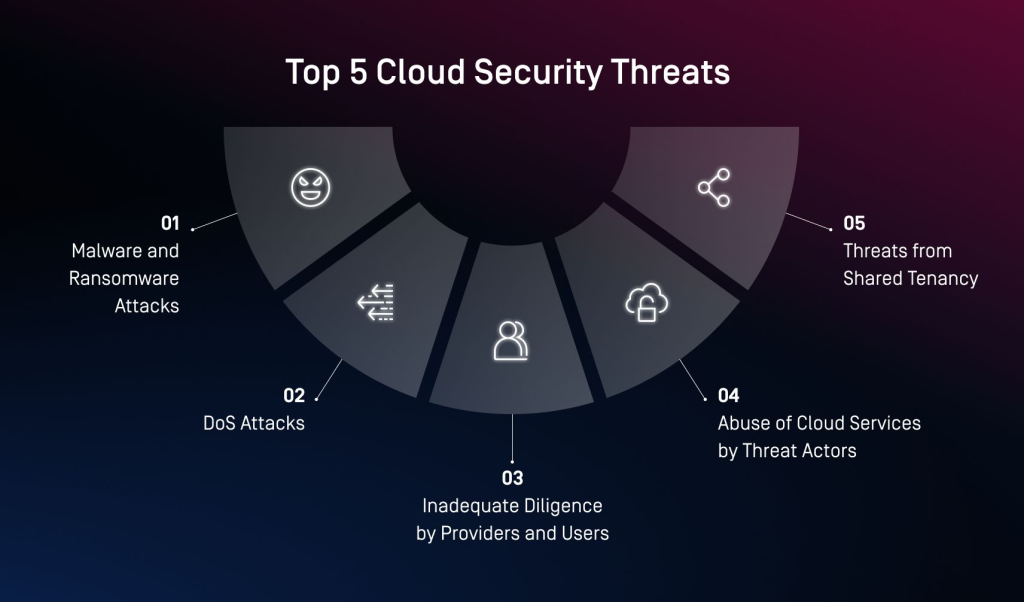
Although cloud platforms provide built-in security features, businesses still encounter several challenges.
Misconfigured Cloud Resources
Incorrect storage permissions, unsecured databases, or poorly configured virtual machines remain one of the leading causes of cloud data exposure. Even a small configuration mistake can leave sensitive information publicly accessible.
Weak Identity and Access Management
Granting excessive permissions or failing to enforce strong authentication creates opportunities for attackers to compromise user accounts.
Insider Threats
Employees, contractors, or third-party vendors with access to cloud systems can unintentionally or intentionally expose sensitive data.
Data Privacy Concerns
Organizations handling customer information must comply with regulations such as GDPR, HIPAA, or industry-specific standards. Failing to protect data properly can lead to severe penalties.
Evolving Cyber Threats
Cybercriminals continuously develop sophisticated attack methods, including phishing, malware, credential theft, and ransomware, specifically targeting cloud environments.
Best Practices for Strengthening Cloud Security
Organizations can significantly improve their security posture by implementing proven best practices.
1. Use Multi-Factor Authentication (MFA)
Passwords alone are no longer sufficient. Multi-factor authentication adds an additional verification step, making unauthorized access much more difficult.
Enable MFA for:
- Administrator accounts
- Remote users
- Privileged access
- Critical business applications
2. Follow the Principle of Least Privilege
Employees should only receive access to the resources necessary for their job roles.
Regularly review:
- User permissions
- Role assignments
- Temporary access
- Administrative privileges
Reducing unnecessary access through Cloud Computing Security minimizes potential damage if an account becomes compromised.
3. Encrypt Sensitive Data
Encryption protects information both during storage and while it’s being transmitted.
Businesses should encrypt:
- Customer records
- Financial information
- Intellectual property
- Backup files
- Internal communications
Even if attackers gain access, encrypted data remains significantly more difficult to exploit.
4. Keep Software Updated
Cloud applications, operating systems, and third-party integrations should receive security updates as soon as they become available.
Routine patch management helps eliminate known vulnerabilities before attackers can exploit them.
5. Monitor Cloud Activity Continuously
Continuous monitoring allows security teams to detect suspicious behavior before it escalates into a major incident.
Useful monitoring includes:
- Login activity
- Failed authentication attempts
- Configuration changes
- Data transfers
- API usage
- Network traffic
Automated alerts help organizations respond quickly to potential threats.
Build a Strong Identity Management Strategy

Identity is one of the most important aspects of cloud security.
Businesses should implement:
- Single Sign-On (SSO)
- Role-Based Access Control (RBAC)
- Identity governance
- Conditional access policies
- Password management policies
Strong identity management significantly reduces unauthorized access risks.
Secure Cloud Data Backups
Data loss can occur due to cyberattacks, accidental deletion, hardware failures, or software issues.
Every organization should maintain:
- Automated backups
- Multiple backup copies
- Offsite storage
- Regular backup testing
- Disaster recovery planning
Reliable backups ensure business continuity during unexpected incidents.
Employee Awareness Is Equally Important
Technology alone cannot eliminate security risks. Human error remains one of the leading causes of cloud security incidents.
Regular security awareness training should cover:
- Phishing emails
- Social engineering attacks
- Password hygiene
- Safe file sharing
- Device security
- Reporting suspicious activity
Educated employees become the first line of defense against cyber threats.
Choosing the Right Cloud Security Partner
Technology alone isn’t enough. Businesses should evaluate cloud providers based on their security capabilities.
Look for providers offering:
- Built-in encryption
- Compliance certifications
- Security monitoring
- Identity management tools
- Threat detection
- Backup solutions
- Incident response support
A reliable provider should also offer transparency regarding its shared responsibility model so customers clearly understand their security obligations.
Future Trends in Cloud Security
As cloud adoption continues to grow, organizations are embracing more advanced Cloud Computing Security technologies.
Emerging trends include:
- Artificial intelligence for threat detection
- Zero Trust security architecture
- Secure Access Service Edge (SASE)
- Cloud-native application protection
- Behavioral analytics
- Automated incident response
These technologies enable businesses to identify threats faster while improving overall resilience against cyberattacks.
Final Thoughts
A proactive approach involving strong access controls, encryption, continuous monitoring, employee education, and compliance management helps reduce risks while supporting business growth.
Implementing effective cloud computing security practices protects valuable business data, strengthens customer confidence, and ensures operational continuity in an ever-changing digital landscape.
By making security a core part of every cloud strategy, businesses can fully leverage the benefits of cloud technology while staying prepared for today’s cybersecurity challenges and tomorrow’s evolving threats.
