

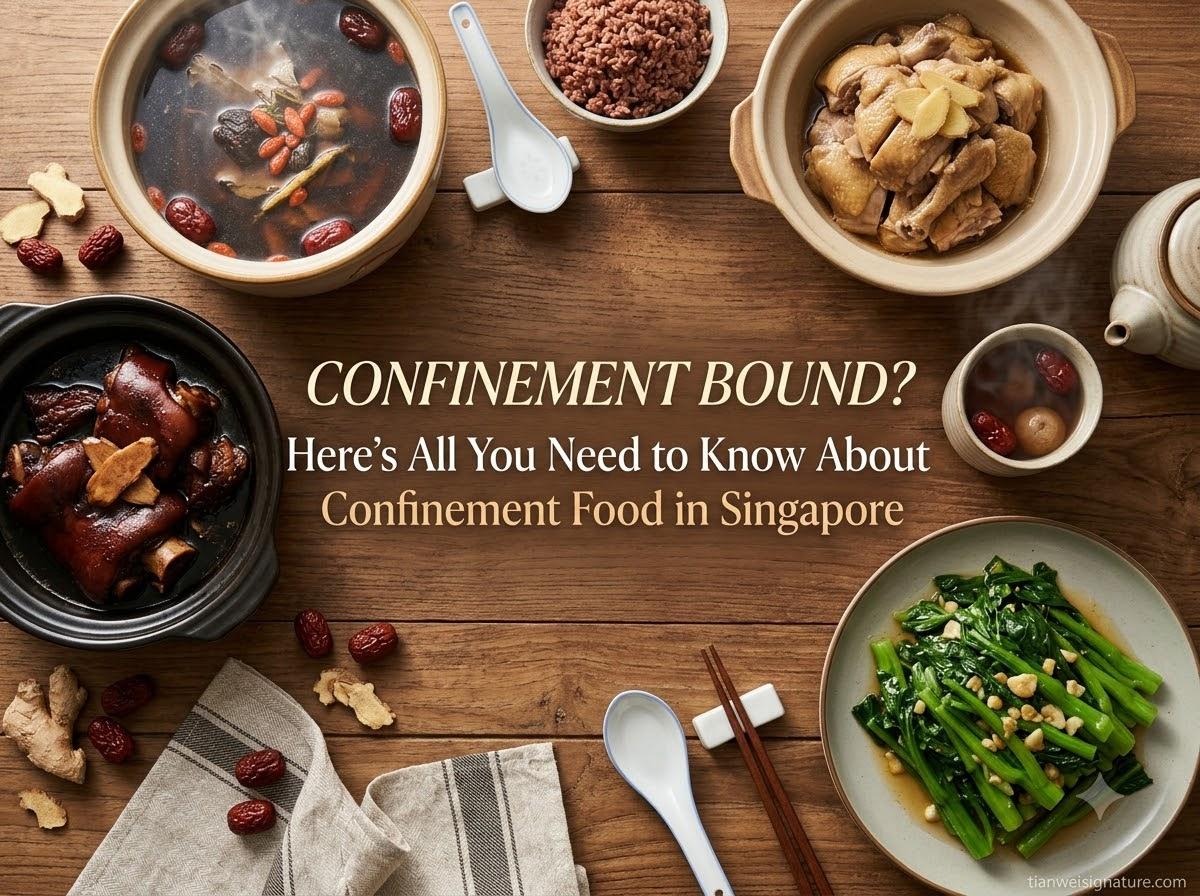
The week you come home with a newborn, time starts moving in strange ways. One minute it’s a blur of feeds and nappies, the next you realise you’ve eaten toast for the third time and it’s already 3pm.
That’s usually when expecting parents start searching for confinement food in Singapore and wondering what’s actually necessary, what’s family tradition, and what’s simply practical when you’re recovering.
Confinement meals can be comforting and grounding, especially if you’re a first-time parent or there’s no one at home to cook. The best approach is to treat confinement food as support: culturally familiar, nutritionally balanced, and safe for a postpartum household.
Confinement Food in Singapore: what it looks like in real life
In Singapore, confinement is commonly observed across Chinese, Malay and Indian families, often for about a month, give or take. You might hear it called “doing the month”, pantang, or simply “confinement”.
The food side of it tends to share a few themes:
- Warm, cooked meals that are easy on the stomach
- Regular soups and teas alongside main dishes
- Ingredients that families traditionally associate with recovery, like ginger, sesame oil, herbs, fish and chicken
Not every mum follows every rule. Many families mix modern nutrition with tradition, or do two weeks of stricter eating and then loosen up.
How long is confinement, and does it have to be strict?
Typical cultural durations you’ll hear in Singapore are:
- Chinese families often plan around 30 days
- Malay families may observe 40 to 44 days
- Indian families often plan around 40 days
These are customs, not medical deadlines. Your recovery timeline depends on your delivery, bleeding, sleep, feeding demands, and whether you’re healing from a tear or a C-section.
A helpful way to think about it is: if a rule makes you eat better, rest more, and reduces stress, it’s probably serving you. If it makes you anxious, hungry, or avoids whole food groups for weeks, it may need adjusting.
Confinement Chinese food and other traditions: similar goals, different flavours
Confinement chinese food often centres on ginger, sesame oil, vinegar, soups, fish, chicken, pork, and sometimes liver. Some families also use cooking wine, herbal soups, or red dates and wolfberries for sweetness.
Malay and Indian confinement traditions vary widely between households, but warm cooked meals, spiced broths, and certain traditional tonics are common themes.
One local research cohort found that postpartum dietary restrictions were still very common across the three major ethnic groups. That tells you one thing clearly: even in modern Singapore, families still care about this stage. It’s not “old-fashioned” to want it done well.
What your body actually needs after birth (simple, not fussy)
Postpartum recovery is hungry work. Tissue repair, sleep deprivation, and (if you’re breastfeeding) milk production all place real demands on your energy and nutrient intake.
A balanced confinement plate usually works best when it includes:
- A carbohydrate staple such as rice, potatoes, noodles, or oats
- A protein dish such as fish, chicken, eggs, tofu, beans, or lean meat
- One to two servings of vegetables, cooked if you prefer
- A soup or fluid-rich dish
- Fruit or a small snack between meals, depending on appetite
If constipation is an issue (very common postpartum), fibre and fluids matter. Oats, vegetables, fruit, beans, and brown rice can help, even if you prefer them served warm.
For fish choices, oily fish like salmon is useful in a postpartum diet and contains Vitamin D and omega-3 fats. If you’re watching iodine or mercury, rotate different fish rather than eating the same one daily.
Breastfeeding: what confinement food can and can’t promise
A good confinement food for breastfeeding plan supports you by making it easier to eat regularly, drink enough, and get protein and vegetables in without thinking too hard.
What it shouldn’t do is promise a guaranteed outcome. Milk supply is influenced by feeding or pumping frequency, latch, maternal rest, and individual health factors.
At Tian Wei, we keep things practical and mum-friendly. We use garlic, ginger, fenugreek, and green papaya in selected dishes to support breast milk supply, while still building meals around overall balance.
If you’re concerned about supply, it’s worth checking in early with a lactation professional. Food is supportive, but it’s rarely the whole story.
The tricky bits: wine, herbs, caffeine, and “cooling” foods
Some confinement dishes use rice wine or cooking wine. If you’re breastfeeding, the cautious route is to avoid alcohol-based dishes where possible and ask directly what’s added. It’s hard to be certain how much alcohol remains after cooking without knowing the method and time.
Herbal tonics and strong herbal blends also deserve respect. “Natural” doesn’t always mean “safe for everyone”, especially if you’re taking medication or have thyroid issues. If you’re unsure, check with your doctor before starting any herbal product.
Caffeine is another one that sneaks in when you’re exhausted. Many mums do fine with a moderate amount, but if baby seems unsettled, cut back and see if it helps.
As for “cooling” foods like fruit and vegetables, many mums tolerate them well, especially when cooked or served at room temperature. The bigger priority is that your diet stays varied enough to meet postpartum needs.
What safe confinement food delivery should get right
Food safety matters more than most people realise in the newborn phase. A stomach bug is miserable at the best of times. With stitches, a healing abdomen, and a baby who feeds around the clock, it can be a complete disaster.
A quick safety checklist for delivered meals:
- Ask when food is cooked and when it’s delivered
- Keep hot food hot, and don’t leave it sitting out for hours
- Refrigerate promptly if you’re not eating straight away
- Reheat until piping hot, especially soups
- Don’t “mix” new food into old leftovers in the fridge
Singapore food safety guidance commonly focuses on temperature control, including keeping hot food above 60°C, chilled food at 4°C or below, and reheating thoroughly.
What to look for when choosing a confinement meal provider
When you’re comparing confinement food menus in Singapore, think about what will make mealtimes easier once your baby is home. A few questions are worth asking before you book.
- Are lunch and dinner delivered separately so each meal arrives fresh?
- Can you book in advance and confirm your start date once your baby arrives?
- Can the provider tell you which dishes contain allergens, herbs or alcohol?
- Can you request less oil or salt, or leave out seafood for part of your confinement?
At Tian Wei, we serve traditional Chinese favourites alongside fusion dishes every week, starting in Week 1. You might enjoy Braised Pork Trotter in Black Vinegar one day and Coq au Vin or Seared Salmon with Cauliflower Cream another. If you enjoy herbal soups, Ma Kuang TCM reviews the herbal soups on our menu.
Want a closer look at what’s cooking? Explore Tian Wei’s confinement food menu.
Costs in Singapore, and how families usually plan it
Recent market listings in Singapore commonly place a 28-day lunch-and-dinner confinement package somewhere around $1,450 to $2,300, with premium or more specialised options going higher. Shorter one to two week plans have also become more popular, especially for families who just want coverage during the most intense first stretch.
Prices and promotions change frequently and may vary by location, meal frequency, GST, and customisation. Always confirm current package pricing and terms with the provider before booking.
A practical tip: if your family is debating whether to hire a confinement nanny or order meals, start with the pain points. If the biggest stress is “no one to cook”, delivery solves it cleanly. If the biggest stress is baby care and household chores, you may want additional help beyond food.
A quick myth check (so you can answer well-meaning relatives)
| Common belief | A more useful way to think about it |
| “You must avoid all cold food and drinks.” | Warm meals can feel comforting, but nutrition, hydration and tolerance matter more than temperature alone. |
| “Fruit and vegetables are harmful.” | Many mums do better with fibre and variety. Cooked veg and warm fruit options can be a gentle middle ground. |
| “Certain dishes guarantee more milk.” | No single recipe is a sure thing. Regular feeding or pumping and enough calories matter most. |
| “More herbs always means faster recovery.” | Herbs vary widely and can interact with medication. Check first if you’re unsure. |
Confinement is easier when you keep what helps, adapt what doesn’t, and stay focused on steady meals you’ll actually enjoy eating.
If you want confinement food that feels traditional yet never boring, plus the convenience of two fresh deliveries daily, Tian Wei is built for real postpartum life. Book Now. Book 1 month before your EDD and enjoy an early bird discount. To lock in your dates and activate later when baby arrives, check out booking details here.
