

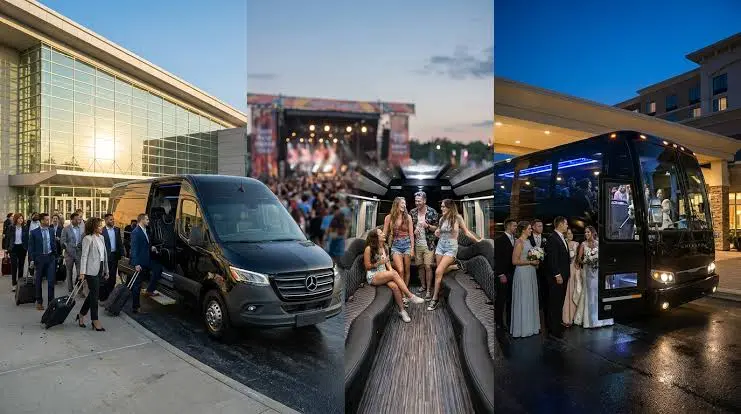
Organising transport for a large gathering involves more than moving people between locations. Conferences, festivals, sporting fixtures, weddings and exhibitions create temporary travel patterns that can place pressure on roads, parking areas and public transport. A structured plan helps attendees arrive at suitable times, reduces congestion near the venue and gives organisers greater control over the programme.
When many guests begin their journey from the same hotel, station, workplace or city district, shared transport can reduce the number of individual vehicles arriving on site. Planning coach hire for events therefore forms part of the wider logistics strategy, alongside venue access, staffing, security and emergency procedures.
Understanding Attendee Travel Patterns
The first stage is to establish where passengers are coming from and when they need to arrive. Registration data, hotel bookings and ticket information can reveal likely departure points. Business delegates may travel from airports and central hotels, while festival visitors may arrive from railway stations or park-and-ride areas. Organisers should separate confirmed information from assumptions. Guest numbers often change, and some attendees may arrange their own travel.
Building a margin into passenger estimates helps prevent overcrowding without creating excessive unused capacity. Peak periods matter most because the number travelling at the busiest time usually determines the main vehicle requirement.
Creating Practical Routes
Route design should reflect road conditions, journey length and the layout of each pick-up point. A route that appears direct on a map may be unsuitable for a large vehicle because of low bridges, narrow streets, weight limits or restricted turning space.
Pick-up locations need enough room for passengers to wait without blocking pavements or entrances. They should be easy to identify and, where possible, well lit. Organisers must also decide whether a direct journey is more reliable than a service with several stops. Extra stops improve coverage but add time and create more opportunities for delay.
Building a Realistic Timetable
Schedules should include more than the driving time shown by navigation software. Boarding can take longer when passengers carry luggage, require assistance or are unfamiliar with the location. Traffic near venues often becomes heavier shortly before an event, while security checks and controlled entrances can slow access.
A timetable should include loading time, traffic allowances, driver breaks and a buffer before key activities. Departure plans should recognise that guests rarely leave at exactly the same moment. Some events have a clear finish, while others produce several waves of demand. Staggered departures or a shuttle arrangement may be more practical than one final journey.
Coordinating with the Venue
Transport plans should be agreed with the venue rather than developed in isolation. Venue staff can confirm where large vehicles may enter, wait, turn and collect passengers. Arrival zones should be separated from pedestrian queues wherever possible.
At busy sites, marshals may be needed to direct vehicles and guide passengers. Organisers should also confirm whether vehicles may remain on site or must use an off-site holding area, as this affects driver scheduling and return journeys.
Considering Accessibility and Passenger Needs
Inclusive planning requires early attention. Passengers may need step-free access, space for mobility equipment, priority seating or additional boarding time. These requirements should be collected through registration forms or direct communication while respecting privacy.
Other practical needs can include luggage storage, child seating arrangements, language support and clearly marked meeting points. For longer journeys, comfort breaks and access to suitable facilities should be considered. Such details should not be left until boarding begins, because last-minute changes can disrupt the wider schedule.
Managing Safety and Compliance
Safety responsibilities extend across the full journey. Organisers should maintain emergency contacts and ensure staff know what to do if a vehicle is delayed, diverted or unable to reach the planned stop. Drivers need clear instructions about venue access, site contacts and passenger requirements.
Legal requirements vary by location, vehicle type and journey. Insurance, licensing, driver working-time rules and vehicle standards should be checked during supplier assessment. When arranging coach hire for events, organisers should record vehicle capacity, operator contacts, planned routes, collection times and contingency arrangements.
Communicating with Attendees
A transport plan can fail if passengers do not understand it. Travel information should be sent in advance and repeated near the event date. It should include the exact meeting point, departure time, expected boarding time, luggage limits, contact numbers and instructions for missed departures.
Messages should use consistent place names and avoid vague descriptions such as “outside the station” when several exits exist. Maps, photographs and location pins can help, but written directions remain useful when mobile data is unavailable. On the day, signs and staff instructions should match the wording used before the event.
Preparing for Disruption
Delays may result from traffic incidents, severe weather, vehicle faults, late-running trains or changes to the programme. A contingency plan should identify likely problems and define who can make decisions. Responses might include holding a vehicle briefly, redirecting passengers, arranging another collection or adjusting the event schedule.
Communication during disruption should be brief and factual. Staff should avoid giving estimated departure times unless they are supported by current information. A central contact point can reduce conflicting instructions from different teams.
Reviewing Transport Performance
After the event, organisers can compare planned and actual journey times, passenger numbers, waiting periods, missed collections and reported accessibility issues. Feedback from drivers, venue staff and attendees may reveal problems that were not visible from the control point.
This information can improve future route design, staffing and communication. It may show that certain departure points were unnecessary or that demand continued later than expected. Treating transport as a measurable operational function turns one-off experience into a repeatable planning process.
A Connected Part of Event Logistics
Group transport affects punctuality, traffic flow, accessibility and the movement of people through an event site. Its success depends on accurate data, realistic timing, clear communication and coordination with venues and operators. When these elements are considered together, travel becomes an integrated part of event management rather than an isolated booking task.
