

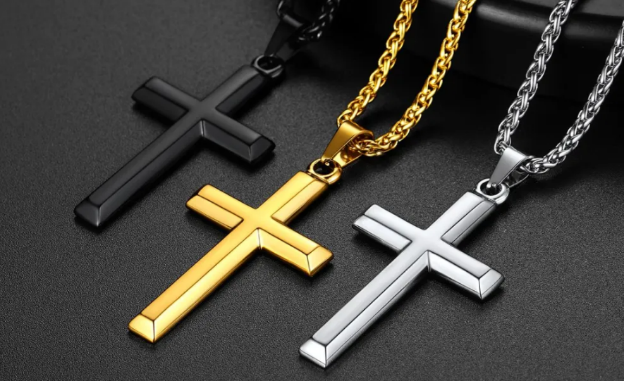
A cross chain is one of the most enduring pieces of jewelry out there, worn as a symbol of faith, a family heirloom, or simply a design that’s stood the test of time regardless of religious meaning. With so many pendant shapes, chain styles, and materials on the market, picking the right one comes down to a handful of practical details most buyers overlook.
What Should You Know Before Buying a Cross Chain?
The pendant style and chain type matter just as much as the material, since a heavy cross on a thin chain will sag and twist while a small pendant on a thick chain can look mismatched. Cross pendants generally range from small, understated designs around half an inch tall to larger statement pieces closer to 2 inches, and the chain should scale proportionally to support the weight without looking off balance.
A few things worth checking before buying:
- Pendant weight vs chain gauge — heavier crosses need a sturdier chain, ideally a curb, box, or franco style rather than a delicate rope chain.
- Clasp type — lobster clasps work fine for lighter pieces, but a spring ring or box clasp holds up better under repeated daily wear.
- Chain length — shorter 16-18 inch chains sit the pendant at the collarbone, while 20-24 inches lets it hang lower on the chest.
- Bail size — make sure the loop at the top of the pendant is wide enough to move freely on the chain without getting stuck.
- Material match — pairing a gold pendant with a silver chain, or vice versa, is a common mistake that’s easy to avoid by checking both listings before buying.
Shoppers wanting to browse a full range of pendant styles and chain pairings in one place can look through this collection of cross chain options, spanning simple minimalist crosses to more detailed, ornate designs.
What Materials Work Best for a Cross Chain?
Material choice affects both appearance and how much upkeep the piece needs, with stainless steel standing out as the most practical option for anyone wearing the chain daily. Solid gold holds its shine indefinitely and resists tarnish completely, but it comes at a much higher price point, especially for larger pendant designs that use more metal.
| Material | Tarnish Resistance | Typical Price Range | Best For |
| Stainless steel | Excellent | $20-60 | Daily wear, gym, swimming |
| Gold-plated | Fair, wears at contact points | $35-90 | Occasional or dressier wear |
| Sterling silver | Good, needs occasional polishing | $40-120 | Balance of price and shine |
| Solid 10k-14k gold | Excellent | $300-1500+ | Long-term or heirloom pieces |
Why Has the Cross Pendant Stayed Popular Across So Many Styles?
The cross has remained a consistent jewelry design for centuries because its simple geometric shape adapts easily to nearly any chain type, metal, or size without losing its recognizable form. That flexibility is part of why it shows up everywhere from minimalist everyday jewelry to heavily detailed, diamond-accented statement pieces worn for special occasions.
Because the shape itself is so simple, small design choices end up making a big visual difference — rounded edges read as softer and more modern, while sharp, angular edges give a bolder, more traditional look. Some versions incorporate a slight curve or beveled edge along the arms of the cross, which changes how light catches the surface compared to a flat-cut pendant.
Is Stainless Steel a Good Long-Term Choice for a Cross Chain?
Stainless steel holds up exceptionally well over time because it resists corrosion, scratching, and skin discoloration far better than gold-plated or sterling silver alternatives, making it a practical choice for something worn every day. Unlike gold-plated pieces, which can start showing a duller base metal at the edges after a year or two of regular contact with skin and clothing, stainless steel keeps its finish with minimal care.
For buyers who want a durable option that doesn’t require regular polishing or careful storage, a stainless steel cross chain offers that low-maintenance durability while still keeping the classic pendant silhouette people look for in this style.
How Do You Keep a Cross Chain Looking New?
Basic care goes a long way regardless of material — wiping the chain down after wear removes oils and sweat that dull shine over time, and storing it flat or hanging prevents tangling or bending, especially on more delicate chain styles. Gold-plated and sterling silver pieces should come off before swimming or showering, since prolonged water and soap exposure speeds up tarnishing and plating wear.
Stainless steel is the exception here, tolerating water exposure far better than other common materials, though it still benefits from an occasional wipe to keep the surface looking its best.
Frequently Asked Questions
What chain length works best for a cross necklace? Most people choose between 18 and 20 inches for a cross pendant, which sits the piece comfortably at or just below the collarbone, though preference varies by neck size and how the pendant is meant to sit.
Is stainless steel a good material for a cross chain? Yes, stainless steel resists tarnish, scratching, and discoloration extremely well, making it one of the most practical choices for a cross chain worn daily without much upkeep.
Can you wear a cross chain in the shower or pool? Stainless steel versions handle water exposure well, but gold-plated and sterling silver pieces should be removed before swimming or showering to avoid accelerated tarnishing or plating wear.
What’s the difference between a gold-plated and solid gold cross chain? Gold-plated pieces have a thin layer of gold over a base metal and cost significantly less, while solid gold holds its color and shine permanently but comes at a much higher price.
How do I know what pendant size fits my chain? As a general rule, heavier or larger cross pendants need a thicker chain gauge to support the weight properly, while smaller, lighter pendants pair well with thinner chains without looking unbalanced.
