

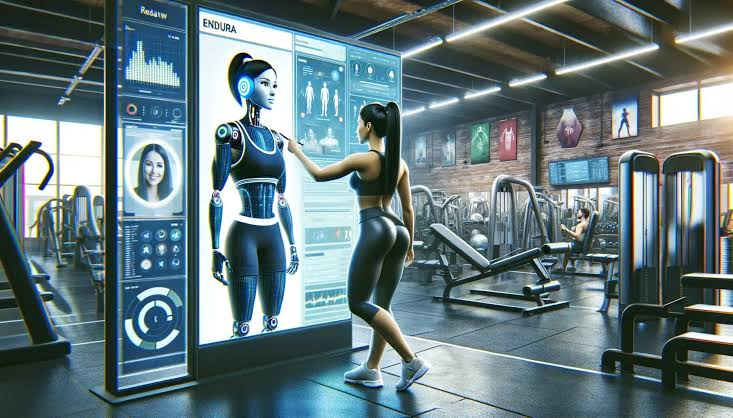
I’ve watched the same autopsy play out more times than I’d like. A fitness app ships an “AI coach,” the launch week numbers look fantastic, and ninety days later the retention chart has fallen off a cliff. The team gathers to blame the model — not enough fine-tuning, wrong provider, need a bigger context window.
It’s almost never the model.
After a few years of building these products, I can tell you the churn usually traces back to something less glamorous: the “coach” was a chatbot wearing a coach’s uniform. It answered questions. It generated plans. It demoed beautifully. What it never did was notice anything about the person using it. And people don’t stay loyal to software that doesn’t notice them.
That gap — between a product that demos well and one people keep paying for — is the real problem in fitness software development right now, and it’s an engineering and product problem long before it’s an AI one. Here’s what I’ve learned separates the coaches people keep from the ones they delete by week three.
The Chatbot Trap
Conversational AI is the easy 20% of an AI fitness coach, and teams keep shipping it as if it were the whole product. The flaw is structural: a chatbot is reactive. It sits there and waits for the user to show up and ask. A coach is proactive — it reaches out before the user thinks to, because it already saw that their sleep cratered for three nights and today’s heavy squat session is a mistake waiting to happen.
Most users don’t open a fitness app just to have a conversation. They open it to feel like they’re progressing and to be told what to do next with some confidence. A chat box quietly hands that work back to them. Every “What should I do today?” is a small tax, and small taxes compound into uninstalls.
The test I use is blunt. If deleting the chat interface would gut your product, you built a chatbot. If deleting it would barely register — because the coaching happens through the program itself — you built a coach.
| Looks great in the demo | What actually retains |
| Answers questions on request | Adjusts the plan before you ask |
| One static program, start to finish | Readiness-based periodization that reshuffles around real life |
| Logs your workout after the fact | Real-time form feedback while you move |
| Works only in the gym | Follows you from gym to living room to hotel |
| Hands down a verdict | Explains the “why” behind today’s session |
Retention is a data problem before it’s an AI problem
Wearables are the number one fitness trend in the US — the ACSM’s 2026 Worldwide Fitness Trends survey put them back at the top, and Wearables remain one of the leading fitness trends in the US, with many consumers already using them to track activity, sleep, and recovery. So your users arrive with heart rate variability, sleep stages, resting heart rate, step counts, and recovery scores already flowing. Accessing that data is only the beginning. Turning it into a reliable coaching decision is where most apps quietly fail. Turning it into a decision is where most apps quietly fail.
Pulling clean, unified signals out of Apple Health, Google Fit, Garmin, Whoop, and Oura is the unglamorous work that nobody puts on a slide: different sampling rates, missing stretches, duplicate entries, mismatched units, syncs that land six hours late. On one build, a user’s Apple Watch and their phone were both logging the same morning run, so our load calculation double-counted it, flagged them as overtrained, and prescribed a deload they didn’t need. One reconciliation bug, and the coach looked like it had no idea what the person was doing. That’s the whole game — nothing erodes trust faster than a recommendation that ignores the 10K someone ran yesterday.
This is the slice of fitness software development that never makes the pitch deck and decides whether the product works. Get the data layer right and a modest model feels perceptive. Get it wrong and the smartest model on the market feels clueless.
What that data layer has to do, reliably, every day:
- Ingest from multiple wearable and phone APIs with wildly different formats and refresh rates.
- Deduplicate and reconcile conflicting entries — two devices, one workout.
- Fill or flag gaps without inventing data the user never generated.
- Normalize everything into one queryable model your coaching logic can trust.
- Do all of it fast enough that this morning’s readiness reflects last night’s sleep.
The mechanics of a coach that adapts
Once the data is trustworthy, good coaching comes down to three things working together.
Adaptive programming
A real coach periodizes. When HRV trends down across several days and sleep is short, it pulls back volume or swaps the heavy day for mobility — and it says why. When someone is hitting every session and recovering well, it nudges the load up. Static plans that ignore the human following them are the single most common reason users tell us an app “doesn’t get me.”
Behavior, not just exercise science
The core principles of exercise programming are well established. Adherence, however, is much harder to solve. Adherence is not. The coaches that retain treat behavioral design as a first-class feature: when to nudge, when to shut up, how to frame a missed week so the user comes back instead of churning out of shame. A small finding that stuck with me — In our experience, notifications timed around a user’s usual training window can be more effective than generic morning reminders. Because they caught people at the moment of decision. Tying today’s session back to the goal they set during onboarding does more for retention than another animated exercise GIF.
Close the loop fast
Feedback that arrives a day later barely counts. The apps gaining ground use on-device computer vision to watch a squat or a deadlift and return real-time form cues and a rep score, the way a trainer’s eyes would. Immediate, specific feedback is what makes someone feel coached rather than tracked — and it’s a real software development challenge: pose estimation running on the phone, tight latency budgets, and graceful handling of bad lighting and awkward camera angles.
Meet users where they train
Nobody trains in one place anymore. Gym Monday, living room Wednesday, a hotel gym Friday. A coach that can’t stitch those contexts together feels broken. Hybrid-aware programming — adapting to the equipment and space on hand without forcing the user to reconfigure anything — is quietly one of the strongest retention levers you can build, and one of the least marketed.
The trust layer nobody wants to build (and everyone needs)
The moment your app touches health data, the stakes change. HIPAA does not automatically apply to every health-related data point or every fitness app. Applicability depends on the entity, its role, and how the information is handled. A HIPAA-ready architecture — encryption, access controls, audit trails, disciplined data handling — is not something you bolt on after your first enterprise deal asks for it. I’ve seen a retrofit eat an entire quarter. Build it in from day one [EXTERNAL LINK: HHS.gov HIPAA guidance for developers].
Trust is also about transparency. Tell users what you track and why. Let them see the reasoning behind a recommendation instead of handing down a black-box verdict. Explainability isn’t only an ethics checkbox — a coach whose advice makes sense is a coach people keep listening to.
Why this is a senior build, not a weekend feature
Look back over what a retaining AI coach actually requires: multi-source data engineering, applied ML, behavioral design, on-device computer vision, and health-grade compliance — plus enough fitness knowledge to make all of it coach like a human instead of a spreadsheet. That combination is why generic software development services tend to struggle with these products. A team that can ship a competent CRUD app is not automatically a team that can fuse live wearable streams and keep PHI safe under audit.
This is specialized fitness software development, and it rewards people who have already made the expensive mistakes once. If you’re weighing a build, the partners worth your time should be able to talk as fluently about HRV normalization and HIPAA as they do about onboarding screens.
A practical way to sequence it:
- Pick one retention metric that matters — week-4 active users is a good start — and design backward from it.
- Build the data layer first: ingestion, cleaning, a unified model, before any “AI” feature ships.
- Instrument everything, so you can see exactly where users drop and why.
- Ship adaptive programming before conversational features. Put the coaching in the plan, not the chat.
- Bake in privacy and compliance from the first commit.
Where to start
The apps winning on retention in 2026 aren’t the ones with the cleverest chatbot. They’re the ones that quietly watch, adapt, explain themselves, and respect the user’s data — and that experience is engineered, not prompted. Treat it as the serious fitness software development project it is, get the data and trust layers right early, and the “AI coach” stops being a demo feature and becomes the reason people stay.
FAQ
What’s the difference between an AI fitness coach and a chatbot?
A chatbot reacts to questions. An AI fitness coach proactively adjusts your program based on your data — recovery, sleep, performance — and tells you what to do next without being asked. The coaching lives in the plan, not the chat window.
How do wearables improve retention in a fitness app?
They let the app respond to the actual person using it. When sleep or HRV drops, a well-built app eases back; when recovery is strong, it pushes. That responsiveness is what makes users feel understood, which is the core driver of long-term retention — as long as the underlying wearable data is cleaned and unified first.
Does an AI fitness app need to be HIPAA compliant?
Whether HIPAA applies depends on the type of organization, its role, and how health information is collected and handled. For products that may process protected health information on behalf of covered entities or business associates, HIPAA requirements should be considered from the architecture stage.
How much does it cost and how long does it take to build an AI fitness coach?
It depends on scope, but expect the data and integration layer to absorb real time and budget before any coaching logic ships. Most serious builds run in phases — data foundation, then adaptive programming, then advanced features like computer-vision form checks — rather than launching everything at once. Budget for the unglamorous data work; it’s where the product is won or lost.
What should I look for in a fitness software development partner?
Proven work in the space, comfort with wearable-data engineering and ML, a real grasp of health-data compliance, and enough fitness understanding to make the product coach like a human. A vendor offering only generic software development services, with no health or fitness track record, is a genuine risk for a build like this.
