

Most organizations have some version of a disaster recovery plan sitting in a shared drive somewhere. The problem is that most of those plans were written once, never tested, and bear little resemblance to the actual infrastructure they are supposed to protect. When a real incident occurs, whether a ransomware attack, a hardware failure, or a natural disaster, teams discover the gaps in the worst possible moment. Building a recovery plan that actually works requires treating it as a living operational document, not a compliance checkbox.
The foundation of any effective recovery plan is an accurate and current inventory of your infrastructure. You cannot recover what you have not documented. This means knowing which systems are mission-critical, what their dependencies are, and how long the business can realistically tolerate each one being offline. For organizations working with a managed service provider, this inventory process is often supported through IT Hardware Maintenance Services, which ensures that physical assets are tracked, maintained, and included in recovery planning from the start. Hardware that is poorly maintained or undocumented becomes a liability the moment something goes wrong.
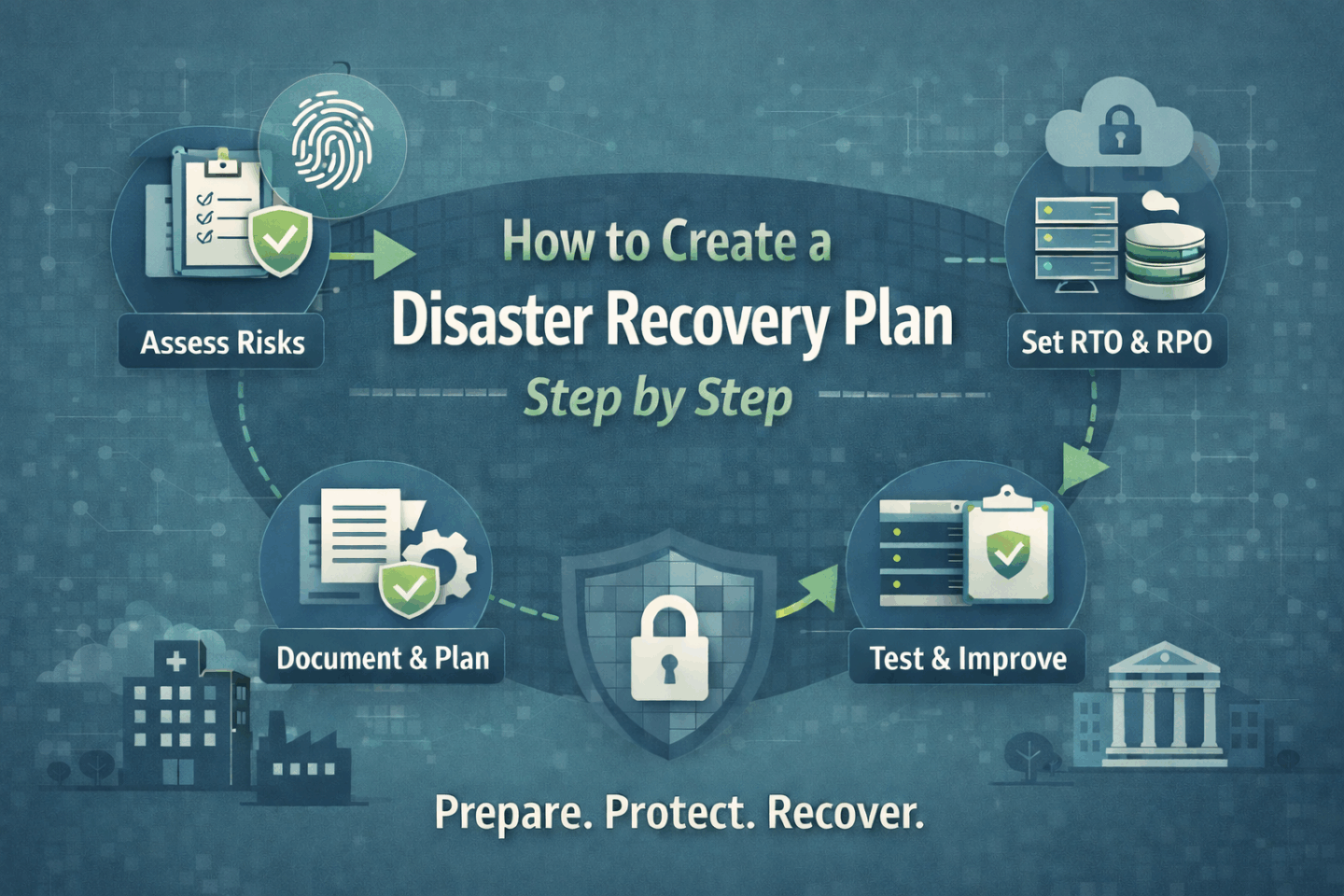
Recovery time objectives and recovery point objectives are the two metrics that should drive every decision in your plan. The recovery time objective defines the maximum acceptable downtime for a given system. The recovery point objective defines how much data loss the business can absorb, measured in time. These numbers are not technical preferences — they are business decisions that need to come from leadership with input from operations. Once those targets are established, your backup strategy, failover architecture, and vendor agreements all need to be aligned to meet them. Many plans fail because the technical team set conservative targets without consulting the business units that depend on those systems daily.
Testing is where most plans reveal their true state. A plan that has never been tested is not a plan — it is a theory. Tabletop exercises are useful for walking through decision trees and communication protocols, but they do not replace actual failover tests. At minimum, organizations should conduct a full recovery simulation annually, ideally more frequently for systems with tight recovery objectives. The simulation should include restoring from backup, verifying data integrity, and confirming that staff can access critical applications through the recovery environment. Every test will surface something unexpected, and that is the point.
Industries with complex operational technology environments face additional recovery challenges. Manufacturing IT Support providers understand that production environments often include legacy systems, proprietary control software, and equipment that cannot simply be virtualized or migrated to the cloud without careful planning. Recovery strategies in these environments need to account for the interaction between IT systems and operational technology, and the plan should be developed in coordination with both teams rather than treating them as separate silos.
Communication is another underestimated component. When an incident occurs, your team needs to know exactly who is responsible for what, in what order, and through what channels. If your primary communication tool is the email system that just went down, that is a problem. Designate backup communication channels in advance, maintain an out-of-band contact list, and make sure every stakeholder knows their role before an incident happens.
Finally, recovery plans need to evolve as the business evolves. Infrastructure changes, personnel changes, vendor contracts change. A plan written for last year’s environment will not protect this year’s operations. Build a review cycle into your organizational calendar and treat it with the same seriousness as a financial audit. The cost of a thorough, tested recovery plan is always less than the cost of an unplanned outage with no roadmap to resolution.
If your organization needs help building or validating a disaster recovery plan that reflects your actual environment, Net-I is ready to work with you.
