

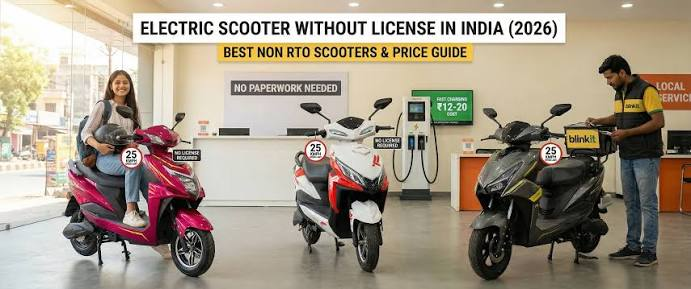
If you are looking for an electric scooter without license, the first thing to understand is that not every electric scooter in India qualifies for licence-free use. The exemption generally applies only to low-speed electric two-wheelers that meet specific technical limits.
Current Indian EV guides consistently identify two important thresholds: a top speed of no more than 25 km/h and motor output of no more than 250W. Scooters that stay within those limits are commonly treated differently from higher-speed electric two-wheelers for licensing and registration purposes.
What Is an Electric Scooter Without License?
An electric scooter without license is typically a low-speed electric two-wheeler that falls within the exemption limits applicable to certain low-powered EVs.
These scooters are mainly designed for:
- Short city commutes
- Local errands
- College travel
- Delivery routes
- Neighbourhood use
- First- and last-mile transport
They prioritise controlled speed and lower running costs rather than high-speed travel.
What Are the Rules for an Electric Scooter Without License in India?
The most important factors are the scooter’s speed and motor specification.
Current Indian market guides identify low-speed electric scooters as models with:
- Maximum speed of 25 km/h or below
- Motor output of 250W or below
Models within these limits are commonly listed as scooters that do not require a standard driving licence or RTO registration.
However, riders should always verify the exact homologation and specifications of a particular vehicle before using it on public roads. A scooter that looks similar but has a more powerful motor or higher top speed may fall under different requirements.
Do All Electric Scooters Avoid Driving Licence Requirements?
No.
The fact that a scooter is electric does not automatically make it licence-free.
Higher-speed electric scooters generally fall under regular motor-vehicle requirements, which can include:
- A valid driving licence
- Vehicle registration
- A number plate
- Insurance requirements
The exemption is associated with qualifying low-speed models rather than EVs as a whole.
What Is the Difference Between Low-Speed and High-Speed Electric Scooters?
The biggest practical difference is performance and regulatory treatment.
Low-Speed Electric Scooters
Low-speed models are designed around controlled urban travel and typically operate at up to 25 km/h when they fall within the licence-exempt category.
They can be useful for short-distance travel where maximum speed is less important.
High-Speed Electric Scooters
Higher-speed models are designed for longer or faster urban travel and generally require the documentation expected for motor vehicles.
Bounce Daily, for example, lists a low-speed rental variant with a top speed of up to 25 km/h and a high-speed option capable of up to 55 km/h. Its current service page also provides driving licence assistance at its hub for eligible riders.
Who May Benefit From a Low-Speed Electric Scooter?
Low-speed electric scooters can work well for riders whose daily routes are relatively short and do not require high-speed roads.
Typical users may include:
- Students
- Gig workers
- Delivery partners
- Office commuters
- Local business workers
- Riders making short daily trips
A low-speed scooter may be less suitable for long commutes, highways, or routes where faster traffic makes 25 km/h impractical.
Is an Electric Scooter Without License Good for Delivery Work?
It can be, depending on the route.
For short delivery zones, low-speed EVs can provide a practical option because they are inexpensive to operate and easy to manoeuvre through dense urban areas.
Important factors to consider include:
- Daily riding distance
- Battery range
- Access to charging or swapping
- Delivery area
- Payload
- Road conditions
Bounce Daily’s low-speed rental scooter is positioned for local commuting and delivery work, with a stated range of up to 85 km and swappable battery support.
That range can help reduce interruptions for riders who make repeated short trips during the day.
Do Low-Speed Electric Scooters Need Registration?
Qualifying low-speed electric scooters that meet the applicable speed and motor thresholds are commonly sold as non-RTO models.
That is why many current listings describe them as scooters that can be used without standard registration requirements.
Still, do not rely only on a seller calling a vehicle a “low-speed EV.”
Check the actual:
- Rated motor power
- Certified top speed
- Vehicle documentation
- Manufacturer classification
This helps confirm whether the specific model qualifies for the exemption.
Do You Need Insurance for an Electric Scooter Without License?
Requirements can differ depending on the scooter’s legal classification.
Some low-speed vehicles that fall outside regular motor-vehicle registration requirements may not be subject to the same compulsory insurance rules as registered scooters.
Even where insurance is not mandatory, riders may still choose insurance for financial protection against theft, damage, or third-party losses.
Check the rules that apply to the exact vehicle before riding.
What Should You Check Before Renting a Low-Speed Electric Scooter?
Do not choose a scooter based only on whether it is described as licence-free.
Consider the complete daily-use experience.
Range
Make sure the practical range matches your expected daily travel.
Battery System
A swappable battery can be useful for riders who cannot leave the scooter charging for several hours.
Speed
A 25 km/h scooter works best for local roads and short routes rather than high-speed corridors.
Rental Terms
Check the rental duration, deposits, documentation, payment structure, and return requirements.
Licence Requirements
Ask the rental provider exactly what documentation is required for the scooter you are booking.
Bounce Daily currently states that it provides driving licence assistance at its hub for a nominal fee and advises riders to check the app or visit a hub to complete the process.
Should You Rent or Buy a Low-Speed Electric Scooter?
Buying may make sense for someone who expects to use the same scooter for several years and is comfortable handling maintenance, battery ownership, and repairs.
Renting can be useful when you want:
- Lower upfront commitment
- Flexible daily or monthly use
- Access to managed vehicles
- Support for battery or maintenance needs
- A scooter primarily for temporary work or commuting
Gig workers and delivery riders may find rental models particularly useful when mobility is required for earning but purchasing a vehicle upfront is not practical.
Are Low-Speed Electric Scooters Suitable for Daily Commuting?
Yes, when the commute matches the vehicle’s limitations.
A rider travelling a few kilometres through local streets may find a low-speed EV practical and inexpensive.
Someone regularly using faster arterial roads may benefit more from a high-speed scooter with the required driving licence and registration.
The right choice depends on the route rather than simply whether a licence is required.
Rent an Electric Scooter for Everyday City Travel
An electric scooter without license can be a practical option when the vehicle genuinely falls within India’s low-speed EV limits. The key is to verify the scooter’s speed, motor rating, documentation, and intended route before riding.
Bounce Daily offers low-speed electric scooter rentals for delivery partners, commuters, students, and gig workers, along with driving licence support at its hub. Explore Bounce Daily’s electric scooter without license options to compare low-speed and high-speed rental choices and understand the eligibility requirements before you get on the road.
