

Lighting accounts for nearly 40% of a typical warehouse’s electricity bill, making it one of the largest controllable operating expenses in logistics and storage facilities. For many warehouse managers, the reality is grim: rows of outdated fluorescent or metal halide fixtures burn energy around the clock, illuminating empty aisles where no one is working. This inefficiency drains budgets while delivering inconsistent visibility that compromises worker safety and productivity. LED motion sensor lights offer a smarter approach, combining the inherent efficiency of LED technology with intelligent occupancy detection that activates illumination only when and where it’s needed. Designed specifically for warehouse managers seeking measurable cost reductions without sacrificing reliability, these systems can slash energy consumption dramatically while providing superior light quality. In this article, we’ll explore how energy-saving LED motion sensor lights transform warehouse operations, examine high-performance solutions like the Hyperlite HBF Series, and provide a practical roadmap for implementation that delivers immediate and long-term returns.
The Critical Role of Lighting in Warehouse Efficiency
In facilities spanning tens of thousands of square feet with ceiling heights reaching 40 feet or more, lighting isn’t merely a convenience—it’s a fundamental operational requirement that directly influences three critical areas. First, safety: poorly lit aisles, loading docks, and racking zones increase the risk of forklift collisions, trip hazards, and mislabeled inventory errors that lead to costly accidents and workers’ compensation claims. Second, productivity: workers navigating dim environments move slower, make more picking errors, and experience greater eye strain during long shifts, all of which erode throughput. Third, cost: traditional metal halide and fluorescent systems consume enormous amounts of electricity, require frequent bulb replacements at height—demanding lifts and maintenance crews—and generate excessive heat that strains HVAC systems during warmer months.
Warehouse managers face a compounding challenge. Aging fixtures degrade in output over time while continuing to draw full wattage, meaning facilities gradually get darker even as energy bills remain unchanged. Scheduled relamping programs add labor costs and operational disruptions. These pain points have accelerated the industry’s shift toward energy-efficient LED technology, which addresses all three concerns simultaneously by delivering brighter, more uniform illumination at a fraction of the energy input while lasting years longer than conventional alternatives.
What Are LED Motion Sensor Lights for Indoor Use?
A LED motion sensor light indoor system integrates two proven technologies into a single intelligent fixture: high-efficiency LED chips that convert electricity into bright, consistent illumination, and passive infrared or microwave sensors that detect human movement within a defined zone. When the sensor registers activity—a forklift turning into an aisle, a picker approaching a shelf—the light activates instantly at full brightness. Once the area is vacated and a preset time delay expires, the fixture dims to a low standby level or switches off entirely, eliminating energy waste in unoccupied spaces.
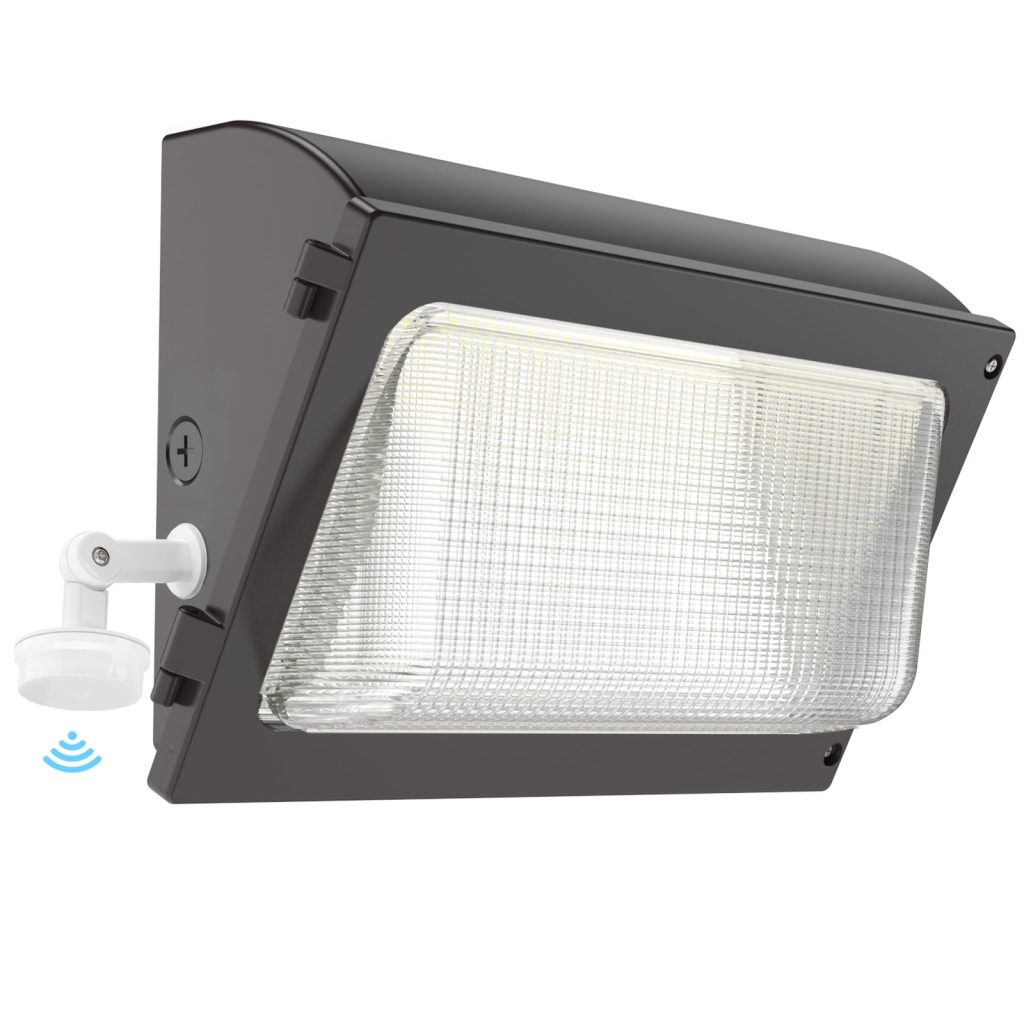
In warehouse environments, this automated on/off functionality solves a persistent problem. Traditional static lighting forces managers to choose between leaving all fixtures burning continuously or relying on workers to manually toggle switches—a practice that rarely happens consistently across a 100,000-square-foot facility. Motion-activated LED systems remove that dependency entirely. They respond to real-time occupancy patterns, delivering light precisely where work is happening while keeping inactive zones dark. The result is energy consumption that mirrors actual operational activity rather than a fixed overhead cost. Beyond savings, these systems improve safety by ensuring any area a worker enters is immediately illuminated to full intensity, eliminating the dangerous warm-up delays common with older discharge lamps.
Introducing the HBF Series: A High-Performance LED High Bay Light
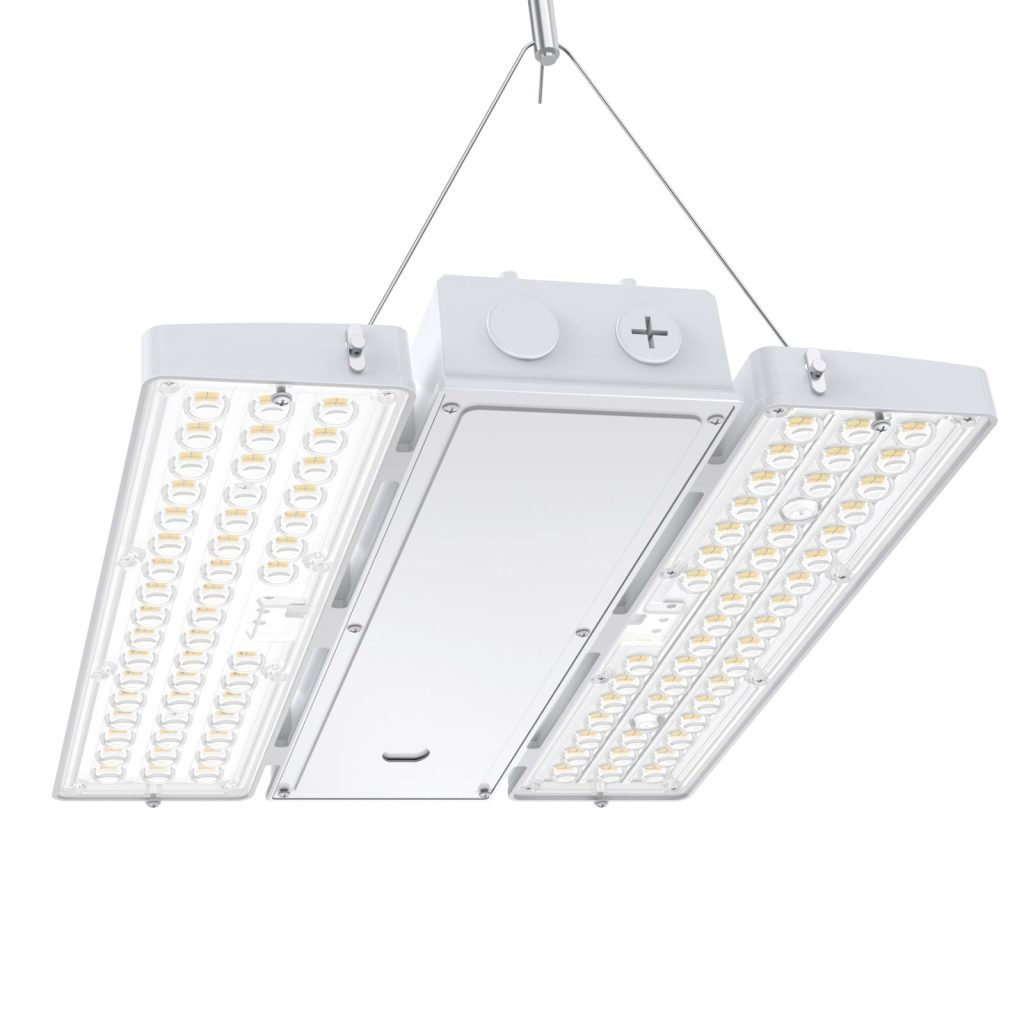
The Hyperlite HBF Series represents a purpose-built LED High Bay Light engineered for the demanding conditions of commercial warehouse environments. Unlike general-purpose fixtures retrofitted for industrial use, the HBF Series was designed from the ground up to deliver powerful, uniform illumination across vast floor areas and tall racking systems while consuming a fraction of the energy demanded by legacy lighting. Its robust construction withstands the vibration, dust, and temperature fluctuations common in active distribution centers, making it a dependable workhorse that warehouse managers can install and largely forget about for years. When paired with integrated motion sensing capabilities, the HBF Series becomes more than a light fixture—it becomes an intelligent energy management tool that responds dynamically to facility activity.
Key Specifications and Benefits
The HBF Series delivers 23100 lumens of bright, consistent output that eliminates dark spots between racking bays and ensures clear visibility for barcode scanning, label reading, and safe equipment operation. This impressive lumen output is achieved at significantly reduced wattage compared to the metal halide equivalents it replaces, translating directly into lower electricity draw per fixture across your entire facility. Available in color temperatures suited to task-intensive environments, the HBF Series produces crisp white light that reduces eye fatigue during extended shifts and improves color rendering for inventory identification. The combination of high output and low energy consumption means each fixture pays for itself through operational savings, while the extended rated lifespan eliminates the cycle of costly relamping that plagues conventional systems.
Comparison with Traditional Lighting
A standard metal halide high bay fixture requires up to ten minutes to reach full brightness after ignition and consumes substantial energy during warm-up and restrike periods—making motion-activated control essentially impossible. The HBF Series activates instantly, enabling seamless integration with occupancy sensors that would be impractical with older technology. On maintenance alone, metal halide lamps typically require replacement every 15,000 to 20,000 hours, each change demanding a scissor lift and trained technician working at height. The HBF Series operates for dramatically longer periods without degradation, reducing maintenance interventions to a fraction of what traditional systems demand. Energy consumption tells an equally compelling story: facilities replacing aging fluorescent or HID fixtures with HBF Series LED High Bay Lights routinely see electricity usage for lighting drop by 60% or more, even before factoring in the additional savings from motion-activated dimming during low-traffic periods.
Energy Savings and Commercial Lighting Advantages
The financial case for energy-saving lights in warehouse environments is compelling and measurable. Facilities that transition from conventional HID or fluorescent systems to LED motion sensor fixtures typically reduce lighting-related electricity consumption by 70% to 80% when combining the inherent efficiency gains of LED technology with the occupancy-based control that eliminates waste in unoccupied zones. For a mid-sized distribution center operating 16 hours daily across 200 fixtures, this translates to tens of thousands of dollars in annual savings—capital that can be redirected toward labor, equipment, or facility improvements. Beyond direct electricity reduction, commercial lighting upgrades with LED technology decrease cooling loads since LEDs emit significantly less heat than metal halide or fluorescent alternatives, compounding savings through reduced HVAC demand during peak months.
From an environmental and regulatory perspective, reduced energy consumption directly lowers a facility’s carbon footprint, supporting corporate sustainability goals and positioning warehouses favorably for green building certifications and utility rebate programs. Many energy providers offer substantial incentives for commercial LED retrofits, effectively subsidizing the transition and accelerating payback timelines. Compliance with evolving energy codes also becomes simpler when facilities operate well below mandated wattage-per-square-foot thresholds, future-proofing operations against tightening regulations.
Calculating Your Energy Cost Reduction
Warehouse managers can estimate their potential savings with a straightforward calculation. Start by documenting your current fixture count, individual wattage, and average daily operating hours. Multiply these together to determine your baseline kilowatt-hour consumption for lighting, then apply your local utility rate to establish current monthly costs. Next, identify the replacement LED wattage for each fixture type and factor in an occupancy reduction percentage—most warehouses find that motion sensors reduce active burn time by 40% to 60% depending on traffic patterns and shift schedules. The difference between your current consumption and the projected LED-plus-sensor consumption represents your monthly savings. For example, replacing 150 fixtures running 14 hours daily with efficient LED high bays incorporating motion dimming often yields payback periods of 12 to 18 months, after which the savings flow directly to the bottom line for the remaining decade-plus of fixture life.
Step-by-Step Implementation Guide for Warehouse Managers
Transitioning to LED motion sensor lighting doesn’t require shutting down operations or overhauling your entire facility at once. A phased, methodical approach allows warehouse managers to minimize disruption while maximizing returns from day one. The following steps provide a clear roadmap from initial assessment through ongoing optimization.
Step 1: Conduct a Lighting Audit
Walk your facility during active shifts and off-hours to document every fixture type, wattage, mounting height, and condition. Note which zones see constant traffic versus areas that sit idle for hours—loading docks, overflow storage, and seasonal inventory sections are typically prime candidates for motion-activated control. Record current light levels using an inexpensive lux meter at task height to identify areas where visibility already falls below recommended thresholds. This baseline data becomes your benchmark for measuring improvement and building the financial justification for procurement approval.
Step 2: Choose and Procure LED Motion Sensor Lights
Match fixture selection to each zone’s requirements. High-ceiling racking aisles demand high-lumen output fixtures like the HBF Series to maintain adequate illumination at floor level, while lower mezzanines or packing stations may need different configurations. Prioritize fixtures with adjustable sensor sensitivity and time-delay settings so you can fine-tune behavior after installation. Consolidate your order to leverage volume pricing and ensure consistent light quality throughout the facility.
Step 3: Installation and Configuration
Engage qualified electricians experienced with commercial high bay installations to ensure proper wiring, secure mounting, and code compliance. Position sensors to detect movement along the primary direction of travel—aiming down aisles rather than across them prevents blind spots. Set initial time delays between 30 seconds and two minutes based on zone traffic frequency, and configure dimming standby levels at 10% to 20% so workers approaching dark aisles still perceive ambient light for orientation.
Step 4: Monitoring and Optimization
Review energy consumption data monthly against your pre-installation baseline to verify projected savings are materializing. Adjust sensor sensitivity if fixtures trigger from adjacent aisle activity or fail to detect slower-moving pedestrian traffic. Seasonal shifts in workflow—holiday surges, inventory rotations—may warrant recalibrating time delays. Periodic checks ensure sensors remain unobstructed by dust or repositioned racking, maintaining peak responsiveness throughout the system’s operational life.
Ensuring Longevity and Reliability of Your Lighting System
Once your LED motion sensor lights are operational, protecting that investment requires minimal but consistent attention. Keep fixture lenses and sensor windows clean by scheduling quarterly wipe-downs during routine facility maintenance—accumulated dust reduces both light output and sensor accuracy over time. Verify that mounting hardware remains secure, particularly in facilities where heavy forklift traffic generates vibration near overhead fixtures. LED drivers are the most common failure point, so select fixtures with quality components backed by strong manufacturer warranties that cover both the LED array and driver electronics. Avoid exceeding rated operating temperatures by ensuring adequate airflow around enclosed fixtures, especially those mounted near roof decks that absorb summer heat. The inherent durability of LED technology means no fragile filaments or gas tubes to rupture, but physical impacts from tall loads or equipment booms still warrant protective guards in high-risk zones. By maintaining these straightforward practices, warehouse managers can confidently expect their lighting systems to deliver consistent, reliable performance throughout their full rated lifespan without unexpected failures disrupting operations.
Transform Your Warehouse Lighting for Lasting Savings
Warehouse lighting represents both a significant expense and a powerful opportunity for operational improvement. LED motion sensor lights address the core challenges warehouse managers face daily—excessive energy costs, inconsistent visibility, frequent maintenance disruptions, and safety concerns in poorly lit zones. By combining the inherent efficiency of LED technology with intelligent occupancy-based control, these systems ensure that every watt consumed directly supports productive work rather than illuminating empty space. The HBF Series exemplifies what purpose-built commercial LED solutions can deliver: exceptional brightness at 23100 lumens, instant activation compatible with motion sensing, and a lifespan that virtually eliminates relamping costs for years. Facilities adopting this technology routinely achieve 70% or greater reductions in lighting energy consumption, with payback periods often under 18 months. The path forward is straightforward—conduct a lighting audit, select fixtures matched to your facility’s specific demands, install with proper sensor configuration, and monitor results against your baseline. Whether you begin with a single high-traffic aisle as a pilot project or commit to a full facility retrofit, the returns are immediate and compounding. Consult with a commercial lighting specialist to map your transition plan and start reclaiming the energy dollars your warehouse is currently wasting every hour of every shift.
