

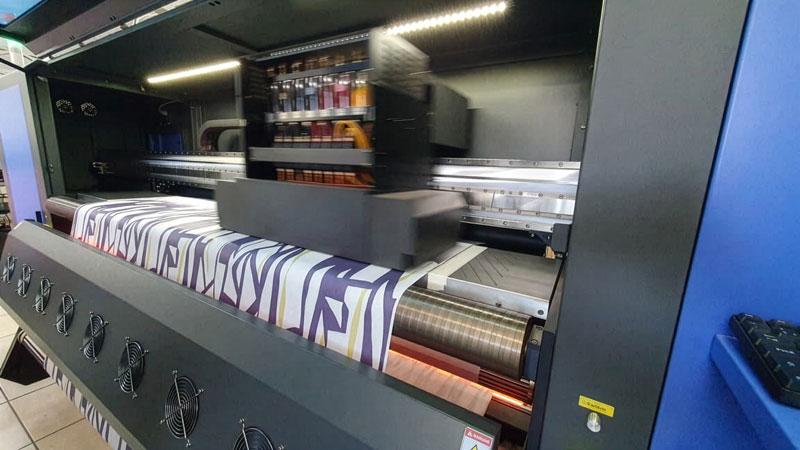
Textile printing has evolved far beyond traditional fabric production. What was once largely limited to mass manufacturing and repetitive designs has become a fast-moving creative industry driven by innovation, flexibility, and digital technology.
Today’s textile printing systems are helping designers, retailers, artists, fashion brands, and commercial printers explore entirely new creative possibilities. From custom fashion collections to immersive retail graphics and personalised interiors, digital textile technology is transforming how businesses approach design and production.
Creativity Is No Longer Restricted by Traditional Production Limits
Traditional textile manufacturing often required large production runs to remain commercially viable. This created limitations for smaller businesses, independent designers, and experimental projects.
Modern digital textile printing has changed this significantly. This flexibility allows businesses to experiment with smaller print runs, limited-edition collections, and niche creative concepts without the financial pressure of traditional manufacturing volumes.
Technology Is Helping Smaller Businesses Compete
Advanced textile printing technology is no longer reserved only for large industrial manufacturers. Entry-level and mid-range systems are making professional textile production more accessible to smaller businesses and independent creators.
Businesses exploring Mimaki fabric printer prices are increasingly looking for systems that balance affordability, flexibility, and long-term scalability. This accessibility is helping creative entrepreneurs bring production in-house, improve turnaround times, and gain more control over quality and experimentation.
Designers Can Work Across More Materials Than Ever
Modern textile printing systems support a wide variety of materials, including cotton, polyester, silk, linen, stretch fabrics, and blended textiles. This opens the door to much broader creative experimentation.
Recent developments include dual ink capabilities that support both dye sublimation and pigment printing, allowing users to work across synthetic and natural fibres within the same workflow. For designers, this means creative ideas are no longer limited to a narrow set of printable fabrics. Fashion collections, soft signage, home décor, sportswear, and exhibition materials can all be produced using increasingly adaptable technology.
Short-Run Printing Encourages More Original Design
One of the most significant shifts in digital textile printing is the rise of short-run and on-demand production. Businesses no longer need to commit to massive quantities before testing new concepts.
A customer case study from Hybrid Services showed how Flamingo Fabrics used Mimaki textile technology to support smaller custom orders while reducing waste and encouraging more creative experimentation. The company highlighted that short-run production allowed designers to test new ideas and produce more unique collections with less financial risk.
This approach is especially valuable for independent creatives and small fashion brands looking to differentiate themselves in crowded markets.
Textile Printing Is Expanding Beyond Fashion
While fashion remains a major sector for textile printing, creative applications now extend far beyond clothing.
Modern digital textile systems are increasingly used for:
- Retail displays
- Exhibition graphics
- Interior décor
- Soft signage
- Event branding
- Sportswear
- Promotional products
- Home furnishings
Textile printers are being used across fashion, retail graphics, exhibitions, and soft signage applications. This expansion allows creative businesses to diversify their services and explore entirely new revenue streams.
High-Speed Printing Supports Faster Creative Turnaround
Creative industries often operate on tight deadlines. Seasonal launches, trend-driven campaigns, and personalised products all require faster production cycles.
Modern textile printing systems are increasingly focused on combining speed with quality. Newer industrial dye sublimation printers support extremely high production speeds while maintaining high-quality output. This allows creative teams to respond to market trends more quickly without sacrificing design standards.
Sustainability Is Influencing Creative Innovation
Sustainability concerns are pushing many businesses to rethink traditional textile manufacturing methods. Digital textile printing is increasingly being viewed as a more flexible and resource-efficient alternative.
Recent textile systems focus on waterless or reduced-water workflows, sustainable pigment solutions, and more efficient on-demand production models. By reducing excess inventory and enabling more precise production, digital textile printing supports more sustainable creative practices while still allowing designers to experiment freely.
Hybrid Printing Technology Is Unlocking New Possibilities
One of the most exciting developments in textile printing is the rise of hybrid systems that combine multiple workflows within a single machine. The Mimaki Tx330-1800, for example, supports both direct-to-textile and transfer printing while also allowing users to switch between dye sublimation and pigment inks. This type of versatility allows businesses to move between different creative applications more easily, making experimentation faster and more commercially practical.
