

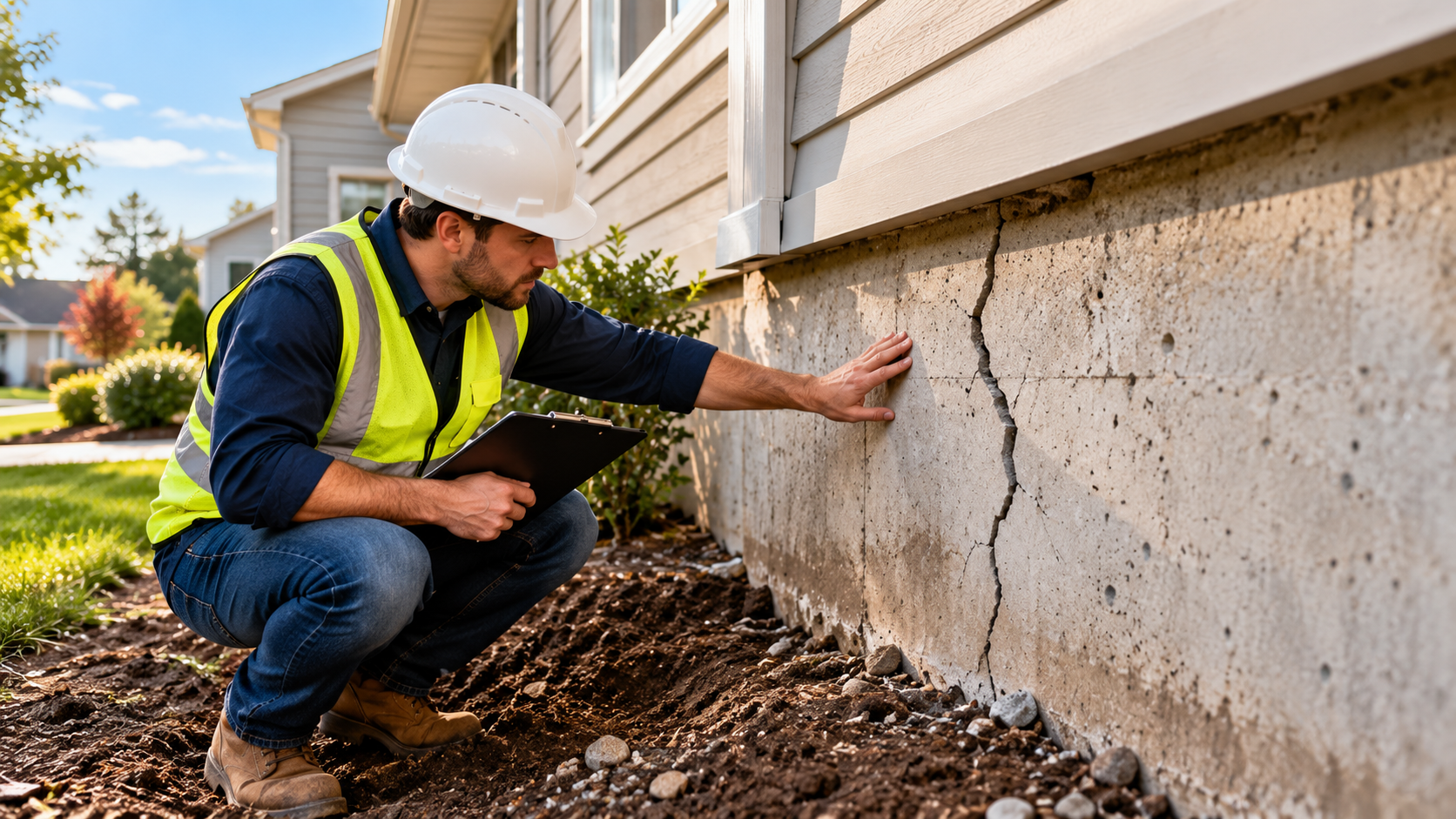
A home’s foundation is mostly out of sight, which makes it easy to overlook until something noticeably changes. A new basement crack, a door that suddenly sticks, or a wall that no longer looks perfectly straight can seem like an isolated annoyance, but these changes sometimes point to movement occurring beneath or around the home.
Understanding the difference between ordinary aging and signs that deserve closer attention can help homeowners respond appropriately. While not every crack or uneven surface indicates a serious structural problem, monitoring changes and investigating unusual patterns can prevent small concerns from becoming much more complicated.
Why Foundations Change Over Time
Foundations are built to support tremendous weight, but they do not exist in a completely static environment. The soil surrounding a house changes as moisture levels, temperatures, and weather conditions fluctuate.
When soil becomes saturated, it can expand and place additional pressure against foundation walls. During dry periods, certain soils may contract. In climates with cold winters, repeated freezing and thawing can create another cycle of movement.
Drainage conditions also matter. Water that consistently collects near a house can increase pressure against basement walls and find its way through existing cracks or joints. Meanwhile, settlement can occur as the soil supporting a foundation compacts over time.
None of these conditions automatically means a foundation will fail. However, they explain why homeowners should pay attention to changes rather than assuming a house will remain exactly as it was when constructed.
Common Warning Signs Inside the Home
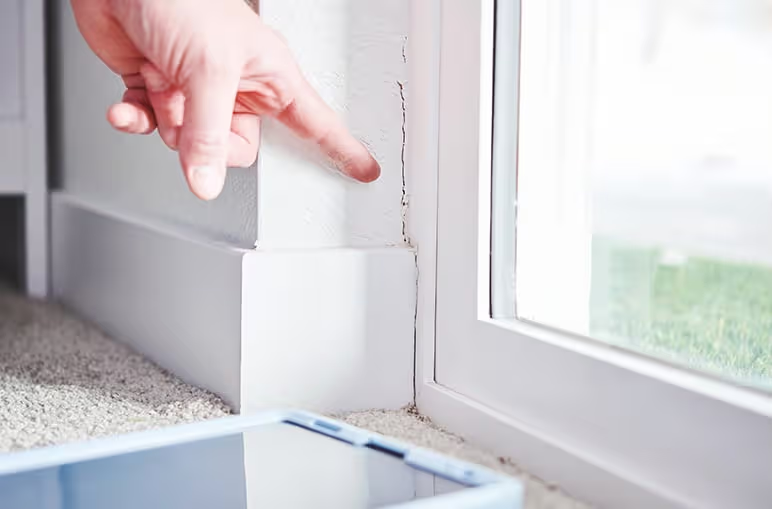
Some foundation-related changes appear far away from the actual foundation. Interior finishes, floors, doors, and windows can reveal clues because the structure above responds when movement occurs below.
Homeowners should pay particular attention to changes that appear suddenly, become progressively worse, or occur in several areas at once.
Potential warning signs include:
- Doors or windows that begin sticking without an obvious cause
- Floors that appear noticeably uneven or sloped
- New cracks around doorways or window openings
- Gaps developing between walls, ceilings, or floors
- Basement walls that appear bowed or tilted
- Cracks that noticeably widen over time
- Recurring basement moisture near foundation cracks
A single symptom does not provide enough information to diagnose a structural issue. A sticking door, for example, can result from humidity or normal changes in building materials. Several related symptoms developing together, however, provide a stronger reason to investigate.
The key is to look for patterns rather than focusing on one imperfection.
What Different Foundation Cracks Can Indicate
Cracks are among the most common reasons homeowners become concerned about their foundations. They can appear in poured concrete, masonry block, basement floors, and other areas.
Vertical Cracks
Vertical cracks are relatively common. Some develop as concrete cures or from minor movement and remain stable for years. A vertical crack that becomes wider, changes significantly, or allows water into the basement deserves additional attention.
Horizontal Cracks
Horizontal cracking can be more concerning because it may develop when pressure from surrounding soil pushes against a basement wall. Homeowners may also notice that the wall is beginning to bow inward.
The crack itself is only part of the picture. Its location, width, progression, and relationship to visible wall movement all help determine its significance.
Stair-Step Cracks
Masonry foundations can develop cracks that follow mortar joints in a stair-step pattern. Some remain minor, while others accompany settlement or movement.
Changes over time are particularly important. A crack that has remained unchanged for decades presents a different situation from one that has recently appeared and continues growing.
Basement Floor Cracks
Concrete basement floors frequently develop cracks, and many are not related to major structural problems. Even so, cracks accompanied by noticeable elevation changes, sinking, or other movement should be evaluated rather than dismissed automatically.
Homeowners who are uncertain about the significance of visible cracking can seek an experienced assessment. For those in southeastern Wisconsin, information about foundation repair by McCoy Contractors provides additional context on different crack patterns, structural movement, and repair approaches.
Moisture and Structural Problems Can Be Connected
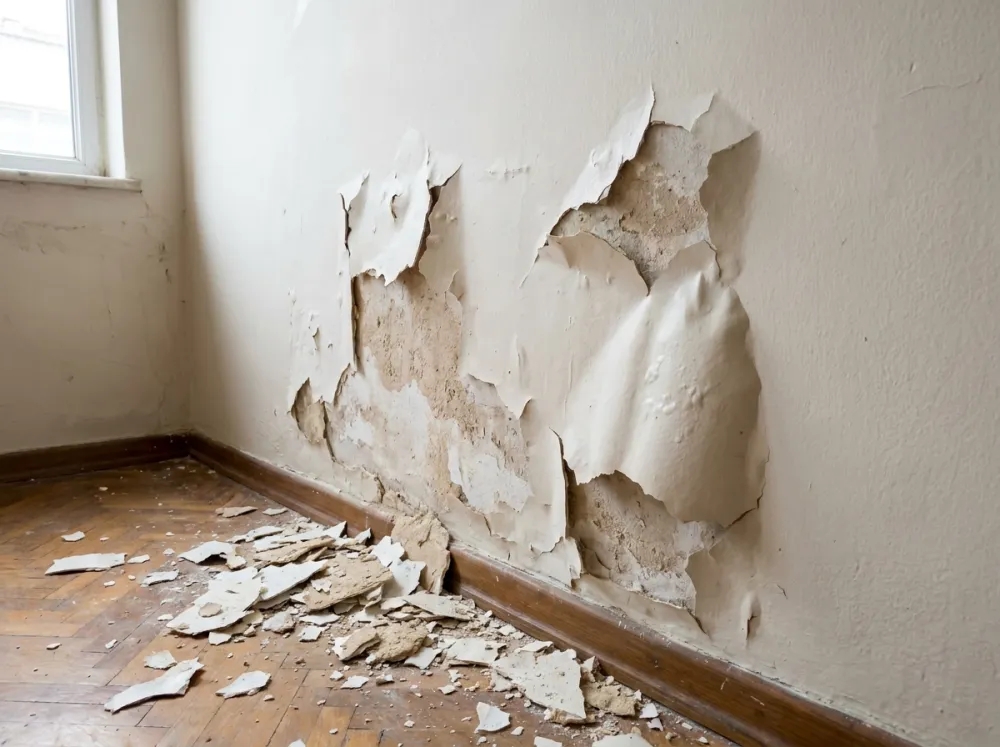
Water in a basement is often treated strictly as a waterproofing problem, but moisture and foundation conditions can influence each other.
Poor exterior drainage may allow water to accumulate around foundation walls. As the surrounding soil becomes saturated, the resulting pressure can contribute to leaks through cracks, joints, or other vulnerable areas. In some situations, long-term water management problems can occur alongside structural movement.
This is why simply covering a crack or cleaning up water may not address the underlying cause.
Homeowners can reduce unnecessary water around their foundations by keeping gutters functional, ensuring downspouts discharge appropriately, and maintaining drainage that encourages water to move away from the house. After heavy rain, it can also be useful to walk around the property and look for areas where water repeatedly pools near the foundation.
Inside the basement, recurring stains, damp areas, or water entering through the same location should be documented. Patterns can make troubleshooting easier.
Why Monitoring Changes Is So Useful
One of the simplest things a homeowner can do is keep a record of suspicious changes.
Take clear photographs of cracks and note the date. Photograph the same locations periodically from a similar distance and angle. If a door begins sticking, record when the problem started and whether it changes seasonally.
This basic documentation can help distinguish a stable condition from an active one.
It is also helpful to examine the entire property rather than concentrating exclusively on the most obvious crack. Look at basement walls, floors, exterior masonry, windows, doors, and visible drainage conditions. A broader inspection can reveal whether multiple symptoms appear related.
Homeowners should avoid attempting to determine structural severity based solely on crack appearance. Similar-looking cracks can have different causes, and the surrounding conditions often matter as much as the crack itself.
Address the Cause, Not Just the Symptom
When foundation problems require repairs, identifying why the movement occurred is an important part of developing an appropriate solution.
A crack caused primarily by shrinkage, for example, is a different problem from a wall experiencing continued lateral pressure. Likewise, a moisture entry point may require a different approach from a foundation affected by settlement.
Depending on the condition, professional repair methods may involve crack sealing or injection, wall reinforcement, stabilization systems, or other structural solutions. There is no universal repair method appropriate for every foundation.
That is why a careful evaluation should come before major repair decisions. The objective is not simply to make a visible crack disappear. It is to understand what caused the condition and determine whether anything needs to be done to reduce the likelihood of continued movement.
Conclusion
Homes naturally change as they age, and an imperfect foundation does not automatically mean a home has a serious structural problem. The most useful approach is to remain observant and respond to meaningful changes rather than either ignoring every warning sign or assuming every crack represents an emergency.
Watch for widening cracks, bowing walls, unusual floor changes, recurring moisture, and groups of symptoms that develop together. Keep photographs and notes so changes can be tracked accurately, and seek an experienced evaluation when a condition appears to be progressing.
Understanding what is happening beneath a home gives homeowners better information for deciding what to do next. When repairs are actually necessary, identifying the underlying cause is the foundation for choosing a solution designed to provide lasting stability.
