

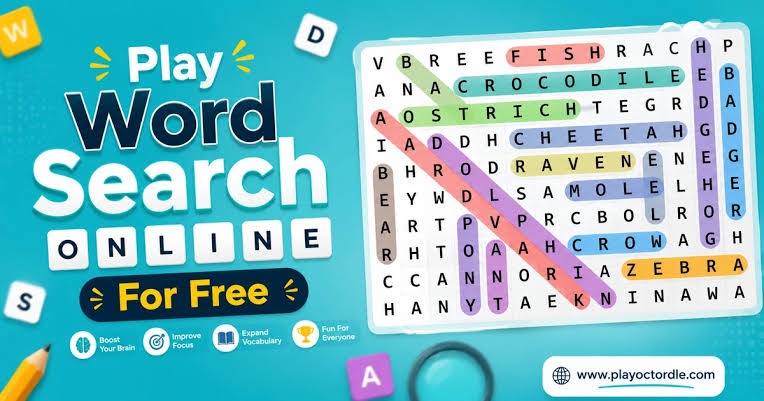
Word search puzzles have been entertaining curious minds for more than five decades — and in 2026, they have never been more accessible. Whether you are killing time on your commute, warming up your brain before a long study session, or looking for a fun educational activity for your kids, Free Online Word Search Puzzles offer exactly what you need, on any device, at any moment.
But not all word search platforms are created equal. In this guide, we cover everything you need to know about playing word searches online, the real benefits behind these deceptively simple puzzles, what to look for in a great puzzle platform, and where to find the best free collection on the internet.
What Makes an Online Word Search Different from a Printed One?
Printed word searches have their charm — there is something satisfying about circling a word with a pencil and crossing it off the list. But online word searches bring a set of advantages that printed puzzles simply cannot match.
Instant feedback. When you find a word in a digital puzzle, it lights up immediately. No second-guessing whether you have found the right letters. The puzzle confirms your find in real time.
No supplies needed. No pencils, no erasers, no printing costs. You open a browser or app and play instantly.
Automatic scoring and timers. Many online platforms track how long you take to solve each puzzle, letting you challenge your own personal best or compete against others.
Unlimited variety. A physical puzzle book gives you a fixed number of puzzles. Online platforms can host hundreds or even thousands of puzzles across dozens of categories — and new ones are added regularly.
Play anywhere. On a desktop during a lunch break, on a tablet at home, or on a phone while waiting in a queue. Online word searches adapt to any screen size.
The Real Benefits of Playing Word Search Puzzles
Many people think of word searches as a light, casual activity — and they are. But the mental work happening underneath is more substantial than it appears.
Sharper Focus and Attention
Scanning a grid for a specific word requires you to filter visual noise and maintain a precise target in mind. This is an active exercise in sustained attention — the same cognitive skill you need to stay focused during meetings, while reading, or when working through complex tasks.
Vocabulary and Spelling Reinforcement
When you hunt for a word in a grid, you process its letters multiple times — once from the list, and again as you scan the grid looking for a match. That repetition strengthens spelling memory in a way that passive reading cannot replicate. Themed puzzles make this especially powerful: a technology-themed puzzle introduces IT vocabulary before a course; a geography puzzle embeds country names through active searching.
Stress Relief and Mental Downtime
The repetitive, rhythmic nature of scanning a word search grid creates a light meditative state. Your mind is engaged but not overwhelmed. This is why many people reach for a word search during a stressful day — it provides genuine mental relief without the overstimulation of social media or video content.
Brain Health Across Age Groups
Research into cognitive aging consistently points to the value of mental engagement. Activities that challenge attention, pattern recognition, and memory — exactly what word searches do — are associated with maintaining mental sharpness over time. Word searches are particularly popular among older adults for precisely this reason.
A Learning Tool That Feels Like Play
For children, themed word searches make vocabulary learning feel like a game rather than a chore. A child who completes an animals word search naturally absorbs the spelling of words like “cheetah,” “flamingo,” and “platypus” — without any deliberate study effort.
What to Look for in a Free Online Word Search Platform
With so many word search sites available, how do you find one that is actually worth your time? Here are the qualities that separate a great platform from a mediocre one.
A Large, Diverse Puzzle Library
The best platforms offer puzzles across a wide range of categories — animals, sports, movies, history, science, geography, food, technology, and more. Having dozens of categories means there is always something that matches your interest or your learners’ curriculum.
Regular New Content
A puzzle platform that never updates becomes stale quickly. Look for sites that add new puzzles regularly so returning visitors always have something fresh to solve.
Clean, Mobile-Friendly Design
The interaction model matters. On desktop, clicking and dragging to highlight words should feel smooth and precise. On mobile, tapping and swiping across letters should be equally responsive. A cluttered interface or laggy performance ruins the experience regardless of how good the puzzle content is.
Multiple Difficulty Levels
A platform that serves both a seven-year-old and an adult needs puzzles at multiple difficulty levels — different grid sizes, different word lengths, different directional complexity. The best sites make it easy to filter by difficulty.
No Paywalls for Basic Puzzles
The best word search platforms make their core content genuinely free. You should not need to create an account, enter payment details, or watch a video to play a standard puzzle.
Thematic Depth
Rather than just labelling a puzzle “animals,” a thoughtful platform creates puzzles around specific sub-themes: dog breeds, ocean creatures, African wildlife, bird species. This depth makes the platform more valuable for educators and more interesting for enthusiasts.
The Best Free Online Word Search Platform in 2026
If you are looking for a platform that ticks every one of those boxes, It WordSearch is the best free option available right now.
It WordSearch offers 289 interactive word search puzzles across 33 distinct categories — and the library is growing. Whether you want a quick five-minute puzzle or a deep dive into a niche topic, the platform has you covered.
Here is a taste of what is available:
- Animals — 23 puzzles covering wildlife, pets, and specific species
- Technology — 18 puzzles built around IT vocabulary, computing concepts, and digital tools
- Sports — 16 puzzles spanning everything from football to athletics
- Movies — 15 puzzles covering genres, directors, characters, and franchises
- Music — 13 puzzles across genres, artists, instruments, and music history
- Geography — 12 puzzles exploring countries, capitals, and world regions
- Health — 12 puzzles covering medical vocabulary, wellness, and anatomy
- Food and Drink — 17 puzzles ranging from world cuisines to individual ingredients
- History — 12 puzzles on historical figures, events, and eras
- Science — 10 puzzles spanning physics, chemistry, biology, and space
Beyond variety, the platform is built for a smooth playing experience. Puzzles load quickly, the grid interaction is crisp on both desktop and mobile, and found words highlight clearly. There are no intrusive pop-ups interrupting your game.
The Daily Word Search category is particularly worth bookmarking. New puzzles drop regularly, giving returning players a reason to come back every day. Players can also compete on leaderboards and track streaks — adding a light competitive layer to what is otherwise a relaxed solo activity.
Word Search Puzzles by Category: What Each Theme Teaches
One of the most underrated features of a themed word search is what you actually learn while solving it. Here is a closer look at the educational value packed into different puzzle categories:
Technology and IT Word Searches
Puzzles in this category introduce computing vocabulary in a low-pressure format — hardware components, networking terms, programming concepts, cybersecurity language. For students starting an IT course or professionals joining a new tech team, an IT word search is a gentle on-ramp to unfamiliar terminology.
Geography Word Searches
Finding country names, capital cities, and geographical landmarks in a puzzle grid is one of the most effective ways to memorise them. The active search process creates stronger memory traces than simply reading a list.
Science Word Searches
Science-themed puzzles make technical vocabulary feel approachable. A student who has searched a grid for “photosynthesis,” “mitochondria,” and “ecosystem” will find those words less intimidating when they appear in a textbook.
History Word Searches
Searching for names like “Cleopatra,” “Renaissance,” or “Industrial Revolution” gives learners repeated exposure to historical terms in a context that feels engaging rather than academic.
Sports Word Searches
These puzzles appeal to a wide audience because they tap into existing knowledge and passion. A cricket enthusiast solving a cricket terminology puzzle is reinforcing vocabulary they already care about.
Movies and Entertainment Word Searches
Pop culture themed puzzles are excellent conversation starters and perfect for casual solo play. They also make excellent icebreaker activities for groups and classrooms.
Tips for Getting More Out of Every Word Search
Even if you have been solving word searches for years, these strategies will help you solve faster and get more cognitive benefit from every puzzle.
Scan for rare letters first. Words containing Q, X, Z, or double letters are visually distinctive and easy to spot in a grid. Finding these first eliminates them from your list quickly and narrows your focus.
Work the word list, not the grid. Pick a specific word, hold its letter pattern in your mind, and then scan the grid for that pattern. Random scanning is slower and more tiring.
Check all eight directions. It sounds obvious, but many solvers habitually forget reverse-diagonal words. When a word is proving elusive, deliberately check each of the eight directions in turn.
Cross words off as you find them. This keeps your list short, makes your progress visible, and ensures you do not accidentally re-search for words you have already found.
Time yourself. Setting a timer creates a mild positive pressure that sharpens focus. Comparing your times across similar puzzles is a simple way to track improvement.
Play a new category occasionally. If you always solve sports puzzles, try a science or history puzzle. The unfamiliar vocabulary makes the puzzle genuinely harder and stretches your pattern recognition further.
Word Search Puzzles for Every Age and Occasion
One of the great strengths of word search puzzles is how universally they work. Here is how different groups get the most from them:
For Young Children (Ages 4–7)
Simple grids with four- to six-letter words, horizontal and vertical directions only, large fonts, and familiar themes like colors, animals, and simple food vocabulary. These puzzles build letter recognition and early reading skills in a playful format.
For School-Age Children (Ages 8–12)
Longer words, all eight directions including diagonals, and themes tied to school subjects. Subject-specific vocabulary puzzles — science terms, historical figures, geographical names — turn revision into an activity kids actually look forward to.
For Teenagers and Adults
Larger grids, complex vocabulary, niche themes, and timed challenges. The competitive element of leaderboards and personal bests adds engagement for this age group.
For Seniors
Large-print formats, familiar and nostalgic themes (classic movies, golden-era music, nature), and a relaxed pace. Word searches are consistently recommended by occupational therapists as a gentle but effective mental exercise for older adults.
For Classrooms
Themed puzzles tied to curriculum units serve as warm-up activities, early finisher tasks, revision tools, and vocabulary introductions. Teachers can use category-specific puzzles from a platform like It WordSearch without any preparation time — simply assign a relevant puzzle and the platform handles the rest.
For Team Building and Events
Themed word searches make excellent icebreaker activities for corporate events, staff meetings, and training days. A team-specific word search — filled with company values, product names, and department vocabulary — is a memorable and low-cost engagement activity.
How Online Word Searches Are Built: A Behind-the-Scenes Look
Understanding how digital word search puzzles are constructed makes you appreciate the craft behind a well-designed one.
Every word search starts with a word list — a curated set of words connected to a specific theme. The best puzzle designers choose words that are neither too common nor impossibly obscure, balancing challenge with achievability.
Those words are then placed into a grid — a rectangular array of letters — using an algorithm that assigns each word a random starting position and direction. The algorithm checks for conflicts (two words trying to occupy the same space in incompatible ways) and resolves them before proceeding.
Once all words are placed, the remaining empty cells are filled with random filler letters — the noise that disguises the hidden words. Good puzzle design ensures that filler letters do not accidentally create unintended words that could mislead or confuse solvers.
Finally, the finished grid is checked: every word from the list must be locatable by a solver following standard rules. On digital platforms, the word list and grid are stored together with metadata about each word’s position and direction, which is what allows the platform to instantly confirm correct finds and highlight them on screen.
The result is a puzzle that looks chaotic but is entirely intentional — every letter has been placed with care.
Frequently Asked Questions
Are online word search puzzles really free? The best platforms, including It WordSearch, offer their full puzzle libraries completely free with no account required. You open the site and play immediately.
Do I need to download an app to play? No. Browser-based platforms work on any device without any download or installation. Just visit the website and start playing.
Are these puzzles good for children? Yes. Word searches are one of the most widely recommended educational puzzle formats for children precisely because they reinforce spelling, letter recognition, and vocabulary in an engaging, game-like format.
Can I play on my phone? Absolutely. Mobile-optimized platforms like It WordSearch are designed for touch interaction — tap the first letter and swipe to the last to highlight a word. The experience on a smartphone is just as smooth as on desktop.
How often are new puzzles added? The best platforms add new puzzles regularly. It WordSearch adds new content across multiple categories, and the Daily Word Search section refreshes with new puzzles on an ongoing basis.
What is the best category to start with? Start with a theme you already enjoy — animals, sports, movies, music. Familiarity with the subject matter makes the puzzle more satisfying and slightly easier, which is a good introduction to the platform. Once you are comfortable, branch into categories with less familiar vocabulary to push your brain further.
Final Thoughts
Free online word search puzzles occupy a rare sweet spot: they are genuinely entertaining, genuinely educational, and genuinely accessible to everyone. No special skills, no prior knowledge, no equipment required — just a browser and a willingness to hunt.
Whether you play daily as a mental warm-up, use them in a classroom to bring vocabulary to life, or pick one up whenever you need a few minutes of focused, screen-friendly relaxation, word search puzzles deliver consistent value.
The best place to start — or to keep going — is It Word Search, where 289 free puzzles across 33 categories are waiting for you right now, on any device, with no sign-up required.
Start exploring. The words are in there somewhere — and finding them is half the fun.
