

Last year you probably asked a chatbot to rewrite an email. This year the same kind of tool might read your inbox, spot the three messages that need replies, draft them and propose meeting slots, all without being prompted at each step. That jump from answering to acting is the shift from chatbot to AI agent. If you work in tech, it’s worth understanding before your job description changes around it.
What’s actually different?
A chatbot responds. An agent pursues a goal. Give it an objective, and it plans steps, uses tools such as search, databases and APIs, checks its own output and tries again if something fails. That loop of plan, act and check is what makes it an agent rather than a clever autocomplete.
Figure 1: The autonomy ladder, from fixed scripts to coordinated multi-agent systems.
Figure 2 shows the loop in more detail. Notice the human-approval gate. Good agent design decides in advance which actions an agent may take alone and which need a person to say yes.
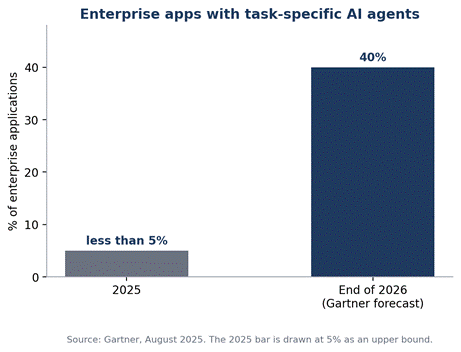
Figure 2: How an AI agent works, as a plan-act-check algorithm with a human-approval gate.
Why this is moving fast
Gartner forecast that 40% of enterprise applications will include task-specific AI agents by the end of 2026, up from less than 5% in 2025. It expects this to grow further, with multiagent ecosystems arriving by 2029.
Figure 3: Gartner’s forecast for enterprise apps with task-specific agents. Source: Gartner, August 2025.
The reality on the ground is messier, and that’s useful to know. In McKinsey’s 2025 State of AI survey, 62% of respondents said their organisations were at least experimenting with AI agents, while 23% were scaling them, usually in only one or two functions. In any single business function, no more than 10% were scaling agents. Gartner has also warned that over 40% of agentic AI projects are expected to be cancelled by the end of 2027.
Figure 4: Interest in agents is high; scaling is rare. Source: McKinsey, The State of AI in 2025.
Read those numbers together and the story is clear. Interest is high, and reliable execution is rare. The people who can make agents work in production, and not just in demos, are the scarce ones.
The five skills that matter
- Breaking work into steps. An agent is only as good as the workflow you give it. Learning to decompose a messy task into clear, checkable stages is half the job.
- Working with tools and APIs. Agents act through software. Comfort with Python, REST APIs and authentication is the practical foundation.
- Evaluation. How do you know the agent got it right? Building small test sets and measuring accuracy separates hobby projects from reliable systems.
- Guardrails and human review. Deciding where an agent must stop and ask is a design skill in its own right, especially around money, customer data and anything irreversible.
- Retrieval and context. Agents need the right information at the right moment. Understanding how documents are chunked, searched and fed to a model saves a lot of pain.
Where to start
Before specialising, get your foundations in order: Python, basic data handling and how large language models behave. Structured online courses with certificates are a sensible way to build those basics, because the graded assignments force you to apply the concepts instead of just watching videos. Choose ones with a project at the end.
Once you can write a script that calls an API and handles errors, move to agent-specific material. The free agentic AI courses are a good place to see how planning, tool use and memory fit together before you start building your own.
A weekend project that proves the skill
Build a small agent that triages a support inbox:
- It reads incoming emails and labels each as billing, bug or feature request.
- It drafts a reply for the simple ones and flags the rest for a human.
- You test it on 20 sample emails and record how many it got right.
The accuracy table is the valuable part. “Agent routed 17 of 20 correctly; here’s where it failed” is a far stronger signal than “familiar with AI agents.”
You don’t need to become an AI researcher. You need to be the person who can turn a vague goal into a dependable, tested workflow.
References
- Gartner (Aug 2025). Gartner Predicts 40% of Enterprise Apps Will Feature Task-Specific AI Agents by 2026, Up from Less Than 5% in 2025. gartner.com/en/newsroom/press-releases/2025-08-26-gartner-predicts-40-percent-of-enterprise-apps-will-feature-task-specific-ai-agents-by-2026-up-from-less-than-5-percent-in-2025
- Gartner (June 2025). Press release on agentic AI project cancellations by end of 2027 (verify the exact wording and URL on gartner.com before publishing).
- McKinsey & Company (Nov 2025). The State of AI in 2025: Agents, Innovation, and Transformation. mckinsey.com/capabilities/quantumblack/our-insights/the-state-of-ai
