

When I pull up to a garage door service call, the first question I ask myself is this: is the door moving at all? If yes, I watch how it moves. If no, I check whether the opener is running without moving the door, or whether nothing is happening at all. That single split in the decision tree tells me almost everything I need to know before I even touch the hardware.
If the door moves but grinds, shakes, or jumps off its path, rollers are almost always the culprit. If the door won’t move and the opener hums, I’m looking at springs or cables. But that grinding, stuttering travel pattern — that’s a roller story, and it’s one I’ve read hundreds of times over the past decade-plus working on residential garage doors throughout Southern California, including right here in Canyon Lake, CA.
The First Question I Ask When I Arrive on a Job
The diagnostic process for roller issues follows a clean logic. First: does the door travel the full height of the track, or does it bind at a specific point? Binding at a fixed spot — say, 18 inches up from the floor — tells me one roller has either cracked, seized, or jumped the track at that exact location.
Next I check whether the noise is consistent or intermittent. Consistent grinding on every cycle usually means multiple rollers are worn down to the metal stem. Intermittent squealing that comes and goes is often a single roller with a dry bearing that only loads under certain angles of travel.
Finally, I check whether the track itself is bent. A bent track can shred a perfectly good roller in a matter of weeks. If I replace rollers without straightening or replacing the track, I’m just selling the homeowner a do-over job in six months — and that’s not how I operate.
What Worn or Broken Rollers Actually Look Like
Garage door rollers fail in three distinct ways, and recognizing which one you’re dealing with changes the repair approach entirely.
Cracked or chipped wheels are the most obvious. You can often see chunks missing from the nylon wheel, or a steel roller that has rusted and flattened on one side. These create a hard “clunk” on each revolution, almost like a car tire with a flat spot.
Seized bearings look fine from the outside but won’t spin when you push them by hand. A roller that doesn’t spin is dragging along the track instead of rolling — it’s wearing a groove into your track and stressing your opener motor at the same time.
Rollers that have slipped out of the track are typically caused by a loose track bracket or a roller stem that has bent from years of side-load pressure. These are the ones that can cause a door to jump entirely if they’re not caught early.
When Roller Damage Points to a Bigger Problem
Here’s where experience really matters. I’ve seen plenty of DIY roller swaps that fixed the symptom but missed the cause. If more than three rollers on a single door are failing around the same time, I don’t just replace the rollers — I look at the spring balance.
An unbalanced door, where the torsion or extension springs have lost tension, forces the opener and the rollers to compensate for extra weight. That constant overload chews through rollers two to three times faster than normal. Replacing springs and rollers together in that scenario is the only fix that actually holds.
If you’re dealing with roller wear in Canyon Lake, CA, the heat cycles we see here — warm, dry summers combined with occasional cold snaps — accelerate bearing wear faster than in coastal climates. I recommend inspecting rollers every 12 months rather than the 24-month interval you’ll read about in generic guides.
For reliable garage door roller repair Canyon Lake homeowners can count on, having a local technician who knows the regional conditions makes a real difference in how long the repair lasts.
Steel vs. Nylon Rollers: Which One Belongs on Your Door
I get this question on almost every roller job. The short answer: nylon rollers with sealed ball bearings for nearly every residential door, steel only when budget is the hard constraint.
Nylon rollers run quieter — we’re talking 30 to 40 percent less operational noise in my informal comparisons on the same door before and after. They’re also easier on the track, because nylon has a slight flex that absorbs vibration rather than transmitting it into the track steel.
Standard nylon rollers have 10 ball bearings. Heavy-duty nylon rollers have 13. For a double-wide door weighing 200 pounds or more, I always specify the 13-bearing version. The price difference is maybe $8 per roller, and they’ll easily outlast the cheaper option by three to five years.
What the Repair Process Actually Involves
A full roller replacement on a standard two-car garage door takes me about 45 to 60 minutes when the tracks and springs are in good shape. The process: release spring tension safely, remove the roller brackets one section at a time (you don’t need to disassemble the whole door), swap the rollers, recheck track alignment, then cycle the door manually before reconnecting power.
The step most DIYers skip is the post-replacement track alignment check. Even a 1/8-inch gap between the roller and the track edge will cause premature wear on the new hardware. I use a track spacing gauge, but a careful eye and a tape measure get you close enough for most adjustments.
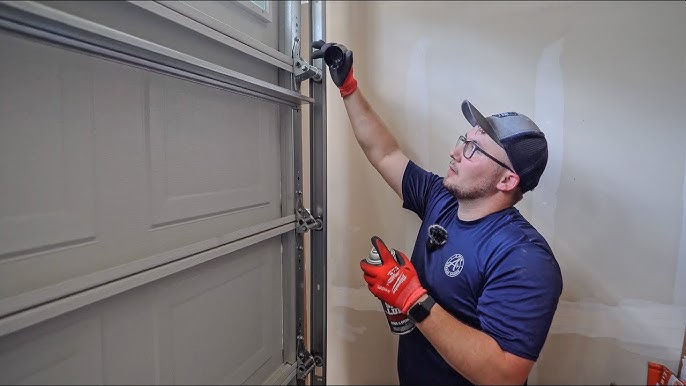
Lubricate the new rollers with a silicone-based spray — not WD-40, which attracts dust and gums up bearings within a few months.
Don’t Overlook Your Opener While You’re at It
Every time I replace rollers on a door that has been running rough, I test the opener’s force settings before I leave. A door fighting bad rollers trains the opener to apply extra force — and once the rollers are smooth, that excess force can make the door slam down faster than the auto-reverse safety allows.
If your remote hasn’t been responding reliably either, that’s often a separate but related issue worth addressing in the same visit. The remote repair service in Canyon Lake from ZAAAP Garage Door covers both the mechanical side and the signal troubleshooting that trips up a lot of homeowners.
Smooth rollers, a calibrated opener, and a responsive remote are the three legs of a garage door system that actually works every single time — and none of them should be treated as optional.
