

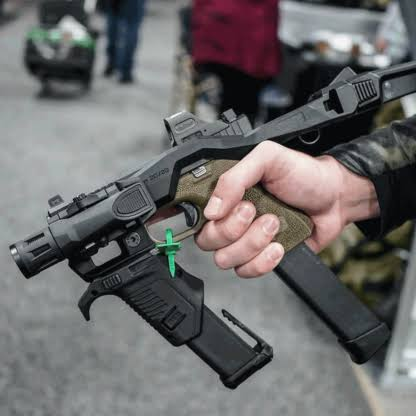
Building a firearm from the ground up is a practice rooted in craftsmanship, customization, and a deep appreciation for mechanical engineering. Polymer 80 frames have earned a well-established reputation among builders who value quality materials and thoughtful design. When paired with the right stabilizing component, these builds take on an entirely new dimension of capability. The p80 brace is a subject that frequently comes up in conversations among experienced builders, and for good reason—it directly influences how the completed firearm handles, balances, and performs in practical use.
What Is the Role of a Stabilizing Brace in a Pistol Build?
A stabilizing brace serves a specific mechanical and ergonomic function. Designed to attach to the rear of a pistol, it provides the shooter with an additional point of contact that enhances control and stability. Unlike a traditional stock, a brace is engineered for use with pistol-configuration firearms and is intended to improve the shooter’s ability to manage the firearm with one hand, though it is commonly used in a variety of shooting positions.
For Polymer 80 builds, which frequently result in compact, lightweight configurations, adding a brace can meaningfully shift the handling characteristics of the finished firearm. The added contact point reduces muzzle movement during firing, supports more consistent sight alignment, and helps manage recoil more effectively than a bare pistol grip alone.
Why Builders Choose to Add a Brace to a Polymer 80 Build
The appeal of a Polymer 80 frame lies in its flexibility. Builders start with a raw component and shape the rest of the build according to their specific preferences and use cases. This means every decision—barrel length, slide profile, trigger system, and accessories—is intentional. Adding a brace fits naturally within this philosophy of purposeful customization.
Those who build for home defense applications often cite improved control as the primary motivation. A compact build that is easier to manage in confined spaces, while still offering solid accuracy, is a genuinely practical tool. Competitive shooters who participate in pistol-caliber events may also find that a stabilizing brace gives them a performance edge when rules and classifications permit its use.
Legal Considerations Every Builder Must Understand
Before incorporating any stabilizing brace into a build, understanding the current regulatory landscape is essential. Rules governing braces on pistol-configuration firearms have undergone revision in recent years, and the legal status of specific configurations can vary depending on jurisdiction and classification. Builders have a responsibility to stay current with federal guidance from the Bureau of Alcohol, Tobacco, Firearms and Explosives, as well as any applicable state and local laws.
Ignorance of the law is not a legal defense, and the consequences of non-compliance can be serious. Consulting with a licensed firearms dealer or legal professional before completing a build with a brace attached is a sound practice that every responsible builder should consider.
What Makes a High-Quality Brace Worth the Investment?
Material durability is a foundational quality indicator. A brace constructed from reinforced polymer or aircraft-grade aluminum will withstand the mechanical stresses of regular use without cracking, warping, or loosening over time. Fit and compatibility are equally critical. A brace that integrates seamlessly with the rear of a Polymer 80 pistol build will maintain a secure connection throughout firing and handling, without requiring constant adjustment.
Adjustability adds further value. Braces that offer multiple length settings or folding configurations provide the builder with greater flexibility in how the firearm is stored, transported, and used in different shooting environments. This adaptability is particularly useful for those whose intended applications vary across different contexts.
Building With Purpose and Responsibility
The decision to add a stabilizing brace to a Polymer 80 pistol build is ultimately about matching the right components to a clearly defined purpose. When every element of a build is chosen with care and legal compliance, the result is a firearm that reflects the builder’s skill and thoughtfulness. The p80 brace conversation is best approached with thorough research, honest assessment of intended use, and a firm commitment to safe, lawful ownership at every stage of the process.
the Purpose of a Glock 19 Conversion Kit
Firearm enthusiasts and professionals alike often look for practical ways to enhance the performance and versatility of their handguns. The Glock 19 is one of the most widely used pistols in the world, favored for its reliability, compact design, and adaptability. At the heart of this adaptability is a growing interest in customization options that allow owners to configure their firearms for different roles. The glock 19 conversion kit has become one of the most discussed upgrades among responsible gun owners looking to maximize the functionality of their existing platform without acquiring an entirely new firearm.
What Does a Conversion Kit Actually Do?
A conversion kit fundamentally changes how a firearm can be used. For the Glock 19, this typically means transforming the pistol into a platform that offers greater stability, improved accuracy over longer distances, or compatibility with additional attachments. The core components of a conversion kit usually include a chassis or housing system that encorporates the existing pistol, along with interface points for accessories such as optics, lighting systems, or extended controls.
The primary function is to increase the shooter’s control and precision. When a compact handgun is integrated into a larger, more structured configuration, the contact points between the shooter and the firearm multiply. This results in better recoil management, more consistent sight alignment, and improved shot placement, particularly during rapid or sustained fire.
Why Do Firearm Owners Consider This Upgrade?
The motivations behind choosing a conversion kit vary depending on the individual’s needs and intended use. For those involved in competitive shooting, the ability to improve accuracy and ergonomics without changing the fundamental mechanics of a trusted firearm is a significant advantage. The Glock 19’s internal systems remain intact, meaning the reliability that owners have come to depend on is preserved throughout the conversion.
Home defense is another area where this type of upgrade draws considerable attention. A more stable and controllable platform can make a meaningful difference in high-stress situations where precision matters. The conversion kit effectively expands what the firearm is capable of without requiring extensive training on an entirely different system.
Law enforcement and security professionals have also explored the practical benefits of such configurations. The ability to transition a sidearm into a more capable tool for specific operational scenarios adds flexibility to equipment loadouts that would otherwise require carrying multiple firearms.
How Does Installation Generally Work?
Most conversion kits are engineered for straightforward installation without the need for specialized gunsmithing. The Glock 19 is typically inserted into the chassis system, where it is secured using the existing frame or trigger mechanism as the operating core. This design preserves the legal classification of the original firearm while providing the physical characteristics of a larger platform.
It is important that users follow all applicable federal, state, and local regulations before installing or using any conversion system. Laws governing these configurations vary significantly by jurisdiction, and responsible ownership always begins with a thorough understanding of legal requirements.
What Should Buyers Look for in a Quality Conversion Kit?
Build quality is the first consideration. A conversion kit made from durable, reinforced materials will maintain structural integrity under repeated use and provide consistent performance over time. Fit and compatibility are equally important. A well-engineered kit designed specifically for the Glock 19 will align precisely with the pistol’s dimensions, ensuring smooth operation without unnecessary play or misalignment.
Ergonomics also play a role. Adjustable components such as length of pull, grip angle, and accessory rail positioning allow the shooter to configure the system to their body type and shooting style, which contributes directly to accuracy and comfort during extended sessions.
Making an Informed Decision
Choosing the right conversion kit requires research, patience, and a clear understanding of your intended purpose. Reviewing verified user feedback, consulting with knowledgeable dealers, and handling the product before purchasing can all contribute to a more satisfying outcome. The Glock 19 is a capable platform on its own, and the right conversion system simply builds on that foundation in a purposeful, practical way.
