

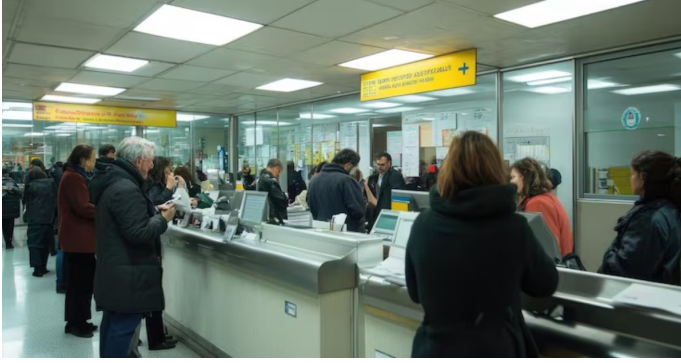
This is a very common story; one we hear from customers after a frustrating bank visit: You walk into a bank during your lunch break. Took a token, looks at the screen… and realizes there are 18 people ahead of you.
You check your watch, and you have only 25 minutes left of your break. Ten minutes later, you walk out, frustrated and unheard, already searching for a digital-first bank on your phone.
This isn’t a rare moment. It’s happening in bank branches every single day. And here’s the real cost: it’s not just one lost transaction, it’s a lost customer.
Let’s discover how smart bank queue management systems are transforming the bank customers’ journey into a seamless experience.
The Growing Problem of Long Wait Times in Banks
Studies show that over 63% of customers say a lack of real-time communication and long wait times are their biggest frustration in banks. Banks aren’t losing customers because of poor products. They’re losing them in the waiting line.
Here’s where things break:
Unpredictable Walk-In Traffic
Mondays, salary days, and lunch hours create sudden spikes. Without visibility, branches get overwhelmed fast.
Outdated Token Systems
Traditional token machines don’t actually manage queues—they just organize the chaos.
There’s no intelligence. No prioritization. No optimization.
Inefficient Staff Allocation
Some counters stay overloaded while others sit idle. Managers are always behind the curve with no real-time information.
What a Modern Queue Management System Really Does
A queue management system isn’t just about giving out tokens; it’s about controlling the entire customer journey.
From the moment a customer decides to visit, to the moment they leave the branch, everything is optimized.
Here’s how Queue Management Systems Actually Reduce Wait Times
1. Virtual Queuing Removes Physical Lines
Customers don’t need to stand inside the branch anymore. They can join a queue remotely through their phone or a web link and arrive just in time.
This leads to less crowding, smoother flow, and a dramatically better experience.
2. Appointment Scheduling Brings Predictability
Instead of unpredictable walk-ins, customers book time slots in advance. Banks can now plan their day instead of reacting to it.
It helps balance workload, shorter queues, and manage peak-hour chaos.
3. Smart Routing Gets Customers to the Right Desk Faster
Not every customer needs the same service. A modern system identifies intent and directs customers to the right staff member instantly. No bouncing between counters. No repeated explanations.
Impact: Faster service and reduced handling time.
4. Real-Time Queue Visibility for Better Decisions
Branch managers can see exactly what’s happening in real time
- How many customers are waiting
- Which services are overloaded
- Where delays are building
This allows reassigning staff wherever required, opening counters, or redirecting flow.
Impact: Problems get solved before customers feel them.
5. Self-Service Kiosks Speed Up Check-Ins
Customers do not have to wait to be registered, but can check in themselves within seconds, eliminating front desk bottlenecks.
Impact: Faster entry, smoother onboarding into the queue.
6. Automated Notifications Reduce Perceived Wait Time
The customers are updated in real time through SMS or messaging apps. They don’t have to guess when it is their time because they get to know in advance, and they do not have to worry about it.
Impact: Even if there’s a wait, it feels shorter and more controlled.
The Business Impact: More Than Just Shorter Lines
Reducing wait times isn’t just an operational win; it’s a growth strategy. It could lead to:
Higher Customer Satisfaction
Customers who don’t wait, don’t complain. Higher satisfaction results in stronger loyalty.
Improved Staff Productivity
Employees spend less time on queue management and more time serving customers. No more chaos. Just structured, efficient workflows.
More Customers Served Per Day
Faster flow means higher throughput. Banks can serve more customers without increasing staff.
Data That Drives Smarter Decisions
Every interaction becomes a data point.
Banks can identify:
- Peak hours
- Service bottlenecks
- Customer behavior trends
This turns guesswork into strategy.
What Banks Should Look for in a Queue Management Solution
Not all systems deliver real impact. The right solution should offer:
- Omnichannel access (mobile, web, kiosk)
- Smart appointment scheduling
- Live analytics and reporting.
- Integration with the existing banking systems.
- Scalability across multiple branches
Smart Queue Management System For Banks, like one offered by Qwaiting, is your one-stop destination software for all he needs. Because this isn’t just about fixing one branch; it’s about transforming the entire network.
The Future of Banking Is Queue-Free
The next generation of banks won’t have lines.
They’ll have:
- Predictive systems that manage demand before it spikes
- Personalized journeys based on customer needs
- Contactless, seamless branch experiences
In short, the waiting line as we know it will disappear.
Final Thought
Banks don’t lose customers at the counter. They lose them in the queue.
The question is no longer whether wait times should be reduced; it’s how fast you can eliminate them.
So here’s the real question: How many customers is your bank losing every day just because they don’t want to wait?
