

For many businesses, takeaway drinks are simply part of the working day. Employees might arrive carrying coffee from a local café, customers may purchase drinks on-site, and meetings or events can generate dozens of used paper cups at once. Without a clear disposal system in place, many of those cups can easily end up in general waste.
Start With Convenient Collection Points
Making recycling convenient is one of the most important steps an organisation can take. If employees or visitors need to search for the correct bin, they are far more likely to use whichever waste container is closest.
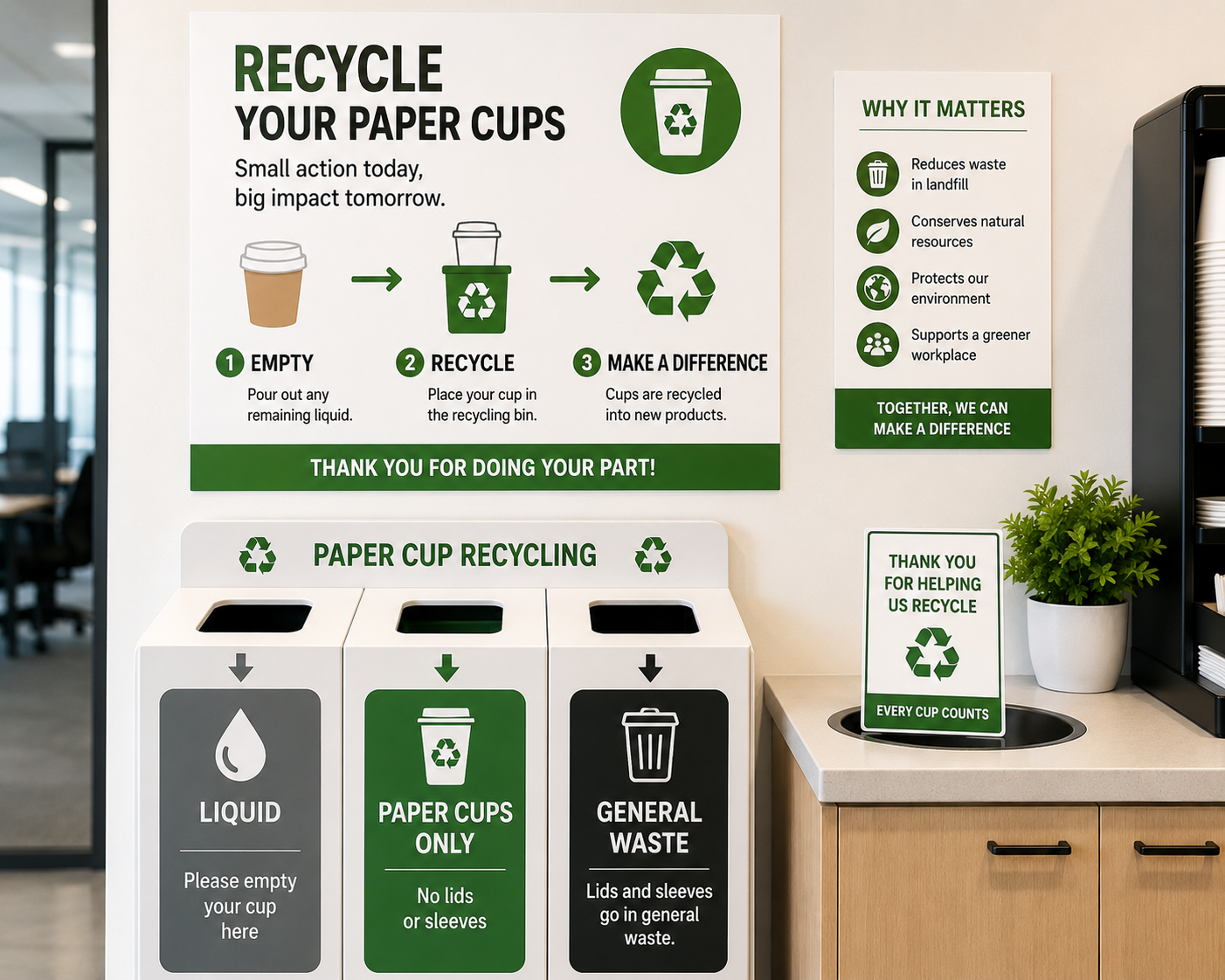
Introducing dedicated collection points for coffee cup recycling can make the correct disposal route much more obvious. These collection points can be positioned wherever cups are most frequently used, such as kitchens, breakout areas, reception spaces, canteens and coffee stations.
The easier the system is to understand, the more likely people are to use it consistently.
Use Clear and Simple Signage

Recycling instructions should be easy to recognise at a glance. A busy employee heading into a meeting is unlikely to stop and read several paragraphs explaining what belongs in each container.
Instead, organisations can use simple labels, familiar recycling symbols and brief instructions positioned directly above or beside collection points.
Signage can also explain whether cups need to be emptied before disposal. Providing a nearby place for leftover liquid can make this process much easier and help keep recycling streams cleaner.
Tell Employees Why It Matters
Infrastructure alone does not always change behaviour. Employees are more likely to participate when they understand why a recycling system has been introduced.
Businesses can communicate their recycling initiatives through internal newsletters, sustainability updates, staff meetings or office noticeboards. Even a short explanation can help demonstrate that used cups are being collected separately for a reason.
Making employees part of the initiative can also encourage greater participation. Sustainability champions or workplace environmental groups, for example, can help remind colleagues about recycling practices and gather feedback about how the system could be improved.
Review What Is Working
Waste and recycling requirements can change as organisations grow. A small office might initially need only one collection point, while a larger workplace could benefit from several bins across different floors.
Businesses should therefore review how their recycling system is being used. Collection points that regularly overflow may need to be emptied more frequently, while bins receiving little use could potentially be moved to busier locations.
Make Recycling Part of Workplace Culture
Effective recycling does not need to involve complicated processes. Often, the biggest improvements come from making responsible choices easier.
By combining convenient collection points, clear instructions and regular communication, businesses can make paper cup recycling part of everyday workplace behaviour. What begins as a simple change to waste management can become another practical step towards creating a more resource-conscious organisation.
