

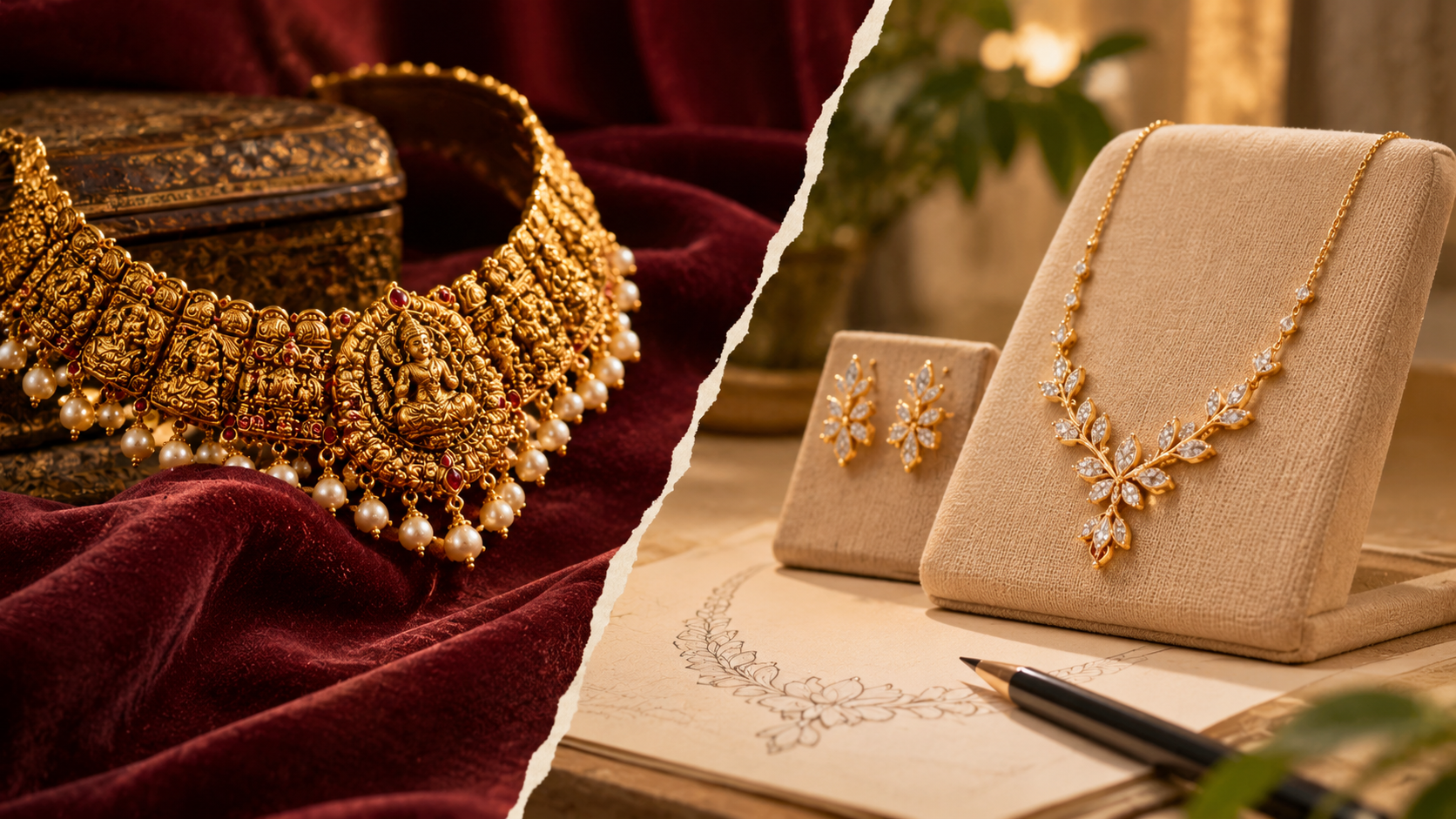
For a long time, the Indian heritage jewelry stores have been known for their wedding sets, their festive pieces, and their traditional style of making jewelry. All this is important; however, there have been changes in how people purchase jewelry, and the kind of jewelry that they wish to wear. This means that young people are interested in getting pieces of jewelry that can be worn for different occasions while retaining Indian culture. This has forced the existing jewelry companies to think again about their traditional design.
Blending Traditional Motifs with Modern Design
One clear change is the use of familiar motifs in newer designs. Temple patterns, floral details, peacocks, paisleys and traditional stone settings may appear in smaller or simpler forms. Large patterns can be adapted into pendants, earrings or shorter necklaces for occasions beyond formal events.
For example, temple jewellery designs may retain the sculpted figures and religious motifs associated with traditional pieces while using a more restrained arrangement. The craftsmanship remains important, but the overall design can feel less elaborate. This allows people to wear pieces inspired by older styles with both ethnic and contemporary clothing.
Lighter Pieces for More Regular Use
The factors such as weight and comfort have now gained importance, especially for those customers who wish to wear gold jewellery on a daily basis. Heavy necklaces and ornate pieces will always find relevance at the time of marriages and celebrations; however, many customers are also interested in earrings, chains, bangles, and pendants that are not heavy in weight.
It is possible for the designer to continue with engraving, filigree, and textured items while altering its size and form. One can use a removable pendant in the necklaces, which can then be worn in several ways. These small items can also be incorporated with other pieces of jewellery.
The trend towards utility designs has even affected the purchases during marriages.
Bridal Jewellery That Can Be Worn Again
Wedding jewellery carries emotional and cultural importance in India and is often chosen with family traditions in mind. Bridal buyers are also considering how pieces can be used after the wedding.
Instead of choosing every ornament as part of one heavy matching set, some brides select pieces that can be separated and styled individually. A long necklace can be layered with a shorter chain, while earrings or bangles can be worn with other outfits. This makes the jewellery useful beyond the wedding day.
The same thinking can be seen in gold vaddanam designs. Traditional waist belts remain part of South Indian bridal dressing, but buyers may compare different widths, patterns and levels of detailing depending on the outfit and occasion. Lighter or more flexible designs can be easier to wear for long ceremonies, while ornate pieces continue to appeal to those who prefer a traditional bridal look.
Personal Style and Customisation
The buyer is becoming more proactive when it comes to choosing the details of jewelry. The buyer could alter the length of the chain, choose between gemstones, or modify a traditional design. There are buyers who would rather mix their pieces than have a matched collection.
The trend for customization has emerged as a part of an evolving attitude towards jewelry. An item could be bought on such occasions as the first salary, birthday, career success, and personal accomplishment, and not just weddings or festivals. Younger buyers could wear jewelry as an expression of personal style by adding a traditional pendant with a chain or wearing heritage earrings with western attire.
Digital Discovery and the Importance of Trust
There have also been changes in shopping habits where people first explore design options, price details, and product descriptions online before paying a visit to the showroom. Social media makes them aware of regional trends and fashion for traditional jewelry.
Buying jewelry entails a great deal of trust, particularly for expensive pieces of jewelry. It is important for customers to know the purity of gold, grading of diamonds, details of stones, weight of jewelry, making charges, and the process of exchange. Hallmarking and documentation are necessary for customers to be able to know exactly what they are buying.
A few established jewellers have taken up online consultation, customization, and even virtual try-on of jewelry. This does not mean that they completely take away the showroom visit. They actually help customers shortlist designs even before buying the piece of jewelry.
Keeping Craftsmanship Relevant
Heritage jewellery draws on techniques passed down through generations. Engraving, meenakari, kundan work, stone setting and temple-inspired detailing continue to give it identity. Adapting does not mean removing these elements.
The challenge is deciding how to present them in ways that suit different lifestyles. A bridal jewellery collection can include elaborate ornaments for the wedding as well as simpler pieces that can be worn separately later. Similarly, a traditional motif can be adapted for a pendant or pair of earrings without losing its connection to its original form.
Heritage jewellery brands are balancing two expectations. Buyers still value history, craftsmanship and cultural meaning, but they also want comfort, choice and convenience. The brands that respond to both are finding ways to keep traditional jewellery part of modern wardrobes rather than limiting it to special occasions.
