

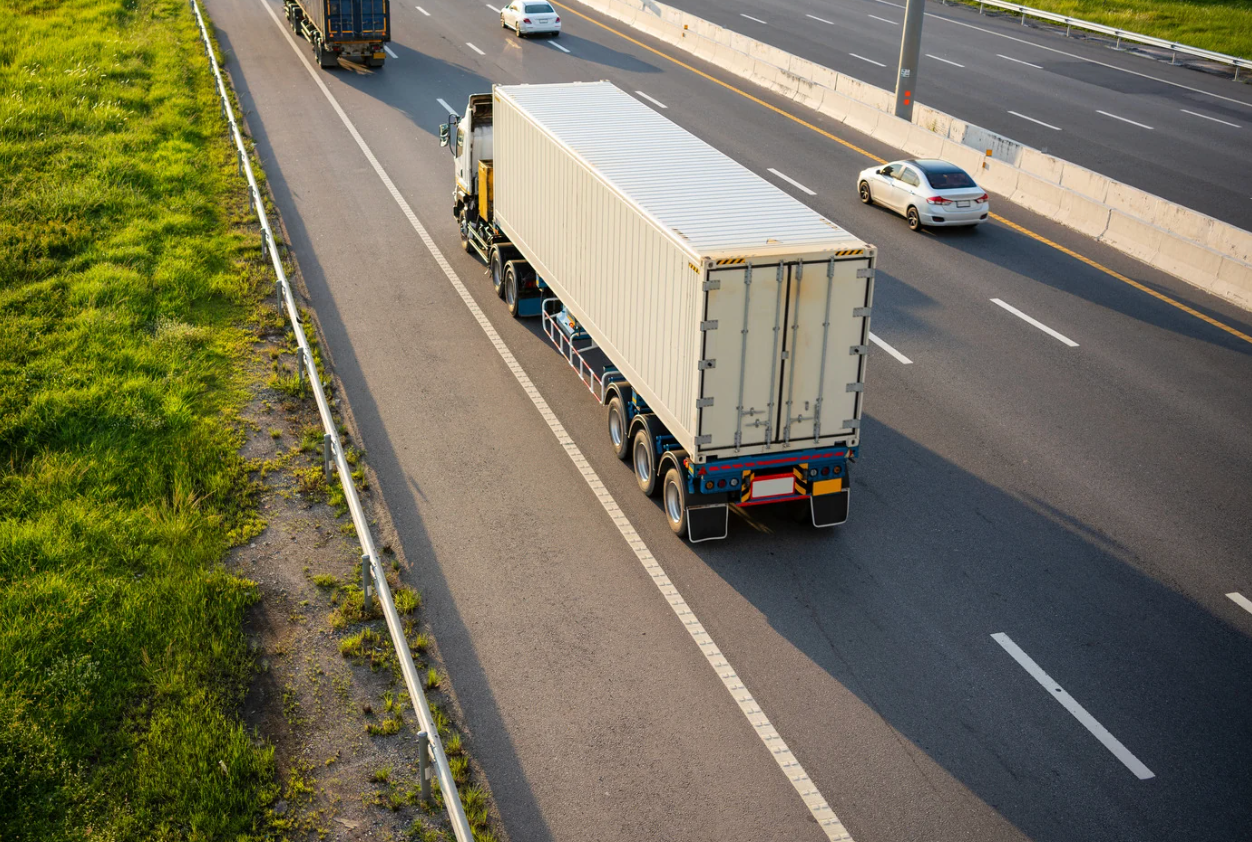
Houston roads are adapting to modern trucking technology in four ways: driverless trucks running on I-45, real-time crash alerts sent straight to truck dashboards, smart truck parking systems and faster, data-driven gates at Port Houston.
The pressure comes from volume. TxDOT says I-45 between Dallas and Houston carries 50% of Texas truck freight and moves 53 million tons of goods worth $95 billion every year. Port Houston handled a record 4,303,345 TEUs of containers in 2025 and served about 2.5 million trucks.
Software-driven 18-wheelers now share Houston lanes with human drivers on highways designed in the era of paper logbooks. This guide covers the technology already on Houston’s freight corridors, the Texas rules that govern it and what the shift means for everyone else on the road.
What Is the I-45 Innovative Corridor?
The I-45 Innovative Corridor is a TxDOT program that uses connected and automated technology to make the Dallas-to-Houston freight route safer and more reliable. The project covers 216 miles of I-45 between I-20 and Beltway 8 North.
TxDOT splits the corridor across three districts: Dallas (64 miles), Bryan (112 miles) and Houston (40 miles). More than 10 million people live near I-45, and the route hosts more than 85,000 freight businesses.
The Houston end is the hardest stretch. TxDOT lists two Houston District segments of I-45 among the Texas 100 Most Congested Roadways.
How Do Real-Time Alerts Reach Truck Drivers on Houston Highways?
Real-time alerts reach truck drivers through the electronic logging devices already mounted in their cabs. TxDOT partners with traffic data firm INRIX to send warnings about sudden slowdowns and congestion to ELDs from Drivewyze partners.
The program started as a pilot on I-45. TxDOT then expanded commercial vehicle alerts to all Texas interstates, covering 3,233.4 miles by July 2024.
The results on I-45 are measurable. TxDOT reported that between December 2024 and February 2025, 64% to 71% of alerted truck drivers slowed down ahead of an incident, and that share was rising.
That matters on Houston freeways, where a loaded 18-wheeler needs far more distance to stop than a passenger car. When an alert arrives a mile before a stalled lane on I-45 near Spring, the trucker has time to brake gradually instead of slamming into backed-up traffic.
How Is Technology Solving Truck Parking Shortages Near Houston?
Truck parking systems tell drivers where open spaces exist before they arrive, which cuts down on unsafe shoulder parking. Without that information, tired drivers park wherever they find room.
Sherry Pifer, freight systems branch manager at TxDOT, has said the lack of truck parking “results in unauthorized parking on highway shoulders, ramps and frontage roads.” A truck parked on a dark shoulder is a crash hazard for every vehicle behind it.
The Texas A&M Transportation Institute tested detection systems at the twin TxDOT safety rest areas on I-45 in Walker County, north of Huntsville. Sensors count trucks entering and leaving each lot, and the system reports how many spaces remain.
TxDOT is putting money behind the fix. The agency planned $300 million in truck parking improvements in its 2025 Unified Transportation Program, covering new truck parking construction and expansion of existing lots.
Where Do Driverless Trucks Operate in Houston?
Driverless trucks operate on I-45 between Houston and Dallas, the first commercial driverless freight lane in the United States. Aurora Innovation launched the service in spring 2025, hauling freight for paying customers with no human behind the wheel.
Aurora CEO Chris Urmson called the company “the first company to successfully and safely operate a commercial driverless trucking service” on public roads. Aurora has since expanded to 10 routes across the Sun Belt, including Fort Worth to El Paso and Dallas to Laredo.
The mileage is growing fast:
- January 2026: 250,000 driverless miles, with zero collisions attributed to the Aurora Driver
- End of June 2026: nearly 440,000 driverless miles
- Next-generation fleet: a new truck built with International, starting on the Dallas-to-Houston route
The technology still has human checkpoints. After launch, truck manufacturer Paccar asked Aurora to place an observer in the driver’s seat of its autonomous trucks. Competitor Kodiak says its trucks complete the I-45 run without a safety observer taking control and plans to remove the observer by the end of 2026.
What Rules Govern Autonomous Trucks on Texas Roads?
Texas requires every company running driverless vehicles commercially to hold an authorization from the Texas Department of Motor Vehicles. Senate Bill 2807, passed in 2025, created the requirement, and TxDMV began enforcing it on May 28, 2026.
Under SB 2807, an autonomous trucking company must:
- Hold an active TxDMV authorization before operating commercially on Texas roads
- File an emergency response plan that tells police and firefighters how to interact with its vehicles
- Participate in a public portal where residents verify operators and submit complaints
TxDMV has authority to suspend or revoke a company’s authorization when its vehicles endanger the public. In the first three months of enforcement, the agency received 42 complaints about driverless vehicles, and its enforcement chief told a Senate committee most involved vehicles being “overly courteous,” such as waiting too long at a light.
How Is Port Houston Using Technology to Move Trucks Faster?
Port Houston uses gate automation, terminal software and new equipment to move trucks through its container terminals faster. The port served about 2.5 million trucks in 2025 with an average truck turn time of about 40 minutes.
Truck traffic keeps climbing. Port Houston recorded a single-day record of 16,438 truck transactions at its container terminals in January 2026, and port officials report about 10,000 trucks a day moving through its two container terminals.
Three upgrades target that traffic:
- RTG-O technology: Port Houston completed full rollout at its container terminals in 2025 and reported productivity gains of up to 20%.
- Hybrid-electric cranes: About half of the port’s rubber-tired gantry crane fleet now runs on hybrid-electric power.
- A new Bayport exit gate: A $48 million federal grant funds a new container yard and exit gate designed to cut truck turn times and add about 440,000 TEUs of capacity.
Faster gates matter beyond the port fence. Every truck that clears the terminal sooner spends less time idling on the roads around Barbours Cut and Bayport.
Where Do Trucks Travel Most Across the Houston Region?
Trucks travel most heavily on a few corridors that connect regional gateways to Port Houston. TxDOT’s Houston District Truck Mobility Study found heavy truck activity on I-10 between Sealy and Cove and between the port’s Turning Basin Terminal and I-45 near Spring.
The study also found that most trucks do not cross the entire region. They make shorter trips between the port, warehouses and highway gateways, which concentrates truck traffic on specific Houston segments and intersections.
TxDOT feeds those findings into Houston District project planning, so crash alerts, parking data and incident management reach the routes trucks use every day.
Who Is Liable When a Driverless or Tech-Equipped Truck Crashes in Houston?
Liability in a crash involving a driverless or tech-equipped truck falls on the company that controlled the truck and any party whose failure caused the crash. That list includes the motor carrier, the autonomous technology developer, the truck manufacturer, the shipper or the maintenance provider.
New technology adds new evidence. A driverless truck records sensor data, camera footage, software decisions and system warnings. A conventional truck carries engine data, ELD logs and dashcam video. All of it disappears fast unless someone demands it be preserved.
Injured drivers in these cases need an 18-wheeler accident attorney in Houston who knows how to identify every responsible party. Sutliff & Stout has handled trucking cases where the legal path was narrow. In one case, the firm represented the estate of a man killed while helping direct traffic after an 18-wheeler jackknifed in the road. The only claim the estate had was for his pain and suffering in the 10 seconds before his death, and Sutliff & Stout secured a $2,350,000 settlement.
The firm’s attorneys also cover how AI and autonomous vehicles are reshaping personal injury law on their Houston car and truck accident podcast. As driverless trucks scale on I-45, that knowledge becomes part of building a case.
What Does Modern Trucking Technology Mean for Houston Drivers?
Modern trucking technology means more trucks on Houston roads, smarter warnings for the people driving them and new rules for the machines driving themselves.
For everyday drivers, a few habits matter more than ever:
- Give trucks room on I-45 and I-10. Driverless or not, an 80,000-pound truck needs long stopping distances.
- Don’t cut in front of a slowing truck. Crash alerts tell truckers to brake early, and a car darting into that gap erases the safety margin.
- Report unsafe driverless trucks. TxDMV’s public portal accepts complaints about autonomous vehicles.
- Expect more truck traffic near the port. Bayport and Barbours Cut volumes keep setting records.
Houston’s freight corridors are turning into test beds for the future of trucking. The technology is arriving fast, and the roads, rules and drivers around it are adjusting in real time.
