

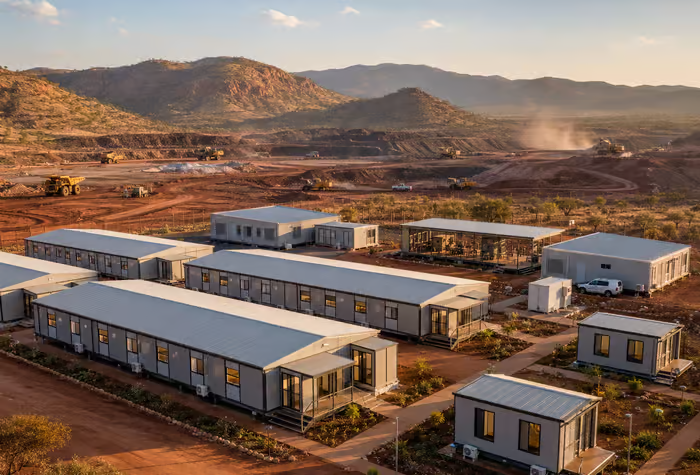
Mining projects often operate in locations where conventional construction can be difficult, expensive, and time-consuming. Remote sites may have limited infrastructure, challenging weather conditions, restricted access to construction materials, and a temporary or changing workforce. For these reasons, companies increasingly look for construction methods that can provide reliable accommodation and facilities without creating unnecessary delays.
Modular mining camps offer a practical approach to these challenges. Instead of constructing every building entirely on-site, modular components can be manufactured, prepared, transported, and assembled according to the requirements of a specific project. This approach can help mining companies establish worker accommodation, dining areas, offices, recreation spaces, and other essential facilities more efficiently.
What Is a Modular Mining Camp?
A modular mining camp is a collection of prefabricated buildings designed to support workers and operations at a mining site. Depending on the project’s requirements, a camp can include sleeping quarters, kitchens, dining halls, offices, medical rooms, bathrooms, laundry facilities, recreation areas, storage spaces, and utility buildings.
The main advantage of modular construction is that many building components can be manufactured away from the mining site. Once the modules are ready, they can be transported to the project location and assembled there.
This can reduce the amount of construction work required in remote environments and make project planning more predictable.
For companies looking at different construction approaches, understanding the modular mining camp construction types available can help them select a solution that matches their workforce size, climate, project duration, transportation conditions, and operational requirements.
Why Are Modular Camps Important for Mining Projects?
Mining operations frequently take place far from major cities and established infrastructure. Building a conventional camp in such an environment can involve significant logistical challenges.
Construction materials may need to travel long distances, skilled workers may have to be transported to the site, and harsh weather can affect construction schedules. A modular approach can address some of these challenges by moving a significant portion of the manufacturing process away from the project site.
This can provide several potential advantages:
- Faster site deployment
- Better construction planning
- Reduced on-site construction work
- Flexible camp layouts
- Improved accommodation standards
- Easier future expansion
- Potentially reduced project disruption
The exact benefits depend on the project design, location, transportation requirements, and quality of the modular construction system.
Faster Construction and Deployment
Time is an important consideration in the mining industry. Delays in establishing accommodation and support facilities can affect workforce mobilisation and overall project schedules.
With modular construction, building components can be manufactured while site preparation and foundation work are taking place. This parallel approach can shorten the overall construction programme compared with methods where most construction activities have to happen sequentially on-site.
Once the modules arrive at the mining location, assembly can often proceed more quickly because many components have already been completed under controlled manufacturing conditions.
For mining companies working against tight project deadlines, this can be a significant advantage.
Better Solutions for Remote Locations
Remote mining locations can present unique construction challenges. Access roads may be limited, weather conditions can change quickly, and transporting large quantities of traditional building materials can be difficult.
Modular construction allows project planners to consider transportation and assembly from the early design stage. Modules can be designed around available transportation methods, site access, lifting equipment, and local conditions.
This planning is particularly important when a camp needs to be established in an area with limited infrastructure.
A successful modular project therefore involves more than simply manufacturing buildings. Logistics, site preparation, transportation, installation, utilities, and commissioning all need to be considered.
Improving Worker Accommodation
Worker wellbeing is an important part of successful mining operations. Employees may spend weeks or months at remote sites, making the quality of accommodation an important factor.
Modern modular mining camps can be designed to provide comfortable sleeping areas, bathrooms, dining facilities, recreation rooms, offices, and other amenities.
Depending on the project, accommodation can be configured as individual rooms, shared units, or larger modular buildings. Interior layouts can also be designed to meet the operational and environmental requirements of the location.
Comfortable facilities can contribute to a better living environment for workers while supporting the practical needs of long-term mining operations.
Flexible Camp Designs
Mining projects do not always remain the same throughout their lifecycle. Workforce numbers may increase during construction and decrease during later operational stages. A temporary exploration project may also have very different accommodation requirements from a large-scale long-term mining operation.
Modular buildings can provide flexibility because individual units can be arranged according to the needs of the project.
For example, a camp might initially include:
- Worker accommodation
- Dining facilities
- Kitchen areas
- Administration offices
- Bathrooms
- Medical facilities
If the workforce later expands, additional modules may be incorporated into the overall camp design, subject to the project’s technical and logistical requirements.
This flexibility can be especially useful for mining companies whose workforce or operational requirements may change over time.
Different Modular Construction Approaches
Not every modular mining camp is designed in the same way. Different projects require different structural systems, layouts, materials, and levels of prefabrication.
Some systems use individual prefabricated modules that are transported to the site and connected. Others may use panelised components or larger prefabricated building sections.
The appropriate solution depends on factors such as:
- Project location
- Climate
- Building purpose
- Expected occupancy
- Transportation restrictions
- Installation requirements
- Project duration
- Budget
- Local regulations
Understanding the available systems before construction begins can help project managers balance speed, durability, cost, and functionality.
The Value of Turnkey Mining Camp Solutions
For large or remote mining projects, managing multiple suppliers and contractors can become complicated. A turnkey approach can simplify the process by bringing multiple stages of the project under one coordinated solution.
A WELLCAMP turnkey mining camp solution can provide an integrated approach to modular camp development, helping project teams coordinate the design, manufacturing, transportation, installation, and related requirements of a mining camp.
The exact scope of a turnkey package can vary depending on the supplier and project. It may include accommodation buildings, offices, dining facilities, sanitation systems, utilities, furniture, and other supporting infrastructure.
Working with a provider capable of handling multiple stages can reduce coordination requirements and provide a clearer project structure.
How Turnkey Solutions Can Simplify Project Management
Managing a remote construction project often involves multiple parties. Architects, engineers, manufacturers, logistics providers, installers, utility contractors, and local teams may all have to coordinate their activities.
A turnkey provider can act as a central point of coordination for many of these tasks.
This can help project managers maintain better visibility over:
- Design requirements
- Manufacturing schedules
- Transportation
- Installation
- Utility connections
- Interior fit-out
- Testing and commissioning
Centralised coordination does not eliminate every project risk, but it can make communication and responsibility easier to manage.
Designing Camps for Different Climates
Mining camps can be located in extremely different environments, from hot and humid regions to cold and remote areas. Building design therefore needs to take local climate conditions into account.
Insulation, ventilation, heating, cooling, roofing, windows, doors, and materials can all affect how well a modular building performs in its environment.
For cold regions, thermal insulation and heating systems may be particularly important. In hot climates, ventilation and cooling can become major design considerations.
A modular camp should therefore be engineered for the actual conditions of the project rather than relying on a one-size-fits-all design.
Safety and Compliance Considerations
Safety should remain a priority throughout the planning, manufacturing, transportation, and installation of a mining camp.
Before construction begins, project teams should identify applicable building codes, fire-safety requirements, electrical standards, occupational safety requirements, and local regulations.
The design should also account for emergency exits, fire protection, electrical systems, structural loads, sanitation, and safe access.
Because mining projects can operate under strict safety requirements, choosing an experienced modular construction provider and obtaining appropriate technical documentation is important.
Local regulations can differ significantly between countries and project locations, so compliance requirements should always be confirmed with qualified professionals and relevant authorities.
Transportation and Site Logistics
One of the most important aspects of modular construction is transportation.
A module may be manufactured in one location and transported hundreds or thousands of kilometres to a mining site. Road conditions, port facilities, loading restrictions, bridges, terrain, customs procedures, and available lifting equipment can all affect the delivery process.
For this reason, transportation should be considered during the design stage rather than after manufacturing has already started.
Modules may need to be designed around maximum transport dimensions and weight restrictions. Delivery schedules should also account for weather and road conditions, especially in remote areas.
Can Modular Camps Be Expanded Later?
One of the attractive features of modular construction is the possibility of future expansion.
If workforce requirements increase, additional accommodation or support facilities may potentially be added to an existing camp. This can be more practical than designing an entirely new conventional facility.
However, expansion should be considered during the original planning process. Site layout, utility capacity, foundations, access roads, drainage, and available space should all be evaluated before construction.
Planning for future growth can help avoid expensive modifications later.
Sustainability and Modular Construction
Environmental considerations are becoming increasingly important across the construction and mining industries.
Modular construction can offer opportunities to improve material efficiency because components are manufactured in controlled factory environments. Precise production processes may help reduce certain types of material waste compared with uncontrolled construction environments.
Modular buildings can also potentially be relocated or repurposed when a temporary project ends, depending on their design and condition.
However, sustainability depends on the complete project lifecycle. Transportation distances, materials, energy use, building performance, maintenance, and eventual disposal or reuse all need to be considered.
Choosing the Right Modular Mining Camp Provider
Selecting a supplier is one of the most important decisions in a modular mining camp project.
Companies should evaluate a provider based on more than the initial quotation. Experience with similar projects, engineering capabilities, manufacturing capacity, logistics support, installation services, quality control, and after-sales support can all affect project success.
Important questions to ask include:
- Does the supplier have experience with remote mining projects?
- Can the company provide customised designs?
- What construction systems are available?
- Can the supplier manage transportation and installation?
- What certifications and quality-control procedures are followed?
- What support is available after installation?
- Can the camp be expanded or relocated if requirements change?
A detailed evaluation can help companies identify a supplier that fits their technical and operational requirements.
Modular vs Traditional Construction
Traditional construction remains suitable for many permanent developments, but it may be less practical when a mining company needs facilities quickly in a remote location.
Modular construction can shift much of the manufacturing process away from the site, potentially reducing on-site labour and shortening installation time.
Traditional construction, meanwhile, can offer greater flexibility for certain highly customised permanent structures.
The right choice depends on the project’s objectives. Factors such as construction schedule, location, budget, building lifespan, transportation, workforce requirements, and future expansion should all be considered.
What Makes a Successful Mining Camp?
A successful mining camp needs to balance several priorities rather than focusing on construction speed alone.
The facility should provide suitable accommodation, reliable utilities, safe working and living spaces, practical transportation access, and appropriate recreational and support facilities.
Good planning also considers the worker experience. Dining areas, recreation spaces, laundry facilities, communication services, and comfortable sleeping areas can all contribute to a functional camp environment.
The best solution is therefore one that combines construction efficiency with long-term usability.
Final Thoughts
Modular mining camps provide an efficient and flexible approach to developing accommodation and support facilities in challenging locations. By manufacturing building components away from the project site and assembling them where they are needed, companies can potentially reduce construction time and simplify deployment.
The flexibility of modular systems also makes them suitable for projects with changing workforce requirements. Camps can be designed for different climates, operational needs, and project durations, while future expansion can be considered from the beginning.
For companies planning a remote mining development, it is worth comparing different construction systems, reviewing modular mining camp construction types, and considering whether a turnkey solution could simplify project management.
