

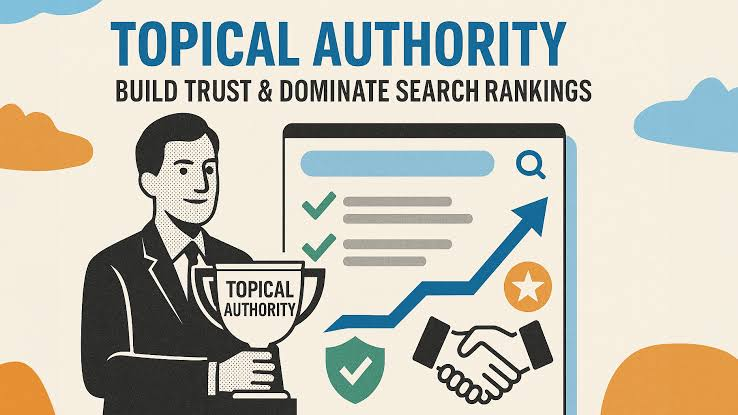
Search engine optimization has matured considerably. The strategies that generated results five years ago — keyword density manipulation, mass directory submissions, templated content — now actively harm organic performance. Brands that continue relying on these tactics face diminishing returns, while those who invest in structural, evidence-based programs are pulling ahead consistently.
The most effective SEO programs begin not with content creation or link outreach, but with a rigorous diagnostic phase. Conducting a thorough audit seo is the foundation upon which every subsequent optimization decision rests. Without a clear picture of current technical health, crawlability, content coverage, and link profile, resources tend to be deployed against the wrong priorities.
What a Technical Audit Actually Reveals
Many organizations underestimate how much technical friction exists on their websites until a structured audit surfaces it. Common findings include:
- Crawl inefficiencies caused by excessive redirect chains or blocked resources
- Duplicate content issues stemming from parameter-based URLs or syndicated material
- Core Web Vitals failures that degrade page experience scores
- Misconfigured canonical tags creating indexation confusion
- Orphaned pages consuming crawl budget without contributing to site authority
Each of these issues suppresses organic visibility in ways that keyword optimization alone cannot overcome. Addressing them systematically — prioritized by estimated impact — forms the backbone of a credible SEO roadmap.
The Expanding Role of AI SEO Services
Artificial intelligence has shifted from a peripheral novelty to a core component of competitive search programs. Machine learning tools now assist practitioners with semantic content mapping, SERP feature analysis, predictive keyword clustering, and site health monitoring at scale.
The emergence of generative AI in search has also introduced a new challenge: brands must now optimize not only for traditional blue-link results, but for AI-generated answer panels, featured snippets, and voice-based queries that increasingly capture user intent before a click occurs. Agencies offering ai seo services are equipping clients to compete across both traditional and generative search surfaces — a capability gap that is widening between forward-looking organizations and those still focused exclusively on conventional ranking factors.
For brands in competitive verticals, AI-assisted analysis reduces the lag between data collection and strategic action. Automated anomaly detection, content gap identification, and competitive benchmarking enable faster iteration cycles without sacrificing analytical depth.
Link Authority: Why Quality Outweighs Volume
Off-page authority — the credibility signals communicated through external links pointing to a site — remains one of the most durable ranking factors in organic search. Search engines treat editorially earned links as evidence of trustworthiness: if authoritative sources reference a piece of content, the reasoning goes, it likely merits prominence in results.
This logic makes the quality of link acquisition far more important than volume. A single placement on a respected industry publication carries more weight than dozens of links from low-authority directories. A credible backlink service focuses on sourcing placements that reflect genuine editorial endorsement — content published on relevant domains because it offers real value to their readers, not because a link exchange was arranged.
Sustainable link programs also carry lower algorithmic risk. Manipulative link schemes may produce short-term ranking lifts, but they create exposure to manual penalties and algorithmic devaluation. Recovering from either is time-consuming and expensive — often erasing gains that took months to build.
Integrating SEO With Broader Marketing Channels
High-performing SEO is not an isolated function. The strongest programs are integrated with paid media, PR, content distribution, and customer data — creating a feedback loop that improves performance across channels simultaneously.
Paid search data, for instance, surfaces high-converting keyword themes worth targeting organically. PR placements generate natural inbound links that strengthen domain authority. Content developed for organic discovery often performs well across email sequences and social channels as well. Brands such as Relevant Audience have built service models around this integration — treating SEO as one layer within a coordinated digital growth architecture rather than a standalone checklist.
Evaluating an SEO Partner: Key Questions to Ask
Selecting the right agency requires evaluating methodology, not just case study outcomes. The following questions help distinguish partners with genuine depth from those relying on surface-level execution:
- How is the initial audit scoped, and how are findings prioritized by business impact?
- What does the content strategy process look like, and how is performance measured over time?
- How are link placements sourced and vetted — and what safeguards prevent low-quality acquisition?
- How are AI tools integrated into workflow, not just referenced in pitches?
- Does reporting connect SEO activity to revenue and conversion outcomes, or only to traffic and rankings?
Agencies that answer these questions with specificity and transparency are generally better positioned to deliver sustainable results than those offering broad guarantees without methodological detail.
Conclusion
Building durable search authority requires a disciplined, multi-layered approach — one that combines technical rigor, content strategy, and credible link acquisition within a framework that evolves alongside algorithm changes. As AI reshapes how users discover information and how search engines evaluate content, the gap between organizations with structured SEO programs and those without will continue to widen.
Brands ready to invest in a systematic, results-oriented approach to organic growth can explore the full range of available services at https://www.relevantaudience.com/
Contact US
Address: 2556, Building 66 Tower, Room.1802,
Floor 18, Sukhumvit Rd, Bangna-Nuea,
Bangna, Bangkok, 10260
Phone: 020385055
Email: info@relevantaudience.com
Website: https://www.relevantaudience.com/
