


Technology has always driven manufacturing forward. From the first steam engines to the rise of automation, each wave of innovation has transformed how we make things. Today, we are in the middle of another profound shift. The convergence of artificial intelligence, connected devices, and advanced machining is creating something entirely new: a manufacturing ecosystem that learns, adapts, and improves on its own. This is not a distant vision. It is happening now, on factory floors around the world.
The numbers tell a clear story. The global smart manufacturing market is projected to grow substantially in the coming years, driven by the need for greater efficiency, higher quality, and more responsive supply chains. Manufacturers that embrace these technologies are gaining measurable advantages: faster production cycles, fewer defects, and the ability to handle complexity that would have been unimaginable a generation ago.
The Rise of the Connected Factory
At the heart of this transformation is connectivity. Machines that once operated in isolation are now linked through industrial networks that collect and analyse data on every aspect of production. Spindle loads, axis positions, coolant pressure, tool wear, temperature, and vibration—all of these metrics flow into systems that provide real-time visibility into the health and performance of every machine on the floor.
The benefits are tangible. Predictive maintenance systems use sensor data to forecast tool failures before they occur, reducing unplanned downtime. Real-time quality monitoring catches defects early, preventing scrap and rework. Production scheduling becomes more responsive, adapting to changing conditions without human intervention. For precision machining, where tolerances are measured in microns and consistency across thousands of parts is non-negotiable, this connectivity is not a luxury. It is a necessity.
AI and the Evolution of Machining

Artificial intelligence has moved from research labs to production floors. In precision manufacturing, AI is no longer experimental—it is integral to daily operations. AI-driven software optimises tool paths automatically, reducing cycle times and extending tool life. Machine learning algorithms analyse historical production data to identify patterns that human operators might miss, enabling continuous process improvement.
One of the most significant applications is adaptive machining. In this approach, the machine adjusts feeds, speeds, and toolpaths in real time based on sensor feedback. When a workpiece exhibits unexpected hardness, the system compensates instantly. When thermal expansion affects part dimensions, closed-loop controls maintain accuracy. The result is higher first-pass yields and more consistent quality, even when conditions vary.
For shops that have integrated these capabilities, the competitive advantages are clear: fewer scrapped parts, shorter lead times, and greater capacity to handle complex geometries. And for the customers who source from them, this translates into reliable delivery and predictable quality.
Digital Twins and Process Optimisation
Digital twin technology represents another leap forward. A digital twin is a virtual replica of a physical machine or process. Engineers use these models to simulate machining operations before the first chip is cut, identifying potential problems and optimising parameters without interrupting production.
When the physical machine runs, sensors feed data back to the digital twin, creating a continuous learning loop. The virtual model becomes more accurate over time, enabling better predictions and more refined optimisation. For complex components—such as aerospace structural parts or medical implants—this capability is invaluable. It reduces development time, minimises trial-and-error, and ensures that production processes are right the first time.
Advanced Materials in the Digital Age
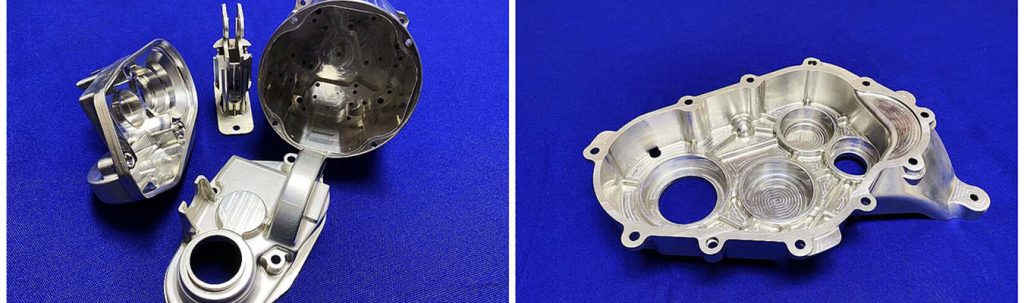
The digital transformation is particularly significant for the materials that form the foundation of modern engineering. Each presents unique challenges that smart manufacturing helps to address.
Aluminium has become indispensable across automotive, aerospace, and electronics sectors. Its exceptional strength-to-weight ratio and thermal conductivity make it ideal for electric vehicle battery housings, aircraft structural components, and heat sinks. In the digital age, advanced CNC machining centres equipped with high-speed spindles and automated tool changers can achieve tolerances as tight as ±0.005 millimetres on complex aluminium components. For engineers and procurement professionals seeking aluminium CNC machining service, working with a shop that has embraced digital manufacturing technologies ensures consistent quality and reliable delivery.
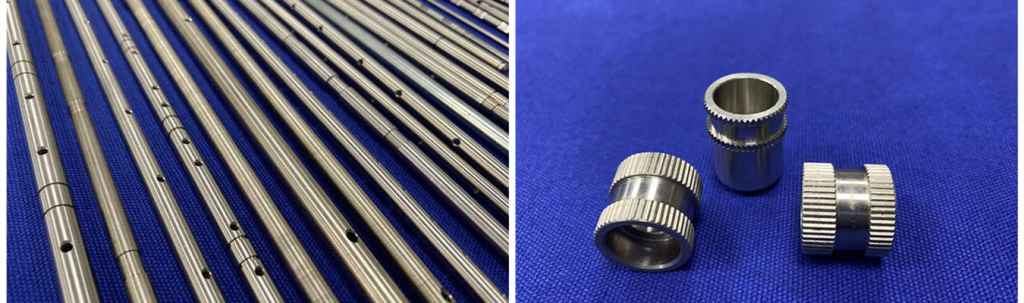
Brass and copper alloys are essential to electrification, telecommunications, and medical devices. Copper’s exceptional conductivity makes it irreplaceable in electric vehicle wiring, busbars, and motor windings, while brass offers excellent machinability for fluid systems and precision components. Both materials present unique machining challenges—copper’s tendency to produce long, stringy chips demands careful chip management, while brass requires sharp tooling and proper chip evacuation. Digital process controls enable consistent results across high-volume production runs. For applications ranging from electrical connectors to fluid system components, brass and copper CNC machining expertise combined with digital process control delivers the surface finishes and dimensional accuracy that modern applications demand.
Stainless steel remains the most widely specified material for components that must withstand corrosion, stress, and time. Medical implants, surgical instruments, and aerospace fasteners all rely on stainless steel grades such as 303, 304, 316L, and 17-4 PH. Machining stainless steel presents significant challenges—austenitic grades work-harden rapidly, and if speeds, feeds, and coolant application are not precisely optimised, the material hardens ahead of the tool, causing premature wear and dimensional drift. Digital process control enables consistent optimisation, reducing variability and improving first-pass yields. For mission-critical applications, stainless steel machining service expertise combined with digital quality systems ensures components meet the most demanding specifications.
The Reshoring Imperative
The digital transformation of precision machining comes at a time when reshoring and supply chain diversification have become strategic imperatives. Companies across North America and Europe are actively bringing production closer to end markets, driven by concerns about supply chain resilience, trade uncertainty, and the rising cost of distant sourcing. However, the industry faces a persistent challenge: a shortage of skilled machinists. Precision machining consistently ranks among the hardest positions to fill because the trade requires years of on-the-job mentoring.
This is where digital manufacturing offers a practical solution. Automation reduces reliance on manual intervention for routine tasks. AI-powered software simplifies programming, enabling less experienced operators to produce complex parts. Predictive maintenance systems reduce the need for emergency repairs, keeping production running smoothly with fewer skilled technicians on staff. The shops that have embraced these technologies are better positioned to capture reshored programs and maintain consistent quality despite the talent gap.
Looking Ahead
The next twelve to eighteen months will likely determine which manufacturing partnerships deliver durable advantages. Demand signals are clear: precision-machined components across aluminium, brass and copper, and stainless steel are moving toward tighter tolerances, more complex geometries, and higher production volumes. The technology required to meet today’s specifications is well understood, but it requires sustained capital investment and process discipline.
The shops that have made those investments—those that have built their operations around digital manufacturing technologies, automated quality control, and a stable, skilled workforce—are positioned to capture the most demanding programs. For customers, that translates into predictability, which in today’s uncertain environment is worth more than a small discount on the unit price.
In an era where every component matters, the companies that embrace digital transformation will lead their industries forward. The technology exists to produce components that were unimaginable a generation ago. The question is which partners have the expertise to deliver them consistently, reliably, and at scale.
