

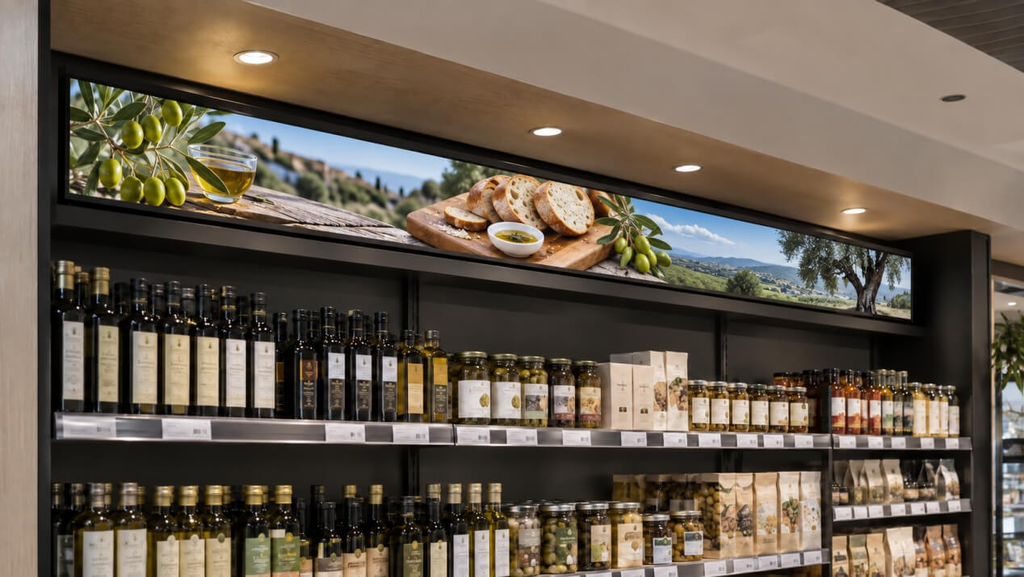
Digital signage has become an essential communication tool for businesses, retailers, transportation facilities, restaurants, hotels, museums, and entertainment venues. As organizations search for more creative ways to communicate with audiences, display technology is moving beyond conventional rectangular screens. One solution gaining attention is the stretched bar LCD display, which offers an elongated format designed for locations where traditional screens may not be practical.
These displays combine modern visual technology with flexible installation possibilities, allowing businesses to transform unused or unconventional spaces into effective digital communication areas. From advertising and product information to wayfinding and branding, elongated screens can support a wide variety of applications.
Understanding Stretched Bar Displays
A stretched bar LCD display is an LCD screen designed with an unusually wide or elongated aspect ratio. Instead of following the standard proportions of televisions and computer monitors, these displays can be significantly longer and narrower.
The unusual shape allows them to fit into spaces where a conventional screen would look oversized or simply not fit. Depending on the application, they can be mounted horizontally or vertically and integrated into walls, shelves, kiosks, counters, transportation systems, and architectural structures.
The display format also gives content designers new opportunities. Rather than adapting traditional advertisements to a standard rectangle, businesses can create panoramic graphics, scrolling messages, product information, and other content specifically for the elongated screen.
Making Better Use of Space
Space is often limited in commercial environments. Retail stores may have shelves, displays, windows, and fixtures occupying most available areas. Restaurants may have limited wall space, while transportation facilities need to accommodate passengers, signs, and other infrastructure.
A stretched bar LCD display can take advantage of narrow spaces that might otherwise remain unused. For example, a retailer could install an elongated screen above a product shelf to highlight promotions. A restaurant could use one above a service counter to communicate menu specials.
This space-efficient design can also help businesses maintain a clean and organized appearance. Instead of installing a large conventional display that dominates an area, an elongated screen can be integrated into the existing environment.
Enhancing Retail Advertising
Retailers are constantly looking for ways to attract customer attention. Digital signage allows businesses to replace static posters with dynamic content that can change throughout the day.
An elongated display can be particularly effective for promotional messages placed above shelves, product sections, or checkout areas. Retailers can use animations, product images, prices, promotional announcements, and branding to communicate with shoppers.
For example, a fashion store could use a long screen to showcase a seasonal collection, while an electronics retailer could display product comparisons or promotional offers. The unusual shape of the display itself can help attract attention while complementing the store’s interior design.
Supporting Transportation Signage
Transportation facilities are another environment where specialized display formats can be useful. Airports, railway stations, bus terminals, and metro systems often contain long corridors, platforms, and structural areas where standard displays may not be ideal.
An elongated screen can display schedules, announcements, directions, advertisements, or emergency information. Because the display can be designed around the available architecture, it can provide useful information without interfering with pedestrian movement.
For passengers who are constantly moving through a facility, clear and highly visible digital information can improve the overall experience.
Creating Modern Hospitality Experiences
Hotels, restaurants, resorts, and entertainment venues can also incorporate elongated displays into their environments. Hospitality businesses often place significant emphasis on atmosphere and visual presentation, making specialized digital signage an attractive option.
A hotel might use an elongated screen in a lobby to display welcome messages, event information, or promotional content. Restaurants can use narrow displays for menu highlights or seasonal campaigns.
Because the screen can be integrated into architectural elements, it does not necessarily have to look like a traditional television mounted on a wall. This can help businesses create a more contemporary and sophisticated environment.
Designing Content for an Unusual Format
The effectiveness of a stretched bar LCD display depends heavily on how its content is designed. Standard advertising graphics may not automatically translate well to an elongated format.
Designers should consider the screen’s aspect ratio when creating layouts. Important messages should remain easy to read, while images and animations should take advantage of the available horizontal or vertical space.
Scrolling text can be useful for announcements, while panoramic images can create an immersive visual effect. Businesses can also use multiple content zones to display different types of information simultaneously.
The key is to create content specifically for the screen rather than simply placing conventional content onto an unusual display.
Flexible Installation Possibilities
One of the major advantages of specialized LCD displays is installation flexibility. Depending on the design, screens can be incorporated into walls, retail fixtures, kiosks, counters, ceilings, or other structures.
This flexibility makes them suitable for customized digital signage projects. Businesses can select dimensions that correspond to their available space and determine how the screen should be positioned for maximum visibility.
Installation planning should consider viewing distance, screen orientation, power requirements, ventilation, connectivity, and access for maintenance. A professional installation approach can help ensure that the display operates reliably while fitting naturally into the surrounding environment.
Benefits for Brand Communication
Branding is another area where elongated displays can provide value. Businesses can use digital screens to communicate brand identity through colors, imagery, animations, slogans, and promotional videos.
The unusual proportions of the display can itself become part of the brand experience. A distinctive screen installation may help a retail store, showroom, or event venue stand out from competitors using conventional signage.
Because digital content can be updated quickly, businesses can also change their messaging according to campaigns, seasons, events, or customer needs.
Choosing the Right Display
Before investing in a specialized display, businesses should evaluate several technical and practical factors. Resolution should match the viewing distance and content requirements. Brightness should be appropriate for the installation environment, particularly if the screen is positioned near windows or strong lighting.
Connectivity is also important. Depending on the signage system, the display may require HDMI, USB, network connectivity, media players, or remote content-management systems.
Durability, operating hours, maintenance requirements, warranty coverage, and installation support should also be considered. Selecting the right display requires more than simply choosing a screen based on size and appearance.
The Future of Specialized Digital Signage
As businesses become more creative with physical spaces, specialized displays are likely to become increasingly important. The stretched bar LCD display is part of a broader trend toward digital signage that is designed around specific architectural and communication requirements.
Instead of adapting a building to accommodate a standard screen, businesses can increasingly choose displays that adapt to the building. This can open new possibilities for retail environments, transportation systems, hospitality venues, museums, exhibitions, and corporate spaces.
As display technology continues to improve, elongated screens may become brighter, more energy efficient, more reliable, and easier to integrate with digital signage management systems.
Conclusion
Modern digital signage is evolving beyond traditional rectangular monitors. Businesses now have access to specialized formats that can make better use of limited space while creating distinctive visual experiences.
A stretched bar LCD display offers a practical and creative solution for locations where conventional screens may not be suitable. Its elongated format can support advertising, branding, information displays, transportation signage, retail promotions, and architectural installations.
With thoughtful content design and proper installation, these displays can turn narrow or underused areas into valuable communication spaces. As businesses continue to prioritize customer engagement and innovative visual experiences, specialized LCD technology is likely to play an increasingly important role in the future of digital signage.
