


Technology has fundamentally changed how organizations handle documents, manage workflows, and store critical information. From small businesses to large enterprises, digital document management systems have replaced paper-heavy processes with structured, searchable, and secure digital environments. This shift is not cosmetic — it represents a measurable transformation in operational efficiency, error reduction, and cost control. Research from the AIIM (Association for Intelligent Information Management) indicates that organizations with digital document management systems reduce document retrieval time by up to 75% compared to manual filing systems. Companies that fully digitize document workflows report cost savings averaging 30–40% annually in administrative overhead alone. The scope of modern document management extends beyond simple file storage. It encompasses version control, access permissions, audit trails, automated routing, and compliance tracking. Industries including healthcare, finance, education, and law rely on document management platforms to meet regulatory requirements, maintain data integrity, and ensure consistent communication across departments. The convergence of cloud computing, mobile access, and workflow automation has made these systems more accessible than ever, with adoption rates climbing steadily across organizations of every size. Understanding how document management technology works — and how to deploy it effectively — is essential for any organization aiming to operate at peak efficiency in a data-intensive environment. This article explores the core dimensions of modern document management, from infrastructure to legal compliance, and draws on current research to present the clearest possible picture of where this technology stands today.
What Are the Core Benefits of Digital Document Management Systems?
The core benefits of digital document management systems include faster retrieval, stronger security, lower operational costs, and improved regulatory compliance. Traditional paper-based filing systems require physical storage space, manual indexing, and significant human labor to maintain accuracy. Digital systems eliminate these constraints by centralizing documents in structured repositories with metadata tagging, keyword search, and instant cross-referencing. According to research published by McKinsey Global Institute, employees spend an average of 1.8 hours per day searching for information — roughly 9 hours per week — a figure that drops by over 35% in organizations using well-configured document management platforms. Version control is a particularly high-impact feature. Organizations that work with contracts, specifications, or policy documents, for example, need to track every revision, identify who made changes, and restore previous versions when necessary. Without version control, duplicate documents, outdated drafts, and conflicting edits create compounding errors. A study from the International Data Corporation (IDC) found that poor document management costs large organizations roughly $20,000 per information worker per year in lost productivity. Security is another foundational advantage. Role-based access controls ensure that sensitive documents — financial records, personnel files, and client data — are only accessible to authorized personnel. Audit trails record every action taken on a document, from opening to editing to downloading, creating full accountability without manual logging. Compliance with standards such as ISO 9001, HIPAA, and GDPR depends heavily on these built-in controls.
How Do Cloud-Based Platforms Transform Document Storage and Access?
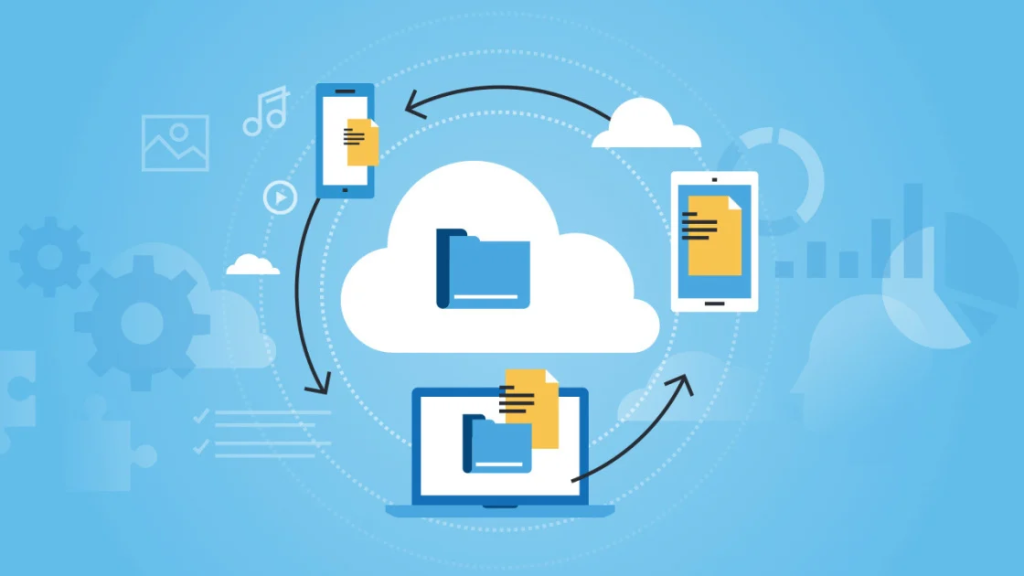
Cloud-based platforms transform document storage and access by removing geographic barriers, enabling real-time collaboration, and reducing dependence on physical IT infrastructure. On-premise document systems require server maintenance, hardware upgrades, and IT staffing — all of which represent fixed costs that scale poorly. Cloud platforms shift these responsibilities to the service provider, allowing organizations to pay for capacity based on actual usage. According to a 2022 report from Gartner, global spending on cloud services exceeded $490 billion, with document management and collaboration tools accounting for a growing share of that investment. Real-time collaboration is one of the most visible benefits. Teams across different offices or time zones can access, edit, and comment on the same document simultaneously without version conflicts, provided the platform includes co-authoring and locking mechanisms. This capability has become standard across major cloud platforms, with enterprise adoption rates for cloud-based document collaboration exceeding 60% globally. Legal and compliance sectors have seen substantial change as well. Many organizations handling sensitive client documentation now rely on professional legal writing and document management standards to ensure their cloud-stored files meet court admissibility requirements and jurisdictional formatting rules. Legal document frameworks mandate specific metadata structures, retention schedules, and access logs that cloud platforms must support to remain compliant. Cloud providers now routinely offer dedicated compliance modules, regional data residency options, and end-to-end encryption to meet these demands, making cloud storage viable even for highly regulated industries.
Do Automated Workflows Improve Document Processing Speed and Accuracy?
Yes, automated workflows improve document processing speed and accuracy significantly, with measurable reductions in processing time and error rates across multiple industries. Workflow automation in document management refers to rule-based routing — where a document automatically moves to the next step, reviewer, or approval stage based on predefined conditions. This eliminates manual handoffs, which are the primary source of delays and miscommunication in document-heavy processes. A study from Forrester Research found that organizations implementing automated document workflows reduce processing times by an average of 50%, with some industries reporting reductions of up to 80% for high-volume tasks like invoice processing, contract approvals, and onboarding documentation. Accuracy improves because automation removes human error from repetitive tasks. Data entry errors, misfiled documents, and missed approval steps drop substantially when the system enforces routing logic rather than relying on individual judgment. Healthcare organizations using automated medical records management, for instance, report a 40% reduction in documentation errors compared to manual systems, according to a 2021 study from the Journal of the American Medical Informatics Association. Scalability is another measurable advantage. Automated systems handle volume spikes — such as end-of-quarter contract surges or regulatory filing deadlines — without requiring additional headcount. A single workflow configuration can process hundreds of documents simultaneously, something no manual system can replicate at comparable speed or consistency.
Can Proper Document Metadata Standards Enhance Searchability and Compliance?
Yes, proper document metadata standards enhance searchability and compliance substantially, functioning as the structural backbone of any effective document management system. Metadata refers to the descriptive information attached to a document — including title, author, creation date, revision history, classification tags, and retention category. Without consistent metadata, documents become difficult to retrieve, classify, or audit. A report from AIIM found that 83% of organizations cite poor metadata quality as a leading cause of failed document searches, contributing to productivity losses measured in hours per employee per week. Standardized metadata schemas, such as Dublin Core or industry-specific frameworks used in healthcare and finance, give organizations a consistent language for describing documents across departments and systems. This standardization allows cross-platform searches to return accurate results and ensures that documents flagged for retention or deletion follow the correct schedule automatically. Compliance frameworks including GDPR, SOX, and HIPAA specify explicit requirements for document classification, access logging, and retention — all of which depend on well-structured metadata to enforce automatically. For a deeper understanding of how metadata standards are developed and applied in information management, the NISO standards for information metadata provide a comprehensive reference that organizations across sectors rely on when building compliant document systems — particularly during initial platform configuration and policy design phases. Organizations that invest in metadata governance reduce compliance audit preparation time by an average of 45%, according to research from Deloitte’s Risk and Financial Advisory division, while simultaneously improving document retrieval accuracy to over 95% in well-maintained repositories.
