

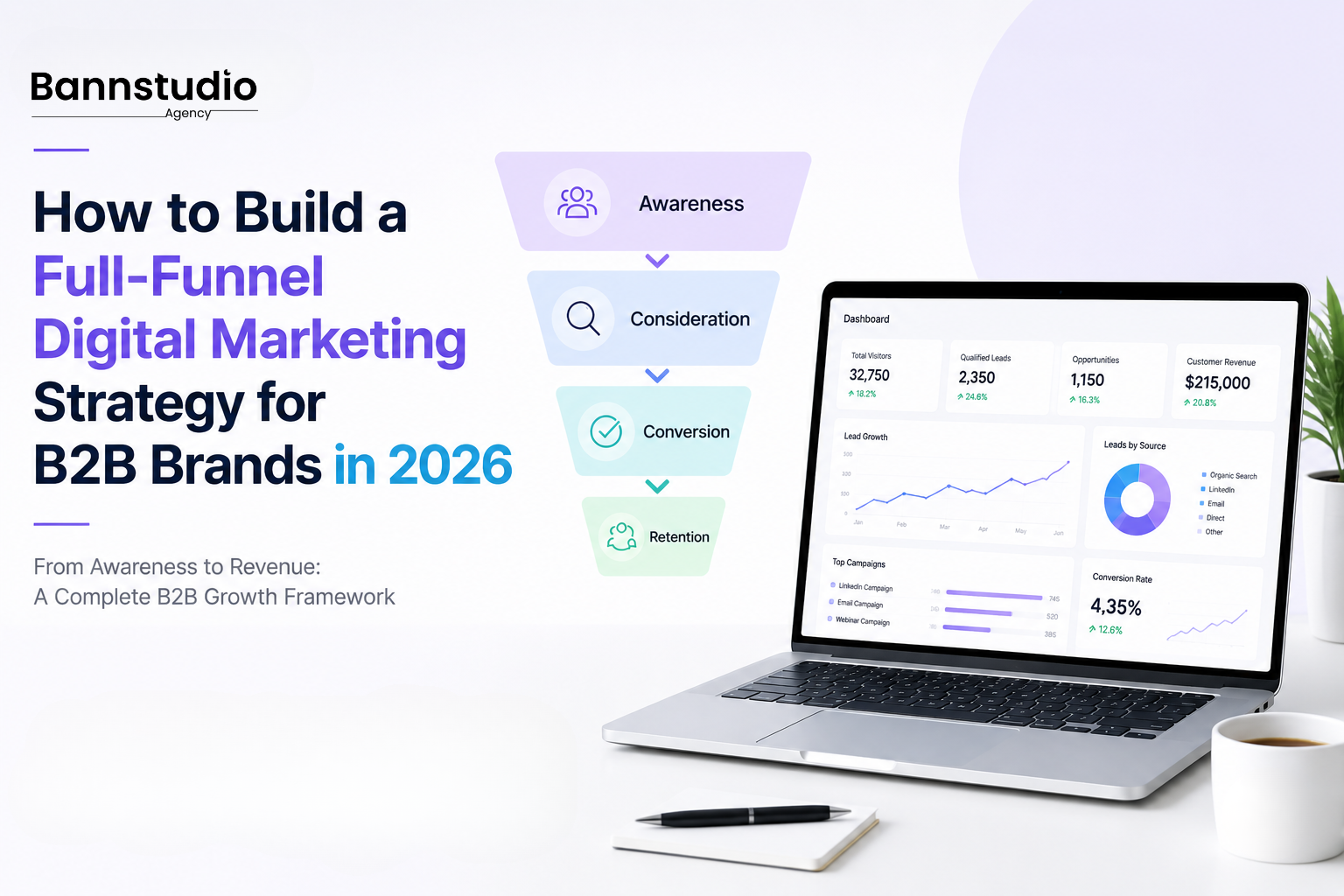
B2B buyer behaviour has changed quite a bit recently.
Typically, the early stage of the buyer journey involves no conversations with sales reps but independent research via Google, LinkedIn, industry media or AI-enabled platforms like ChatGPT, Gemini or Perplexity.
As per some of the top research and advisory firms, most B2B buyers prefer digital-first experience and use generative AI tools for research before reaching out to vendors. Consequently, businesses can no longer rely on random SEO campaigns and social media interactions here and there.
They need a comprehensive full-funnel marketing strategy that generates awareness, establishes trust and converts leads all along the buyer journey.
Why A Full-Funnel Approach Is Important in 2026
The modern B2B customer journey is not linear.
A potential buyer may become familiar with your brand due to a LinkedIn post, visit your site through a Google search, analyse competitors through AI-powered search experience and come back weeks later asking for a proposal.
Each touchpoint affects the final purchasing decision.
Full-funnel marketing makes sure your marketing activities work together at each stage of the funnel. Not just generating leads, it facilitates moving prospects from the initial touchpoint to becoming clients.
In the case of businesses working in a competitive industry, this approach will result in the formation of a more reliable and sustainable growth engine.
Awareness Stage: Increase Visibility Across Search and AI Platforms
The very first element in the funnel of any B2B marketing process is visibility.
In order for people to be able to contact your company, they need to find it.
It is still true that the best way of driving quality traffic is via search engine optimization. But visibility in 2026 is not just about rankings anymore.
Google’s AI Overviews and AI-powered search experience are drastically changing users’ perception of information. At the same time, AI platforms are gaining trust as the sources of research for decision-makers of companies.
In other words, you need content that performs well on both search engines and AI.
Some awareness-stage activities to consider are:
- SEO and keyword optimization
- Education-oriented blog content
- Thought leadership on LinkedIn
- Video marketing
- Content creation aimed at the specific industry
- Generative Engine Optimization (GEO)
Many companies now work with professionals like Bannstudio Digital Agency to become more visible on search engines and new AI platforms.
Consideration Stage: Convert Visitors into Clients
Traffic generation is just one side of the equation.
Once you’ve captured leads’ attention, you need to prove that you know what they want and can get the job done.
This is where trust-building content comes in. Consideration-stage assets could be:
- Case studies
- White papers
- Industry insights
- Comparative guides
- Customer success stories
- Email nurturing sequences
Your main aim here is to educate, not sell. Buyers are seeking knowledge, authority and evidence of results before they decide to engage in a discussion.
Organisations providing value on a regular basis stand a chance of making it to a buyer’s shortlist.
Conversion Stage: Get Rid of Friction and Capitalise on Demand
At this stage, buyers are evaluating possible partners. It’s easy to miss an opportunity because of minor inconveniences.
Key characteristics of a good B2B website include:
- Convenient calls-to-action
- Fast loading
- Pages specific to different services offered
- Reviews and testimonials
- Simple enquiry forms
- Solid SEO foundation
For many B2B customers, by the time they arrive at this stage, a lot of groundwork has been done. The purpose of your website is to make the process of making a decision easy and smooth.
ACME Case Study: How ACME Optimised Marketing Funnel
A great example of a full funnel marketing approach is the work done for ACME Universal.
Working in the space of industrial solutions, ACME struggled with low visibility, lack of consistency on social media and poor engagement from the audience.
Here is how the issue was solved with an advanced digital marketing strategy.
As a first priority, search visibility had to be improved by conducting in-depth keyword research, optimising website pages, fixing technical SEO issues and building quality backlinks.
Secondly, social media activity was addressed with monthly content calendars, platform-specific content and story-focused campaigns.
Thirdly, content optimisation ensured that all the existing pages are adjusted according to user intent and new content formats like reels, posts and carousels encouraged more interaction.
In other words, instead of focusing on just one type of marketing, ACME created its own ecosystem that could boost visibility, engagement and grow over time.
Conclusion
B2B marketing in 2026 is not about trying to rank for a few keywords or publishing occasional posts on social media anymore.
The customers navigate through search engines, artificial intelligence-based platforms, web and social media before making any purchase decision. Companies which establish visibility, trust, and chances of conversion along each step of the customer journey are sure to succeed in the long run.
No matter whether you are handling your campaigns internally or hiring a digital marketing agency in Gwalior, implementing a full-funnel marketing strategy is sure to change marketing from fragmented tasks into a scalable growth model.
