

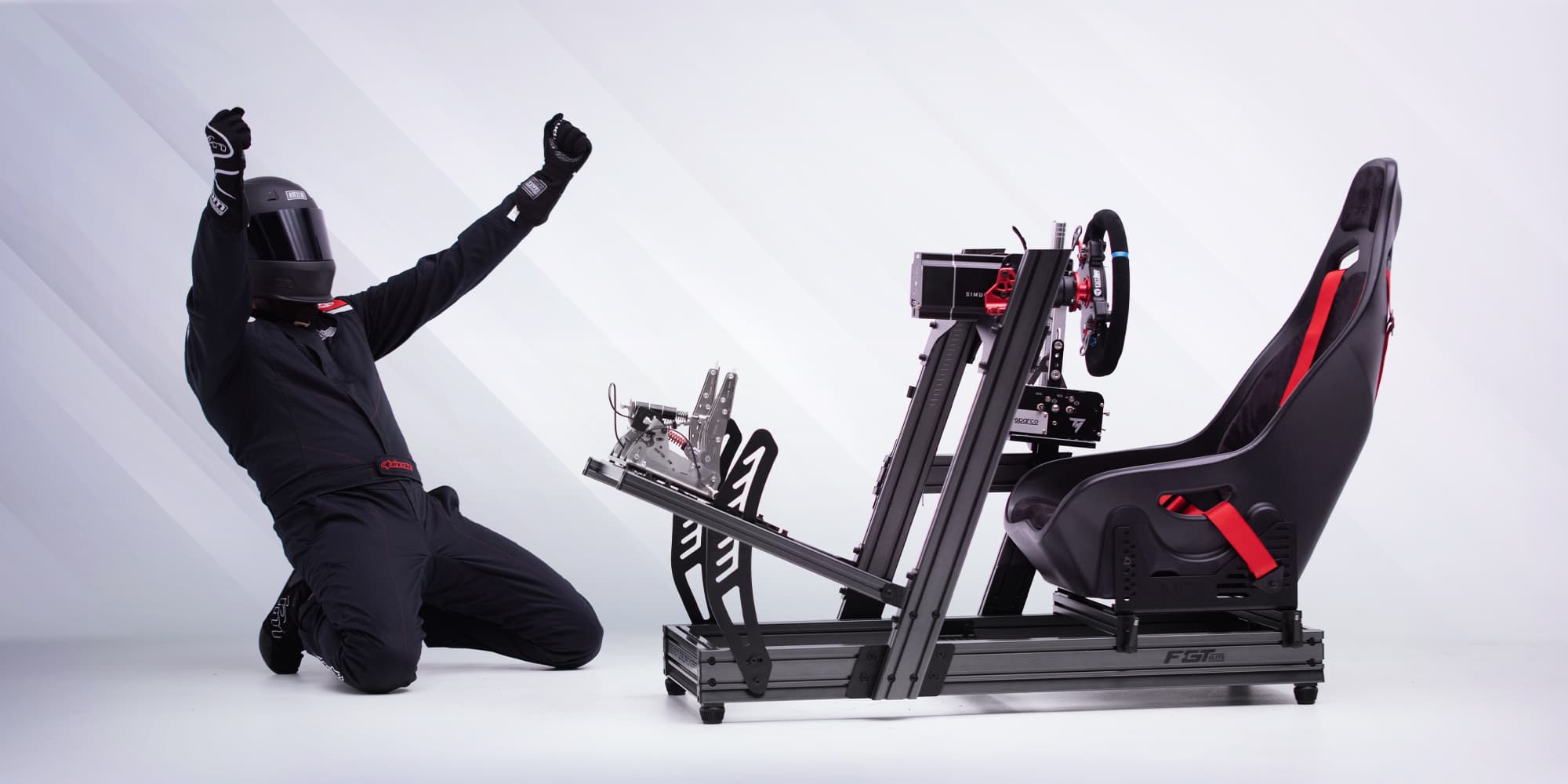
Motorsport preparation has changed significantly over the past decade. Where teams once relied almost entirely on physical testing sessions and post-race data reviews, simulation now plays a central role in how drivers train, how engineers model performance, and how teams allocate resources before ever arriving at the track. For GT-class racers in particular — whether competing at the club level or running in professional endurance series — simulation services have moved from a supplementary tool to a core part of the preparation process.
The problem is not a shortage of options. The problem is that the market has grown faster than the standards used to evaluate it. In 2025, US racers are being asked to choose from a wide range of simulation providers, each presenting different technical approaches, service structures, and claims about accuracy. Without a clear framework for evaluation, it is easy to spend significant money on a service that does not match your actual operational needs.
This guide is written for drivers, team managers, and performance engineers who are actively weighing their options and need a grounded, practical way to assess what is in front of them.
Understanding What GT Simulation Actually Involves
GT simulation is a structured process that models the performance of a GT-class vehicle — its powertrain behavior, aerodynamic load, suspension response, and tire interaction — within a controlled computational environment. It is not a driving game, and it is not a general-purpose racing simulator. A proper gt simulation service builds a specific vehicle model based on real technical parameters, runs that model through scenarios that reflect actual race conditions, and produces outputs that engineers and drivers can use to make concrete decisions.
For those early in the evaluation process, working through a structured Gt Simulation guide can help clarify what a professional service should include, what inputs are required from your side, and what kind of outputs you should expect in return. This kind of preliminary research prevents misaligned expectations before any contract is signed.
What separates a useful simulation engagement from an expensive exercise is the degree to which the model reflects your specific car configuration, your specific circuits, and your team’s decision-making process. Generic simulation outputs applied to a specific race setup are rarely actionable. The value of gt simulation comes from specificity — the closer the model is to your actual operational reality, the more reliable its outputs become.
The Difference Between Driver Training Simulation and Engineering Simulation
These are two distinct categories, and confusing them leads to poor purchasing decisions. Driver training simulation focuses on building muscle memory, improving reaction consistency, and familiarizing a driver with circuit layout and braking zones. Engineering simulation focuses on vehicle behavior modeling — suspension geometry, downforce curves, brake balance sensitivity, and lap time delta analysis under varied setups.
Some providers offer both within a single service structure. Others specialize in one or the other. A team preparing a driver for a new circuit may prioritize driver training simulation. A team trying to optimize a setup for a specific tire compound and ambient temperature range may need engineering simulation almost exclusively. Understanding which category your current need falls into prevents you from purchasing a service built for a different purpose.
Evaluating Provider Credibility in a Fragmented Market
The US simulation market for motorsport is not regulated. There is no certification body, no licensing standard, and no third-party audit process that distinguishes qualified providers from those offering less rigorous services. This creates a real challenge for buyers who lack the technical background to evaluate simulation methodology independently.
Credibility in this space comes from verifiable outcomes, not from promotional materials. A provider worth serious consideration should be able to demonstrate a track record of work with real teams in real competitive environments. This includes specific series, specific circuits, and ideally, performance outcomes that can be referenced — even without disclosing proprietary client data.
Questions That Reveal Operational Depth
When evaluating a simulation provider, the most revealing questions are those that require the provider to explain their methodology rather than their results. Ask how they build their vehicle models, what data they require from your team, and how they validate their simulation outputs against real-world telemetry. A provider with genuine depth will answer these questions in specific, technical terms. A provider operating at the surface level will pivot quickly to outcomes and testimonials.
It is also worth asking how the provider handles model updates. GT-class regulations and vehicle configurations change across seasons. A simulation model built for last year’s specification may produce misleading outputs if applied to this year’s car without proper revision. Understanding the update process — and who is responsible for managing it — is directly relevant to the reliability of the service over time.
Team Integration and Data Ownership
Some simulation providers operate as standalone consultancies. Others are structured to integrate directly into your team’s existing engineering workflow. Neither model is inherently superior, but the right fit depends on your team’s internal capacity. A well-staffed engineering team may benefit from a provider who delivers raw simulation outputs and allows in-house engineers to interpret and apply them. A smaller team with limited engineering resources may need a provider who takes a more consultative role and translates outputs into actionable setup recommendations.
Data ownership is also a practical consideration. Simulation work generates significant amounts of vehicle data, much of which is derived from your team’s own telemetry and technical inputs. Clarify from the outset who owns that data, how it is stored, and whether it can be used by the provider for any purpose beyond your engagement. In competitive motorsport, data security is an operational concern, not a formality.
Matching Simulation Services to Your Race Program Structure
GT simulation is most useful when it is aligned with a defined race program rather than purchased as an isolated service. The cadence of your simulation engagement should reflect the cadence of your season — pre-season baseline work, pre-event circuit preparation, mid-season setup optimization, and post-event analysis. A provider who offers only one-off simulation packages without a structured engagement model may not be equipped to support the continuity that a full season requires.
According to research compiled by the Society of Automotive Engineers, the integration of computational modeling into vehicle development processes has consistently demonstrated improvements in testing efficiency when the modeling is tightly coupled to the specific vehicle configuration and operating environment — a principle that applies directly to competitive motorsport preparation.
Budget Allocation and Value Framing
Simulation services represent a significant line item in most race budgets. The temptation to evaluate them purely on cost is understandable, but cost per session is a poor proxy for value. A cheaper simulation package that requires multiple revision cycles, produces outputs your engineers cannot apply, or fails to reflect your actual vehicle configuration will cost more in wasted time and missed setup opportunities than a more comprehensive service purchased at a higher price point.
A more useful frame is to evaluate simulation cost relative to the cost of physical testing. Track time for GT-class vehicles is expensive. Every setup decision that can be validated or refined through simulation before a test session reduces the number of sessions needed to achieve the same result. When framed this way, gt simulation becomes less of a discretionary expense and more of a mechanism for making existing testing resources go further.
Realistic Expectations for Simulation Accuracy
No simulation is a perfect representation of reality. Every model involves assumptions, and every assumption introduces some degree of deviation from real-world behavior. The goal is not perfect accuracy — it is sufficient accuracy to support better decisions. A good simulation provider will be transparent about the boundaries of their model, where confidence is high, and where uncertainty remains.
Teams that approach gt simulation with this understanding extract more value from it than teams that treat it as a predictive certainty. When simulation outputs are understood as probabilistic inputs to a decision-making process rather than definitive answers, they are used more effectively and interpreted more accurately by the people applying them on the engineering side.
Practical Steps Before Committing to a Provider
Before signing a contract with any simulation provider, there are several practical steps worth taking regardless of the provider’s apparent credibility. Request a sample output — even a anonymized or generic one — and evaluate whether it is presented in a format your team can actually use. Ask for a brief technical conversation with the engineer who will be running your model, not just a sales contact. Understand the turnaround times for deliverables and how revisions are handled if outputs require adjustment.
If possible, speak with another team that has used the provider’s gt simulation services in a similar competitive context. Not every provider will facilitate this, but those with genuine confidence in their work typically have clients willing to speak about their experience. That kind of direct reference is more reliable than any case study or testimonial published on a provider’s own platform.
Conclusion
Choosing a gt simulation service in 2025 is a structured decision that rewards patience and specificity. The market is active, the technology is capable, and the potential value is real — but only when the service is matched carefully to your team’s actual needs, your vehicle’s configuration, and your program’s competitive objectives.
The teams that get the most from simulation are those that approach it as an ongoing engineering discipline rather than a pre-season purchase. They ask detailed questions before committing, maintain clear expectations about what simulation can and cannot produce, and integrate simulation outputs systematically into their decision-making process rather than treating them as standalone verdicts.
If you are in the process of evaluating your options, begin with a clear definition of what decisions you need simulation to support. From there, find providers whose methodology, service structure, and client experience align with those specific needs. Done correctly, gt simulation is one of the more consistent investments available to a competitive GT program — not because it guarantees results, but because it improves the quality of the decisions that lead to them.
