

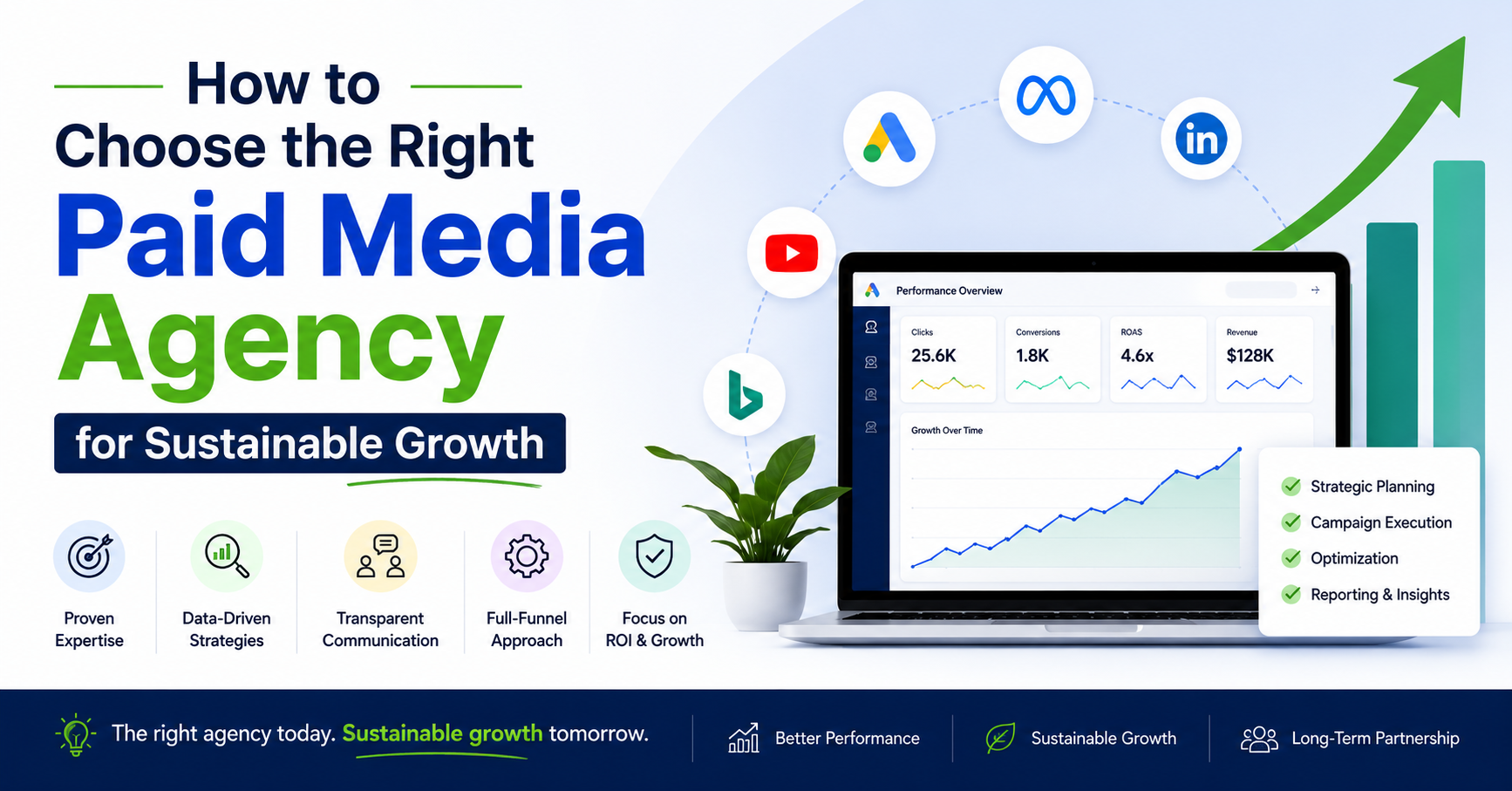
Choosing outside support for paid acquisition can feel deceptively simple. On paper, every agency promises better returns, stronger creative, sharper targeting and faster growth. In reality, the difference between a strong partner and an expensive mistake often comes down to how they think, how they report and how honestly they assess your business before touching your budget.
For founders, marketing leads and scale-up teams, this decision matters because paid media rarely sits in isolation. It affects demand generation, revenue forecasting, landing page strategy, creative testing, analytics and customer acquisition economics. A good partner helps you join those dots. A weak one simply spends more and hopes results improve.
This buyer’s guide is designed to help you make a better decision before signing a retainer, approving ad spend or handing over account access. It breaks down what a strong agency relationship looks like, which questions to ask, what warning signs to notice and how to compare providers fairly.
If you are looking for a paid media agency that focuses on growth rather than vanity metrics, it is worth reviewing how their process connects strategy, testing and commercial outcomes.
At its best, paid media is a disciplined system for turning insight into revenue. It is not guesswork, nor is it just about running ads on Google or Meta. It relies on audience understanding, offer clarity, measurement, experimentation and smart budget allocation. That is one reason many in-house teams also reference wider background material on advertising and media channels when shaping their approach, including resources such as Wikipedia’s overview of online advertising.
Why This Decision Matters More Than Most Buyers Expect

The wrong agency can do more than waste money. It can distort your understanding of performance.
Many businesses assume their campaigns are underperforming because the market is crowded, the product needs work or the platform is becoming too expensive. Sometimes that is true. But often the real problem is simpler. Tracking is wrong. Creative testing is too shallow. Audience structure is messy. Landing pages are not aligned to the ad message. Reporting hides the real acquisition cost. The agency optimises for clicks when the business needs qualified pipeline, trial starts or repeat purchases.
When this happens, paid media becomes noisy and hard to trust. Internal confidence drops. Budget decisions become reactive. Leaders lose visibility. Growth slows not because the channel has failed, but because the setup never gave it a fair chance.
That is why the selection process matters. You are not just choosing a supplier. You are choosing a team that may influence your channel mix, your reporting discipline, your pace of learning and your appetite for investment.
What a Strong Growth Partner Actually Does
A strong agency does far more than launch campaigns. It helps you answer a set of commercial questions:
- Which channels fit your business model
- Which audiences are most likely to convert profitably
- Which messages deserve more spend
- Which creatives are driving action rather than attention
- Which landing pages need improving
- Which metrics should shape decision-making
- Which tests are worth running next
That means your chosen partner should show competence across several layers at once. Strategic planning is one. Execution is another. Measurement, creative thinking, prioritisation and communication are equally important.
A good agency helps simplify complexity. It explains why performance is changing. It tells you what has been learned. It gives you a clear rationale for what comes next. It also knows when not to spend.
A mediocre one often hides behind platform jargon, vague optimism and large dashboards full of numbers that do not help the business make better decisions.
Paid Media Agency Evaluation Criteria That Matter Most

When comparing providers, many buyers focus first on price, case studies or channel coverage. Those things matter, but they should not be your starting point.
A better framework is to judge agencies against the following:
Strategic Fit
Does the agency understand your business model, margin profile, sales cycle and growth stage?
An e-commerce brand with repeat purchase potential needs different media thinking from a B2B SaaS company, a mobile app, a fintech product or a high-consideration service business. Strategy should reflect that. The agency should talk comfortably about your economics, not just your impressions and click-through rate.
Measurement Quality
Can they define success properly and measure it accurately?
This includes conversion tracking, event setup, attribution logic, CRM integration where relevant, and reporting that connects campaign data to business outcomes. If they cannot explain how they measure incrementality, assisted conversions or lead quality, that is worth noting.
Testing Discipline
Do they have a real experimentation process?
Strong agencies test creatives, audiences, offers, landing pages, bid strategies and campaign structures in a systematic way. They do not run random experiments for the sake of activity. They prioritise the tests most likely to produce learning.
Commercial Transparency
Do they explain fees, media management structure and expected ramp-up honestly?
No reliable agency can guarantee instant scale. What they can do is explain how long setup may take, when signal should improve, what dependencies matter and where risks sit.
Communication Style
Will your team actually enjoy working with them?

This sounds soft, but it affects performance. A strong agency relationship needs clarity, candour and responsiveness. If they are evasive during the pitch, they will rarely become clearer once the contract is signed.
The Difference Between Media Buying and Growth Thinking
One of the most important distinctions buyers can miss is the difference between pure media buying and genuine growth support.
Media buying focuses on placing spend, managing campaigns and hitting short-term efficiency targets. That can be useful, especially when you already have a mature funnel, strong creative resources and robust analytics in-house.
Growth thinking goes further. It treats paid media as one part of a broader acquisition system. It looks at offer design, funnel friction, creative resonance, conversion architecture and retention signals. It asks not only how to improve results in-platform, but how to improve the whole journey around the platform.
This broader mindset matters because platform efficiency can only take you so far. If your landing page is weak, your sign-up flow is confusing or your proposition lacks clarity, even the best campaign management will plateau.
A smart agency should be able to tell you where paid media ends and where adjacent improvements begin. That boundary awareness is often a sign of maturity.
Signs an Agency Understands Your Funnel
A capable partner will usually ask good questions before offering bold promises. For example:
- Who is the ideal customer and how are they segmented?
- What is the average conversion path?
- Which channel currently creates demand and which one captures it?
- What does a qualified lead or valuable customer look like?
- How long does it take for performance to stabilise?
- What role does creative play in conversion?
- What happens after the click?
- How is retention measured?
If an agency spends more time talking than asking, treat that as a warning sign.
Strong operators diagnose before prescribing. They want to know what has already been tried, which campaigns failed, where tracking may be broken and what the business can realistically support in terms of budget, internal approvals and creative production.
Growth Marketing Partner Red Flags
Some warning signs appear early and should not be ignored:
- They guarantee specific ROAS or CPA outcomes before auditing the account
- They speak only in platform metrics
- They cannot explain how they structure tests
- They avoid discussing attribution limits
- They promise to “unlock scaling” without defining what that means
- They provide generic case studies with no context
- They overstate what creative alone can solve
- They use reporting to impress rather than clarify
- They do not ask about your sales process or margins
- They want full control but little accountability
A confident agency should be comfortable with scrutiny. It should welcome detailed questions about process, data, communication and performance expectations.
What to Ask Before You Sign
A well-run buying process depends on asking sharper questions. Here are some of the most useful ones.
On strategy
- How do you decide which channels deserve budget first?
- How do you adapt strategy for businesses at different growth stages?
- What signals tell you a campaign is ready to scale?
On execution
- Who will actually manage the account day to day?
- How many accounts does that person handle?
- What is your campaign testing framework?
- How often do you refresh creative or messaging?
On measurement
- How do you validate tracking before launch?
- What attribution model do you use for reporting?
- How do you distinguish low-cost leads from high-quality leads?
- How do you report on business outcomes rather than platform activity?
On collaboration
- What do you need from our internal team to succeed?
- What slows down results most often?
- How do you handle disagreement over budget or priorities?
- What happens in the first 30, 60 and 90 days?
On commercial terms
- What is included in the fee?
- Are there setup costs?
- How do you handle creative production or landing page work?
- What notice period applies if things do not work out?
The answers matter. So does how those answers are delivered. Clear, practical responses usually indicate a team that knows what it is doing.
Performance Marketing Services Buyers Should Understand

Not every agency offers the same scope, and not every business needs the same level of support. Before comparing proposals, be clear about what you are actually buying.
Some agencies focus mainly on media buying. Others combine it with strategy, analytics, creative direction, CRO support or full-funnel growth consulting.
Common service areas include:
- Search advertising
- Paid social campaign management
- Creative strategy and testing
- Audience research
- Account restructuring
- Conversion tracking and analytics
- Landing page recommendations
- Budget planning and forecasting
- Reporting and insight reviews
- Experiment roadmaps
The key is alignment. If your internal team already handles creative well, you may not need heavy support there. If your analytics are weak, measurement expertise may be more valuable than channel breadth. If your funnel is immature, a partner that can improve conversion architecture may outperform one that simply runs more campaigns.
How Service Scope Affects Results
Buyers sometimes compare agencies only by monthly fee, without considering scope. That can lead to misleading conclusions.
A cheaper proposal may exclude strategy work, landing page recommendations, analytics support or creative testing. A more expensive one may actually create more value because it addresses the real bottlenecks behind paid performance.
That is why the right question is not, “Which agency is cheapest?” It is, “Which partner gives us the best chance of profitable learning and measurable growth?”
How to Compare Agency Proposals Fairly
Once proposals arrive, compare them using the same structure.
Create a simple scorecard with categories such as:
- Strategic understanding of your business
- Clarity of recommended approach
- Channel suitability
- Tracking and reporting quality
- Testing methodology
- Creative support
- Team quality
- Communication style
- Transparency on fees
- Realism of expectations
This allows you to assess substance rather than presentation style. Some agencies are excellent at pitching. Fewer are excellent at delivery.
Also pay attention to what they leave out. If the proposal never mentions attribution, creative testing, landing page alignment or internal dependencies, that omission matters.
The Value of Realistic Expectations
The strongest agencies rarely promise instant miracles. They usually explain the conditions required for success.
That might include:
- enough data volume for learning
- working conversion tracking
- timely feedback from sales or customer success
- sufficient budget to test properly
- clear creative approval processes
- landing pages that match user intent
Realism is not negativity. It is professionalism. A good partner should help you understand what is controllable, what is uncertain and what needs fixing before scale is possible.
Budget Conversations Buyers Often Mishandle
Budget is one of the most misunderstood parts of the buying process.
Some businesses treat agency fees and ad spend as interchangeable when they are not. Others underfund testing, then conclude the channel is weak. Some ask agencies to commit to hard performance targets without sharing margins, LTV, close rates or internal constraints.
A more productive budget conversation includes:
- target acquisition cost
- expected payback window
- gross margin or contribution margin
- conversion rate benchmarks
- budget flexibility
- appetite for testing
- acceptable learning period
Without this context, an agency is guessing. And when both sides guess, trust erodes quickly.
Media Investment Planning for Sustainable Growth
Sustainable growth usually comes from disciplined allocation, not aggressive spend for its own sake.
That means:
- protecting budget for testing
- increasing spend in line with signal quality
- balancing efficiency and scale
- understanding when creative fatigue is reducing returns
- avoiding overreaction to short-term fluctuations
A good partner should guide these decisions calmly. It should not swing between overconfidence and panic every time weekly numbers move.
The Role of Creative, Landing Pages and Messaging
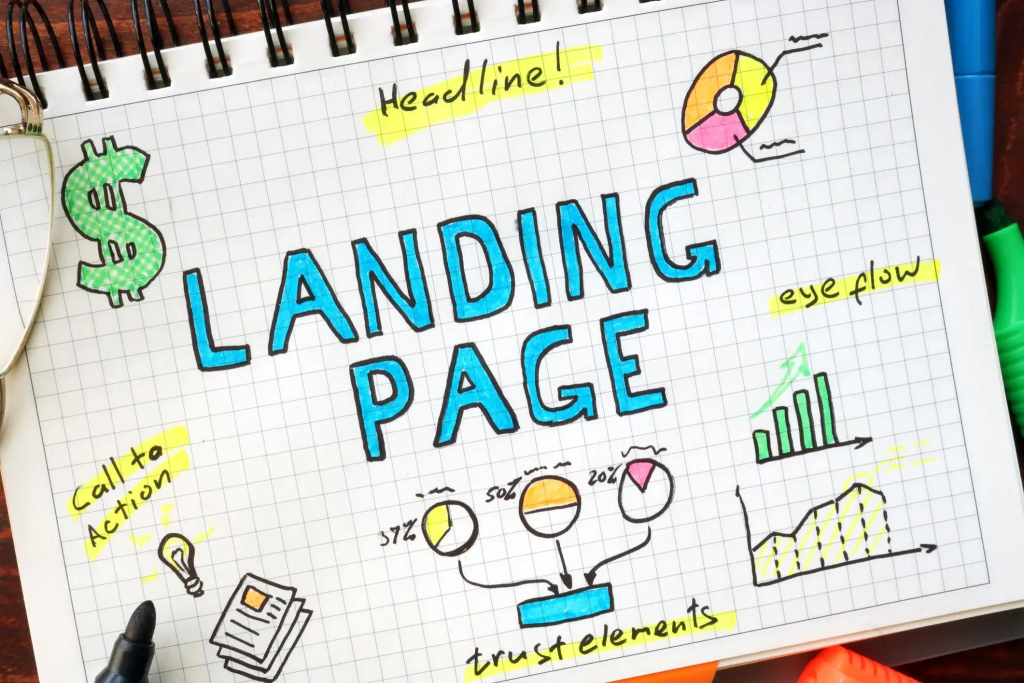
Many buyers still think paid media performance is mostly a targeting problem. In many categories, that is no longer true.
Creative, message-market fit and landing page experience often make the biggest difference. If several competitors can access similar audiences on similar platforms, then the offer, angle and experience after the click become far more important.
An agency worth hiring should be able to discuss:
- which customer pains or desires are most commercially relevant
- how messaging should differ by funnel stage
- which creative formats are being tested and why
- how ad intent maps to landing page content
- where friction is likely reducing conversion
Why Full-Funnel Thinking Matters
Paid campaigns do not succeed in isolation. They succeed when the whole path supports the user.
That includes:
- ad relevance
- page speed
- mobile usability
- message match
- trust signals
- clear calls to action
- simple forms
- sensible onboarding
- effective follow-up
If an agency can only optimise what happens before the click, its impact may be limited. That does not mean it must build every landing page itself. It does mean it should recognise where conversion problems are sitting and communicate them clearly.
How to Set the Relationship Up Properly
Even a strong agency can struggle in a weak client environment. Results improve when both sides define expectations early.
Set agreement on:
- success metrics
- reporting cadence
- decision makers
- approval turnaround times
- creative responsibilities
- data access
- testing priorities
- escalation routes
A healthy partnership has enough structure to stay aligned, but enough flexibility to adapt to new findings.
The First 90 Days
The early phase should not look like endless activity with little explanation. A strong first 90 days often includes:
Weeks 1 to 2
- audit of accounts, tracking and historical performance
- clarification of goals and commercial targets
- account access and data validation
Weeks 3 to 6
- campaign setup or restructure
- initial creative and audience testing
- reporting framework established
Weeks 7 to 12
- test analysis
- budget reallocation based on results
- clearer view of scalable segments and weak spots
The exact pace depends on spend level, traffic volume and funnel complexity. But there should be a visible logic to the work.
How Buyers Know It Is Working
The best agency relationships generate more than better numbers. They create better understanding.
You should expect:
- clearer insight into what drives acquisition
- more confidence in channel decisions
- stronger reporting discipline
- faster identification of wasted spend
- better quality creative hypotheses
- improved coordination between media and conversion work
Performance matters, of course. But confidence in the operating model matters too. If your team understands what is happening and why, you can make smarter decisions even when market conditions change.
Final Thoughts
Choosing the right agency is less about finding the most impressive pitch and more about finding the most credible operating partner.
The strongest choice will usually be the team that understands your business model, communicates clearly, treats data with care, tests with purpose and stays commercially grounded. It will not hide behind dashboards or platform language. It will help you see where growth is being created, where it is being blocked and what should happen next.
As a buyer, your job is not just to compare promises. It is to compare ways of thinking. Ask better questions, look for sharper reasoning and choose the partner that feels built for long-term progress rather than short-term theatre.
FAQs
1. How do I know whether my business is ready to hire an agency?
You are usually ready when paid acquisition has become important enough to need specialist focus, but not so mature that in-house expertise covers every gap. Signs include rising spend, unclear reporting, weak testing discipline or internal bandwidth constraints.
2. Should I choose a specialist or a full-service partner?
That depends on your bottleneck. If you mainly need sharper campaign execution, a specialist may work well. If your issues include tracking, creative, landing pages and funnel alignment, broader support may create more value.
3. How long should it take to see results?
There is no universal answer. Some improvements appear quickly, especially when tracking or account structure is clearly broken. More meaningful gains often take time because testing, learning and creative iteration need enough data to be reliable.
4. What is the biggest mistake buyers make?
One of the biggest mistakes is choosing based on confidence rather than evidence. A polished pitch can hide shallow strategy. Strong buyers look for rigour, honesty and a clear method for learning.
5. What should I expect in monthly reporting?
You should expect reporting that connects campaign activity to business outcomes. That includes spend, acquisition efficiency, quality of conversions, key test learnings and a clear explanation of what actions will follow.
