

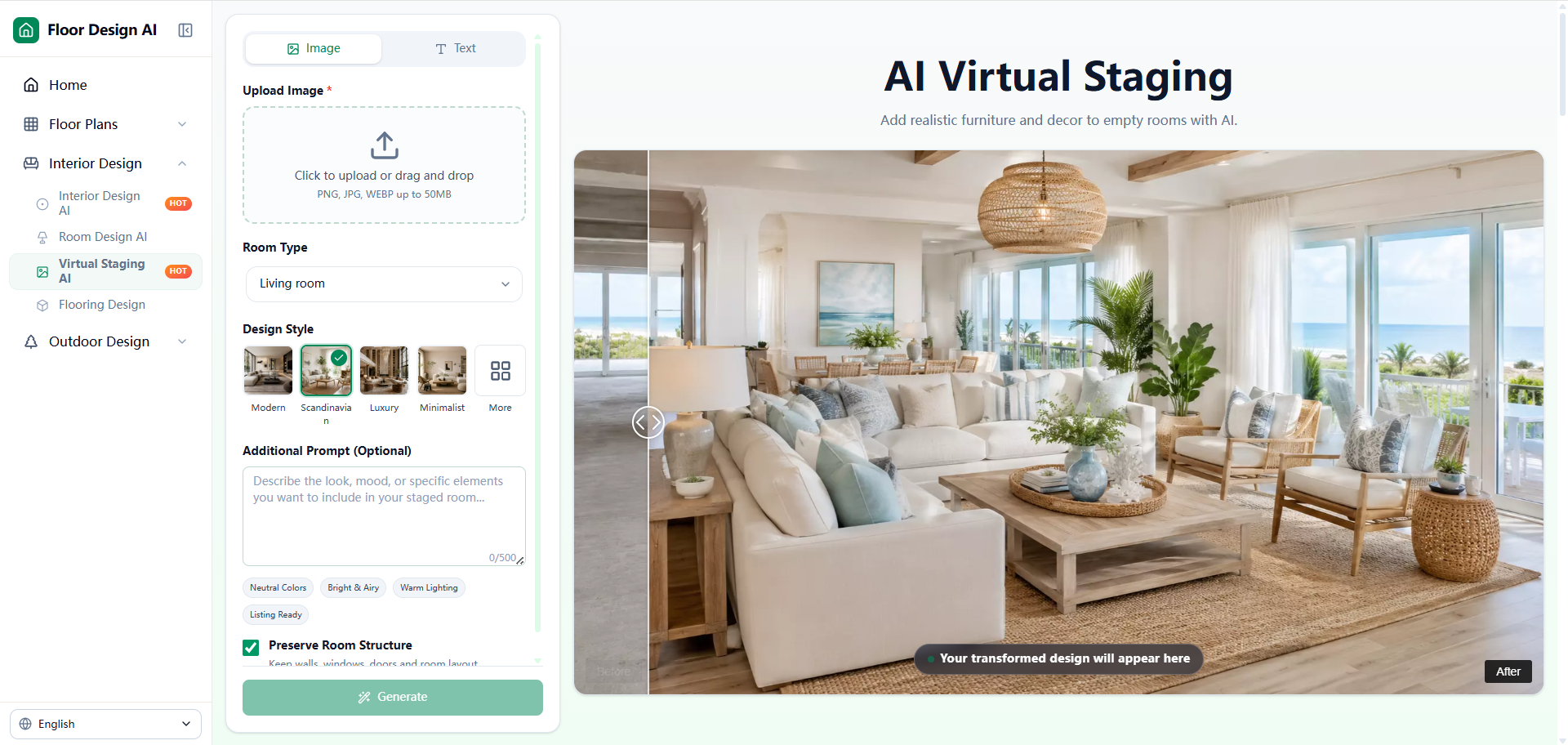
Selling an empty property can be more difficult than many homeowners expect.
At first glance, an empty home seems like it should be easier to market. There are no personal belongings, no outdated furniture, and nothing distracting buyers from the actual space.
But when a buyer opens a listing online and sees room after room with empty walls and floors, something important is missing.
They have to imagine everything themselves.
Where would the sofa go?
Would the bedroom fit a king-size bed?
Could this corner become a home office?
For some buyers, visualizing these possibilities comes naturally. For many others, an empty room simply feels unfinished.
That is why presenting a property is not only about showing what exists today. It is also about helping buyers understand what the space could become.
Why empty homes are harder to understand
Furniture provides context.
A dining table immediately shows the size of a dining area. A sofa helps people understand the scale of a living room. A bed gives a bedroom a clear reference point.
Without those elements, even a well-designed home can feel uncertain.
This is especially true when buyers are browsing online. They are usually comparing multiple properties at once, often making quick decisions based on images alone.
A vacant room may have great potential, but if that potential is difficult to see, buyers may move on before they ever schedule a visit.
Good property marketing reduces that uncertainty.
Helping buyers imagine the lifestyle, not just the space
People do not buy homes only because of measurements.
They buy because they can imagine their life there.
A living room becomes more meaningful when buyers can picture family gatherings.
A spare bedroom becomes more useful when they can imagine it as an office or guest room.
A small corner becomes more valuable when they see how it could serve a purpose.
This is why visual presentation matters so much in real estate.
A well-presented property tells a story.
It helps buyers move from:
“Can this space work?”
to:
“I can see myself living here.”
Virtual staging creates possibilities
Traditional home staging has always been an effective way to make properties more attractive.
However, physical staging is not always practical.
It requires furniture rental, transportation, installation, and additional costs. For vacant homes, investment properties, or properties being marketed remotely, this process may not always make sense.
This is where virtual staging provides another option.
Instead of physically furnishing a room, digital technology can add realistic furniture, decorations, and interior concepts to property images.
A single empty room can be presented in different ways:
- A comfortable family living room
- A modern workspace
- A minimalist bedroom
- A stylish entertainment area
The goal is not to change the property.
It is to help buyers understand the possibilities that already exist.
Floor plans explain what photos cannot
Beautiful images are important, but they do not always answer practical questions.
A buyer may like a living room photo but still wonder:
How does this room connect to the kitchen?
Where is the dining area?
How much space is available between rooms?
What does the overall layout look like?
This is where floor plans become valuable.
A floor plan gives buyers a clearer understanding of how a property functions.
It shows relationships between rooms, movement paths, and the overall structure of the home.
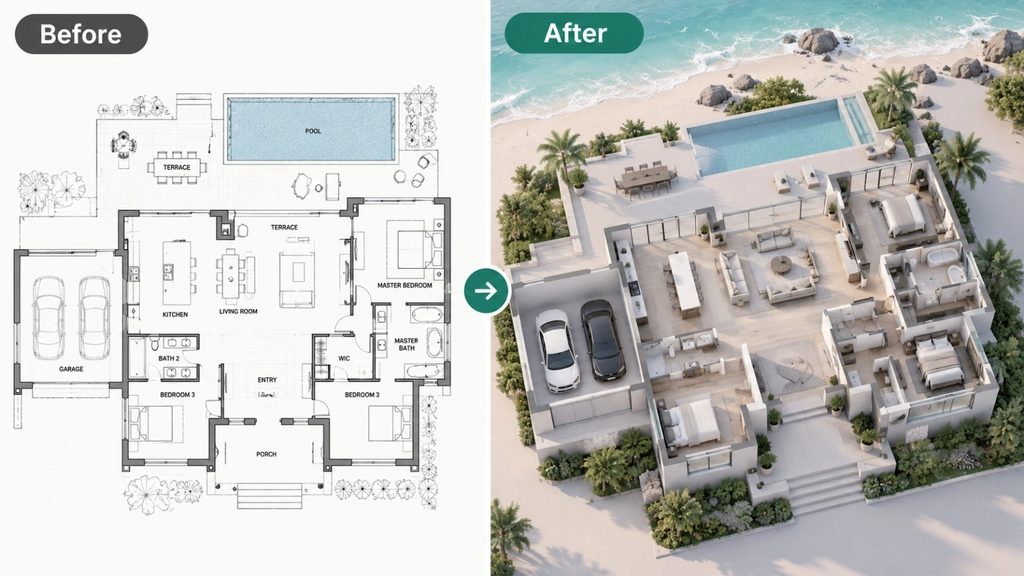
For properties that need a more immersive presentation, a floor plan to 3D model approach can take this one step further by helping buyers understand the space in a more realistic way.
Instead of looking at separate rooms, they can better understand how the entire property connects.
Turning old drawings into useful digital layouts
Not every property starts with professional digital files.
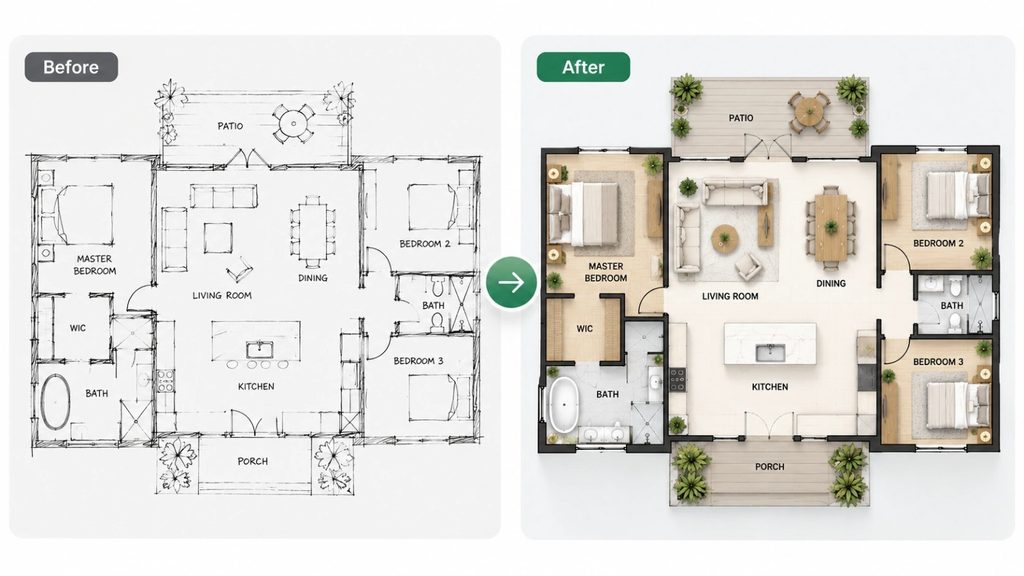
Older homes may only have basic drawings. Renovation projects may begin with hand-drawn ideas. Real estate professionals may receive simple sketches instead of detailed plans.
These materials can still be valuable.
A sketch to floor plan solution can help transform simple layouts into clearer digital representations, making it easier to communicate ideas and present spaces.
This is especially useful for:
- Older properties
- Renovation projects
- Property development concepts
- Early-stage design planning
The easier a space is to understand, the easier it becomes for people to make decisions.
Combining different visuals creates a stronger property experience
No single type of image tells the entire story.
Photos show appearance.
Floor plans show structure.
Virtual staging shows possibility.
Together, they create a much more complete picture.
For example, a buyer viewing a vacant apartment could:
See the finished visual concept through staged images
Understand the room relationships through a floor plan
Explore how the overall space connects through a 3D view
Each piece answers a different question.
That makes the buying process more comfortable and reduces uncertainty.
Better presentation helps both buyers and sellers
Improved visuals are not only beneficial for buyers.
They also help sellers and real estate professionals communicate value more effectively.
A clearer presentation can help:
- Buyers understand a property’s potential
- Agents explain unique layouts
- Sellers showcase unused spaces
- Developers present future concepts
The purpose is not to make a property appear different from reality.
The purpose is to make the existing value easier to see.
The future of real estate visualization
Real estate is becoming increasingly digital.
Buyers expect more information before visiting a property. They want to understand spaces quickly and confidently.
As visualization technology improves, property marketing will continue moving beyond simple photography.
The future will likely combine different forms of digital presentation:
- Realistic interior concepts
- Interactive floor plans
- 3D space visualization
- Better remote viewing experiences
The properties that communicate clearly will have an advantage because buyers can make decisions with more confidence.
Final thoughts
An empty property is not the problem.
The challenge is helping people see what the property could become.
With the right visual tools, a vacant room can become easier to understand, easier to imagine, and easier to connect with.
From virtual staging to floor plan visualization and digital layouts, modern technology gives sellers and buyers a better way to experience a space before making an important decision.
A home is more than walls and measurements.
The better people can understand the possibilities, the easier it becomes to see its true potential.
