

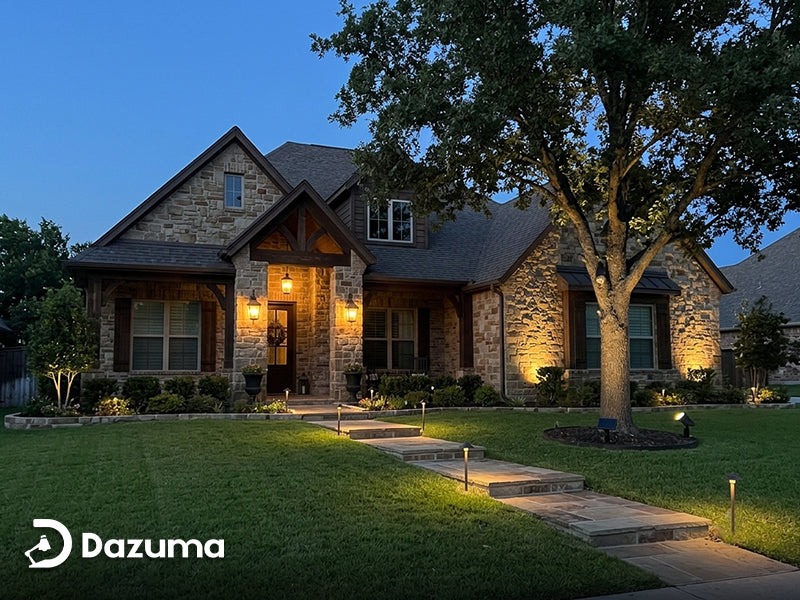
A well-lit exterior is easier to navigate, more comfortable to spend time in, and more welcoming from the street. Effective plans begin with everyday habits rather than a catalogue of fixtures. Think about where people arrive, how they move through the garden, and where they sit. Once those activities are clear, choosing and positioning lights becomes much simpler.
View the exterior as a series of connected zones. The driveway, entrance, side path, patio, and planting beds may need different illumination, but they should still feel like parts of one home. Retailers such as Dazuma Lighting are useful when comparing designs across these areas, especially when you want related finishes without an overly matched look.
Begin With Arrival and Entry
The route from the driveway to the front door deserves first attention. Light should make turns, changes in level, and obstacles easy to recognize. One bright fixture at the door cannot do all this work alone. If the approach remains dark, the sudden contrast near the entrance may make it harder for the eyes to adjust.
Use a sequence of moderate light instead. A driveway marker, low path illumination, and a shielded wall light can guide movement. Aim fixtures at the walking surface rather than people’s eyes. At the entrance, faces should be visible and locks easy to use. The goal is clarity, not a floodlit stage.
Light Steps, Paths, and Side Yards for Safe Movement
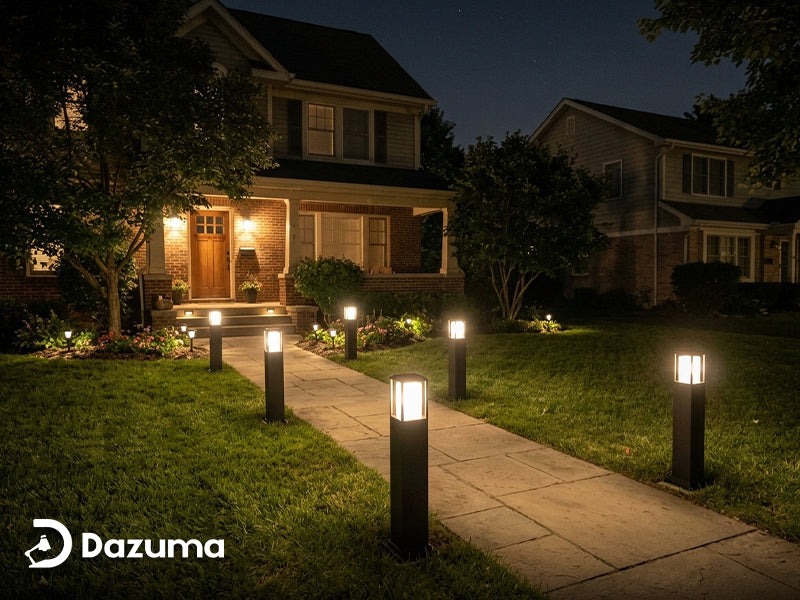
Circulation areas receive less design attention than patios, yet they have an important role. Steps should be visible from above and below, with enough light to distinguish each tread. Along paths, concentrate illumination at corners, gates, and surface changes instead of using rigid, close intervals. This guides movement without creating an “airport runway” effect.
Side yards require care because they are narrow. Large, unshielded fixtures may feel harsh and cast light into neighboring windows. Compact downward-facing options are usually more comfortable. Motion activation can help in an occasionally used passage, provided the sensor is adjusted so pets, branches, or traffic do not trigger it constantly.
Treat Patios as Outdoor Rooms
A patio needs more than one intense light mounted above a door. Consider the activities that happen there: cooking, serving food, dining, reading, or talking. Food preparation areas need clear task lighting, while a dining table is more inviting under warm, gentle illumination. Seating areas often benefit from light coming from several low or indirect sources rather than one glaring overhead fixture.
When exploring Outdoor Lighting, compare products by purpose as well as appearance. A decorative lantern may establish the character of a covered porch, while step lights, wall fixtures, or small directional lights quietly handle practical tasks. Combining these roles produces a more adaptable space and allows you to use only the lights needed for a particular evening.
Use the Garden to Create Depth
Without lighting beyond the patio, a window or seating area can seem to face a dark wall. A few carefully selected garden features can create depth and make the property feel more spacious. An attractive tree, textured wall, specimen plant, or architectural feature is usually a better focal point than an empty lawn. Light one or two elements and allow darker areas to remain between them.
Experiment before installing permanent fixtures. A portable light or flashlight can help you test direction and beam width after dark. Lighting from the side tends to reveal texture, while lighting from behind can produce a subtle silhouette. If a fixture points upward, keep the beam controlled and aimed at the intended surface to reduce stray light.
Choose a Consistent Color and Sensible Brightness
Consistency matters more than maximum output. When one fixture looks amber and another looks icy blue, the exterior can feel visually disconnected. Warm white light usually complements brick, timber, stone, and greenery, although the best choice depends on the home’s materials. Check color temperature before purchasing and keep nearby fixtures within a similar range.
Brightness should reflect the task. Entrances and cooking surfaces need more visibility than flower beds or decorative walls. Dimmers, separate circuits, timers, and well-configured sensors make it easier to adjust the scene. They can also prevent every exterior fixture from operating at full power throughout the night.
Review the Result From Several Viewpoints
After installation, walk the property as a guest would. Approach from the street, enter through the gate, use the steps, and sit in each outdoor area. Then look from inside the house to check whether any lamp causes glare through a window. Small adjustments to angle, output, or shielding often improve the result more than adding another fixture.
Finally, revisit the system as plants grow and seasons change. Leaves may block a beam in summer, while bare branches alter the effect in winter. Clean lenses, confirm that fixtures remain secure, and check cables or seals periodically. An outdoor lighting plan works best when it supports real routines, respects the night, and quietly makes the entire home easier to enjoy.
