

The home theater has evolved from a niche luxury into a defining feature of modern residential design. As more homeowners invest in dedicated viewing spaces, the seating arrangement has become just as important as the screen and sound system. For interior designers, selecting movie room chairs row of 4 presents a unique challenge — these seats must deliver exceptional comfort during long viewing sessions while seamlessly integrating with contemporary aesthetics. A four-seat configuration strikes a compelling balance between intimate gathering and efficient use of space, but finding chairs that satisfy both form and function requires careful consideration. From high-density foam cushioning and posture support to elegant finishes that elevate a room’s visual identity, every detail matters. This guide is designed for interior designers and design-conscious homeowners who refuse to compromise on style or comfort. We’ll walk through the essential factors — material quality, ergonomic design, recliner functionality, and aesthetic coordination — so you can confidently select movie room chairs row of 4 that transform any modern interior into an inviting cinematic retreat.
The Fundamentals of Movie Room Chairs Row of 4 in Modern Spaces
A four-seat row hits a sweet spot that other configurations struggle to match. It accommodates a small group comfortably — a family of four or a couple with guests — without overwhelming the room or creating awkward empty seats. From a spatial perspective, movie room chairs row of 4 typically span between 10 and 13 feet depending on individual seat width, making them suitable for rooms that range from modestly sized dedicated theaters to larger multipurpose media spaces. This width allows designers to center the row opposite the screen while preserving clear sightlines and balanced proportions on either side.
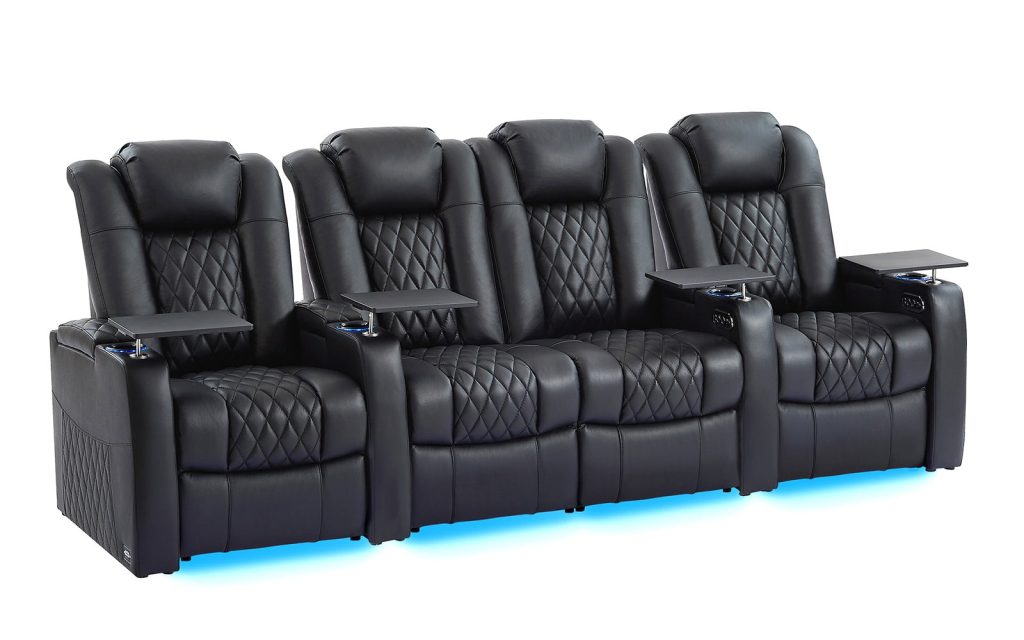
Modern interior trends favor clean, intentional layouts where every piece of furniture earns its place. A row of four theater chairs acts as an architectural element in its own right, anchoring the room with a strong horizontal line that complements low-profile media consoles and recessed lighting. When selected thoughtfully, these seats reinforce the room’s design language rather than disrupting it. The configuration also encourages a shared viewing experience — everyone sits at a comparable distance from the screen and sound system, creating uniform audio-visual immersion. For interior designers, this means fewer compromises between social functionality and cohesive aesthetics, which is precisely what discerning clients expect from a professionally designed home theater.
Prioritizing Comfort: High-Density Foam and Posture Support
Comfort is the non-negotiable foundation of any home theater seat, and it starts beneath the upholstery. The internal cushioning material determines how a chair feels on day one and — more importantly — how it performs after years of regular use. For movie room chairs row of 4, where every seat must deliver a consistent experience, the quality of foam construction directly impacts client satisfaction and the longevity of your design investment.
Benefits of High-Density Foam for Lasting Comfort
High-density foam, typically rated at 2.0 pounds per cubic foot or higher, resists the compression and sagging that plague lower-grade alternatives. This resilience means each seat in the row maintains its original shape and firmness over thousands of hours of use, eliminating the uneven wear patterns that make older theater chairs look neglected. Beyond structural durability, dense foam absorbs minor vibrations and reduces the subtle creaking noises that cheaper padding produces — a detail that matters in acoustically sensitive rooms where every stray sound competes with the surround system. From a maintenance standpoint, high-density foam holds its form without requiring fluffing, rotation, or replacement cushions, giving interior designers a low-maintenance solution they can recommend with confidence.
Ergonomic Design for Optimal Posture Support
A beautifully upholstered chair means little if it leaves viewers shifting uncomfortably halfway through a film. Effective posture support begins with contoured lumbar reinforcement that follows the natural curve of the spine, distributing body weight evenly rather than concentrating pressure on the lower back. Look for seats with graduated foam densities — firmer support in the lumbar and seat base, softer cushioning along the shoulders and headrest — to create a cradling effect that encourages neutral spinal alignment. Adjustable headrests and armrest heights add another layer of customization, allowing each viewer to fine-tune their position. For health-conscious clients who spend extended periods in their home theaters, these ergonomic elements are not luxury add-ons but essential features that prevent stiffness, fatigue, and long-term discomfort.
Exploring Chair Types: The Appeal of Recliners
Among the various seating options available for home theaters, recliners have emerged as the dominant choice — and for good reason. They transform passive viewing into an actively comfortable experience, allowing each person in a row of four to independently adjust their position from upright to fully reclined without disturbing the person beside them. Modern recliners bear little resemblance to the bulky, overstuffed models of decades past. Today’s designs feature slim profiles, wall-hugging mechanisms that require minimal clearance behind the seat, and smooth power-operated systems that glide silently through their range of motion. For interior designers working on contemporary projects, this evolution means recliners can now be specified without sacrificing the clean visual language a modern space demands.
Advantages of Recliners in Home Theater Settings
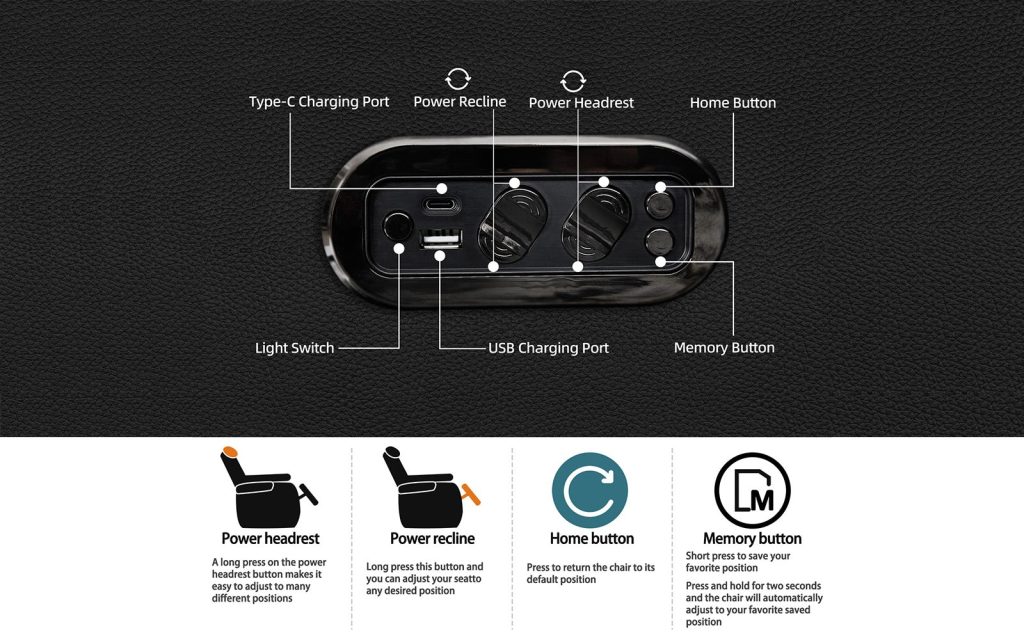
The core advantage of recliners is customizable comfort — one viewer might prefer a slight recline with an elevated footrest during a casual comedy, while another wants to lie nearly flat for a late-night marathon. Power recliners with memory settings take this further, letting each user save their preferred position and return to it instantly. Many models now integrate USB charging ports, LED cup holder lighting, and hidden storage compartments within the armrests, adding practical functionality without cluttering the chair’s exterior appearance. Wall-hugger and zero-clearance mechanisms are particularly valuable in tighter theater rooms, since they allow full recline while positioning the chair just a few inches from the back wall. This space efficiency gives designers more flexibility with row placement and room layout. For clients who entertain frequently, the ability to offer every guest an equally luxurious, independently adjustable seat elevates the entire hosting experience — turning a movie night into something that feels genuinely curated rather than casually arranged.
Aesthetic Considerations: Incorporating Elegant Design
In a well-designed home theater, the seating does more than provide a place to sit — it establishes the room’s visual tone. Movie room chairs row of 4 occupy significant square footage and command immediate attention upon entry, which means their design language must align precisely with the surrounding interior. For modern spaces, this calls for seats that balance visual restraint with tactile richness: clean silhouettes that avoid unnecessary ornamentation, paired with materials and finishes that reward closer inspection. The goal is seating that feels intentionally placed, as though it were designed alongside the room rather than dropped into it afterward.
Selecting Materials and Finishes for Modern Appeal
Material choice shapes both the look and the lived experience of theater seating. Top-grain leather remains a perennial favorite for its refined appearance, natural patina development over time, and straightforward cleaning — a practical advantage in rooms where drinks and snacks are part of the ritual. For designers seeking warmth without the sheen of leather, performance velvet offers a sophisticated matte texture that absorbs light beautifully under the low ambient conditions typical of theater rooms. Sustainable and vegan leather alternatives have also matured significantly, now offering convincing grain patterns and supple hand-feel that satisfy eco-conscious clients without aesthetic compromise. Beyond the primary upholstery, accent details matter: contrast stitching in a complementary tone, brushed metal base plates, or matte-black cup holder trim can subtly elevate the entire row from functional furniture to a design statement. Interior designers should request material samples and evaluate them under the room’s actual lighting conditions, since colors and textures shift dramatically between showroom fluorescents and the dim, controlled illumination of a home theater.
Coordinating Design with Room Themes
Successful integration depends on reading the room’s existing design vocabulary and selecting chairs that speak the same language. In a minimalist theater defined by neutral palettes and unadorned surfaces, opt for chairs with slim arms, hidden mechanisms, and monochromatic upholstery that recede into the space rather than competing with it. Industrial-themed rooms with exposed concrete, metal accents, and darker tones pair well with charcoal or cognac leather seats featuring visible stitching and angular profiles. For transitional interiors that blend contemporary and classic elements, consider seats with gentle curves and mid-tone fabrics like slate or taupe that bridge both aesthetics gracefully. Color coordination extends beyond the chairs themselves — the row should harmonize with wall treatments, carpet or flooring tones, acoustic panels, and even the screen surround. Designers who treat the four-seat row as an integrated component of the room’s palette, rather than an isolated furniture selection, consistently achieve the visual harmony that distinguishes a professionally designed theater from a room that simply contains theater equipment.
Step-by-Step Guide to Selecting the Perfect Row of 4 Chairs
Knowing what makes great theater seating is one thing — executing a selection that satisfies every requirement is another. The following process gives interior designers a structured framework for narrowing options and arriving at a final specification that balances client expectations, spatial realities, and design integrity. Each step builds on the previous one, ensuring no critical factor is overlooked before committing to a purchase.
Step 1: Assess Client Requirements and Space Constraints
Begin with precise room measurements. Record the available wall-to-wall width where the row will sit, the depth from the back wall to any obstruction behind or in front of the seats, and the ceiling height if risers are involved. A row of four typically needs 10 to 13 feet of lateral space plus 3 to 5 feet of depth when fully reclined, so confirm these tolerances early. Next, conduct a detailed client interview covering viewing habits — how many hours per session, whether children will use the seats, physical considerations like back pain or mobility limitations, and entertainment style preferences such as casual family viewing versus dedicated cinephile sessions. Document priorities explicitly: some clients rank posture support above all else, while others insist on a specific visual aesthetic. This upfront clarity prevents costly revisions later and gives you objective criteria against which to evaluate every option.
Step 2: Evaluate Comfort and Material Quality
With requirements documented, assess the internal construction of shortlisted chairs. Request foam density specifications from manufacturers — anything below 1.8 pounds per cubic foot should be eliminated for dedicated theater use. Ask about foam layering: the best seats combine a high-density base layer for structural support with a softer top layer for immediate comfort. Examine the frame material as well, since hardwood or welded steel frames outlast particleboard alternatives by years. Home furnishing specialists like Comfiroom and similar brands often provide detailed construction breakdowns on their product pages, making it easier to compare internal build quality across options. Check for lumbar contouring by sitting in the chair for at least fifteen minutes and noting whether pressure points develop. If samples are unavailable, request cross-section diagrams or construction videos that reveal what lies beneath the upholstery. This due diligence protects your reputation and ensures the seats perform as promised long after installation day.
Step 3: Test Functionality with Recliners and Adjustability
Hands-on testing is irreplaceable. Operate the recliner mechanism repeatedly, listening for motor noise on power models and checking for smooth, jerk-free motion on manual versions. Confirm that the footrest extends fully without catching and that the headrest adjusts without requiring excessive force. For power recliners, verify that the motor operates quietly enough to remain inaudible during dialogue-heavy scenes — ask for decibel ratings if possible. Test the wall-hugger function by positioning the chair at the minimum recommended clearance and cycling through full recline to ensure no contact with the wall occurs. Evaluate safety features such as anti-pinch mechanisms and emergency manual overrides in case of power failure. Finally, confirm that all four seats in the row operate independently without mechanical interference, since shared armrests or linked bases can occasionally restrict adjacent movement.
Step 4: Finalize Design Choices for Elegant Integration
Once comfort and function are validated, turn attention to visual execution. Bring upholstery samples into the actual theater space and evaluate them under the room’s installed lighting at various dimmer levels — a charcoal leather that looks rich in daylight may appear flat or washed out under warm LED sconces. Consider how the chair profile interacts with surrounding elements: a high-back design might block a rear speaker or wall sconce, while an ultra-low profile could look undersized against a large screen wall. Select accent finishes — stitching color, base material, cup holder trim — that reference other hardware in the room, creating subtle visual threads that unify the space. Request a full-row mockup or digital rendering positioned within the room layout before placing the final order. This last verification step confirms that your movie room chairs row of 4 will function as the cohesive design anchor you envisioned, delivering both the elegant appearance and the ergonomic performance your client deserves.
Designing a Cohesive Four-Seat Theater Experience
Selecting movie room chairs row of 4 for a modern interior is a deliberate process that rewards careful attention to every layer of the decision — from what’s inside the cushion to how the finished row reads within the room’s broader design narrative. The four-seat configuration remains one of the most versatile and visually balanced options for residential theaters, offering enough capacity for comfortable group viewing without overwhelming the space. Prioritizing high-density foam construction and thoughtful ergonomic contouring ensures that comfort holds up session after session, protecting both the viewer’s posture and your credibility as a designer. Recliners, particularly power models with wall-hugging mechanisms, deliver the personalized luxury today’s clients expect while fitting neatly into contemporary layouts. And when materials, finishes, and profiles are chosen with the room’s full palette in mind, the seating becomes an integrated design element rather than a standalone purchase. By following a structured selection process — assessing spatial and client requirements first, validating construction and functionality second, and confirming aesthetic alignment last — interior designers can specify movie room chairs row of 4 with the confidence that every seat in the row will perform beautifully, look exceptional, and endure for years of cinematic enjoyment.
