

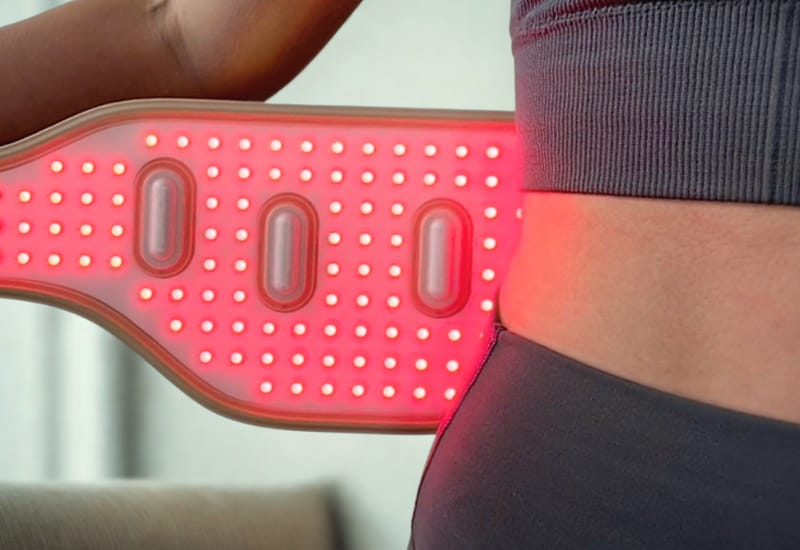
Red light therapy belts have become one of the most popular at-home body contouring tools — and for good reason. They’re non-invasive, convenient, and backed by a growing body of clinical research showing measurable reductions in body circumference when used correctly.
But here’s what most guides won’t tell you: a red light therapy belt is not a magic fat-melting device.It works by stimulating your fat cells to release stored fatty acids through a process called lipolysis — but your body still needs to burn those released fatty acids for energy. Without the right usage protocol, diet, and activity level, the results will be minimal.
This guide breaks down the science behind red light therapy for fat loss, walks you through the exact step-by-step usage protocol, and covers the common mistakes that waste your time.
How Red Light Therapy Actually Works for Fat Loss
Before diving into the “how-to,” it helps to understand what the belt is actually doing to your body. This isn’t just background — it directly informs how you should use it.
The Science of Photobiomodulation and Lipolysis
Red and near-infrared light (typically 635 nm for body contouring devices) penetrates the skin and reaches the subcutaneous fat layer. At the cellular level, this light is absorbed by“cytochrome C oxidase ”in the mitochondria of fat cells (adipocytes), triggering a cascade of biological effects:
1.Increased cAMP production — Red light stimulates cyclic AMP, a signaling molecule that activates hormone-sensitive lipase, the enzyme responsible for breaking down stored triglycerides into free fatty acids and glycerol.
2. Transient pore formation in fat cells — Research by Neira et al. (2002) demonstrated that 635 nm laser exposure at 1.2–3.6 J/cm² caused temporary pores to form in adipocyte membranes, allowing stored fat to escape. At 4 minutes of exposure, approximately 80% of fat content was released; at 6 minutes, nearly 100%.
3. Fat cell apoptosis — Longer-term red light exposure can trigger mitochondrial dysfunction in adipocytes, leading to programmed cell death (apoptosis), which may contribute to more sustained fat layer reduction.
What to Prepare Before Using Your Red Light Therapy Belt
Proper preparation ensures maximum light penetration and effectiveness.
1. Clean, Dry, Bare Skin
Red light therapy works best on bare skin. Clean the target area with mild soap and water, then pat completely dry. Remove any lotions, oils, creams, or sweat — these can create a barrier that reduces light transmission to the fat layer.
Do you need gels or conductive creams? No. Unlike some body treatments, red light therapy does not require conductive gels. In fact, gels can scatter light and reduce penetration depth. If your device’s manufacturer specifically recommends a companion product, follow their guidance — but in general, bare skin is best.
2. Choose Your Target Area
Common treatment areas for weight loss belts include:
– Abdomen — The most popular target
– Waist/love handles
– Hips
– Thighs (front, back, or outer)
– Upper arms
Focus on “one area per session” for concentrated light delivery. Spreading the belt across multiple areas simultaneously dilutes the light energy reaching each zone.
3. Check Your Device Settings
Before starting, confirm:
– The device is fully charged or plugged in
– The wavelength indicator shows red light (635 nm) or red + near-infrared combination
– The timer is set to the recommended duration (typically 15–30 minutes)
– The intensity is set appropriately (start low if you’re a beginner)
4. Prepare Water for Post-Treatment Hydration
Have a glass of water ready before you begin. Lipolysis releases fatty acids that your body needs to metabolize and eliminate — hydration supports this process.
Common Mistakes to Avoid
Even experienced users make these errors. Each one can significantly reduce your results.
Mistake 1: Using the Belt Over Clothing
The problem: Clothing blocks red light penetration. Even a thin cotton shirt can reduce light transmission by 25% or more. The 635 nm wavelength needs direct skin contact to reach the subcutaneous fat layer effectively.
The fix: Always use the belt on clean, bare skin. If modesty is a concern, position yourself in a private room where you can use the device properly.
Mistake 2: Overusing the Belt
The problem:Red light therapy has a cellular saturation point. After approximately 30 minutes, your fat cells cannot absorb additional photons. Extending sessions beyond this threshold provides no additional benefit and may cause skin irritation, redness, or mild thermal discomfort.
The fix:Stick to 15–30 minutes per area per session. More is not better — consistency is what drives results.
Mistake 3: Skipping Post-Treatment Hydration
The problem: Lipolysis is a water-dependent process. When fat cells break down triglycerides into free fatty acids and glycerol, your body needs adequate water to transport and metabolize these byproducts. Dehydrated users consistently report less circumference reduction than well-hydrated users.
The fix:Drink 8–16 oz of water immediately after each session. Maintain a daily intake of 8–10 glasses. Avoid substituting with caffeinated or sugary beverages.
Mistake 4: Expecting Instant Results
The problem: Red light therapy produces gradual, cumulative results. While some users notice subtle changes within the first week, most clinical studies measure meaningful outcomes at the 2–4 week mark.
The fix:Set realistic expectations, commit to a consistent schedule for at least 4–6 weeks, and take weekly measurements (not daily) to track progress objectively.
Mistake 5: Treating the Belt as a Standalone Solution
The problem:Using the belt without adjusting your diet or activity level is the most common reason for disappointing results. Research consistently shows that red light therapy alone produces modest reductions, while combining it with exercise nearly doubles fat loss.
The fix:Treat the belt as one component of a three-part system: red light therapy + regular physical activity + balanced nutrition. The belt accelerates and enhances your results — it doesn’t replace foundational lifestyle habits.
Who Should Consult a Doctor First
– Pregnant or breastfeeding women — Insufficient research on fetal safety
– People with photosensitivity disorders — Conditions like lupus that cause light sensitivity
– Individuals taking photosensitizing medications — Certain antibiotics, retinoids, and NSAIDs
– People with active skin infections or open wounds in the treatment area
– Individuals with a history of skin cancer — Consult your oncologist before use
– People with implanted medical devices — Check with your physician
Usage Safety Rules
1. Never use the belt on the face — the parameters for facial rejuvenation differ from body contouring, and unintended fat loss on the face is a documented concern
2. Do not fall asleep with the belt on — set a timer to prevent overexposure
3. Do not use on broken, irritated, or sunburned skin
4. Keep the device away from water and moisture
5. Follow the manufacturer’s specific guidelines for your device model
What Results Can You Actually Expect?
Based on the published clinical evidence, here’s a realistic assessment:
With the belt alone (no diet/exercise changes):
– Modest circumference reduction of 1–3 inches across treated areas over 4–8 weeks
– Results may plateau without lifestyle modifications
– Some studies show the body may reabsorb released fatty acids over time without exercise
With the belt + exercise + dietary changes:
– Significantly enhanced fat loss — up to 91% more than diet and exercise alone in one study
– Typical combined circumference reduction of 3–5+ inches over 8 weeks
– More sustainable, long-term results
– Additional benefits: improved skin texture, reduced inflammation, enhanced exercise recovery
FAQ
How long should each red light therapy session be for weight loss?
Most clinical studies and manufacturers recommend 15–30 minutes per treatment area per session. If you’re new to red light therapy, start with 15 minutes and gradually increase to 25–30 minutes as your skin adapts. Exceeding 30 minutes per area provides no additional benefit and may cause irritation.
How often should I use a red light therapy belt for weight loss?
Research protocols typically use 3–5 sessions per week for the initial 4–6 weeks, then 2–3 sessions per week for maintenance. Consistency matters more than frequency — it’s better to use the belt 3 times every week than 7 times one week and zero the next.
Can I use a red light therapy belt every day?
Daily use (15–20 minutes per area) is generally considered safe for most red light therapy belts. However, the research suggests that 3–5 times per week with consistent schedule produces comparable results to daily use. Always follow your specific device’s usage guidelines.
Will a red light therapy belt help me lose weight without exercise or diet changes?
You may see modest inch loss, but the results will be significantly limited. Red light therapy triggers lipolysis (fat cell breakdown), but your body needs to burn the released fatty acids for energy. Without exercise or a caloric deficit, those fatty acids can be reabsorbed. For meaningful, lasting results, combine the belt with regular physical activity and balanced nutrition.
When will I start seeing results from a red light therapy belt?
Most users notice initial changes within 2–3 weeks of consistent use. Clinically meaningful results typically appear at the 4–6 week mark. Full results develop over 8–12 weeks when combined with exercise and proper nutrition. Individual results vary based on body composition, consistency, and lifestyle factors.
Does a red light therapy belt work on belly fat specifically?
Yes. The abdomen is the most commonly treated and most studied area for red light body contouring. The Jackson et al. studies demonstrated significant waist circumference reductions using 635 nm red light on the abdominal area. However, spot reduction is a gradual process — combining belt use with overall body fat reduction through diet and exercise yields the best outcomes.
Are red light therapy belts safe?
Yes. Red light therapy belts are FDA-cleared Class II medical devices with an excellent safety profile. Clinical trials have reported no significant adverse effects. Mild, temporary side effects (slight warmth, temporary redness) may occur but typically resolve within minutes to hours. Always follow manufacturer guidelines and consult your physician if you have underlying health conditions.
Final Thoughts
A red light therapy belt is a scientifically supported, non-invasive tool for body contouring — but it’s not a shortcut. The clinical evidence is clear: the belt stimulates real lipolysis and produces measurable inch loss, especially around the waist and abdomen. However, the most impressive results come when you combine it with regular exercise and sensible nutrition.
