

Introduction
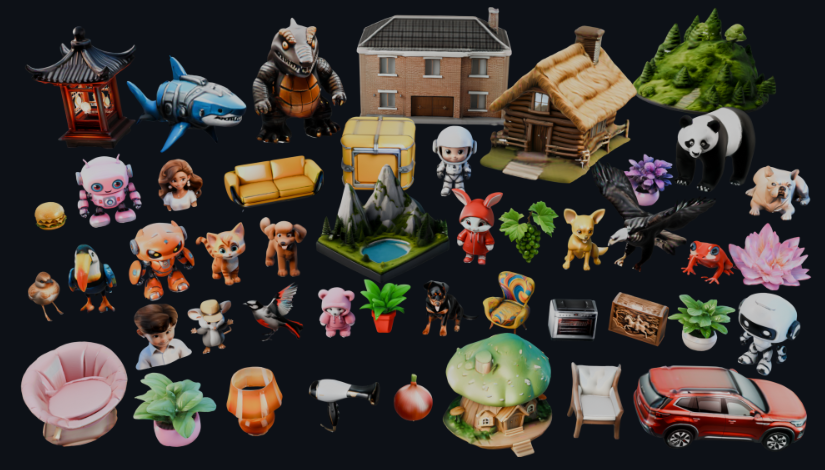
The world of 3D design is changing fast, and creators now expect speed, simplicity, and high-quality results in one place. Traditional modeling methods often require deep technical skills, long hours of manual work, and complex software setups. But with modern AI-powered platforms like Modelfy, the process becomes much more accessible through the use of a 3dmodel generator that helps turn ideas into usable 3D assets in minutes instead of days.
A 3dmodel generator is transforming how designers, developers, and artists approach digital creation. Instead of building everything from scratch, users can now generate meshes, refine topology, and export production-ready assets using intelligent automation. This shift is not just about saving time; it is about making 3D creation more open, scalable, and suitable for industries like gaming, animation, product visualization, and AR/VR development.
How AI is Redefining Mesh Creation Workflows
Mesh creation used to be one of the most technical parts of 3D modeling. Artists had to manually build vertices, edges, and faces while ensuring clean topology for animation or rendering. Today, a 3dmodel generator simplifies this entire workflow by using artificial intelligence to automatically construct optimized mesh structures based on text prompts, sketches, or reference images.
This new AI-driven approach reduces the barrier for beginners while increasing productivity for professionals. Instead of spending hours fixing geometry, creators can focus more on creativity and design direction. Platforms like Modelfy are built around this idea, where the 3dmodel generator acts as a core engine for fast, accurate, and production-ready 3D asset creation.
The Role of 3dmodel Generator in Modern SaaS Platforms
Modern SaaS tools are making advanced 3D design accessible directly from the browser, removing the need for heavy local software installations. In this ecosystem, the 3dmodel generator becomes the central feature that powers instant creation and real-time editing. Users can simply input an idea, and the system generates a structured 3D model with correct proportions and mesh flow.
This cloud-based approach allows designers to collaborate, iterate, and export models quickly without hardware limitations. The 3dmodel generator also integrates with rendering engines and game development pipelines, making it easier to move assets from concept to final production. For businesses, this means faster turnaround times and lower development costs while maintaining high visual quality.
Benefits of Instant Mesh Generation for Designers and Developers
One of the biggest advantages of using a 3dmodel generator is speed. What once took hours or even days can now be done in minutes. This rapid workflow allows designers to experiment more freely, test multiple variations, and refine ideas without worrying about time constraints or manual modeling complexity.
Another key benefit is consistency. A 3dmodel generator ensures that generated meshes follow clean topology rules, which is essential for animation, simulation, and real-time rendering. Developers working in gaming or AR/VR environments benefit greatly because they receive optimized assets that are ready to use with minimal cleanup required.
Integration of 3dmodel Generator with Creative Industries
The influence of AI-powered 3D tools is expanding across multiple industries. In gaming, developers use a 3dmodel generator to create characters, environments, and props quickly, helping them build large-scale worlds with fewer resources. In animation, studios use it to prototype scenes and design assets before final production.
Product designers and e-commerce businesses also rely on these tools for creating realistic 3D product models. Instead of expensive photoshoots or manual modeling, a 3dmodel generator can create accurate digital representations that can be used in online stores, marketing campaigns, and AR previews. This makes digital content creation more efficient and cost-effective across industries.
Semantic Power of AI in 3D Modeling and Mesh Optimization
Behind every advanced 3dmodel generator is a combination of machine learning models trained on vast datasets of 3D geometry. These systems understand structure, symmetry, and design patterns, allowing them to generate realistic and functional meshes. This is where semantic understanding plays a key role in producing meaningful results from simple inputs.
Mesh optimization is another important aspect of this technology. A 3dmodel generator does not just create shapes; it ensures they are usable in real-world applications. This includes reducing polygon count, maintaining clean UV mapping, and preparing assets for rendering engines. As a result, users get models that are both visually appealing and technically efficient.
Future of 3D Design with 3dmodel Generator Technology
The future of digital design is heading toward fully automated and AI-assisted workflows. As the 3dmodel generator continues to evolve, it will likely support more complex inputs such as voice commands, real-time sketching, and even motion-based modeling. This will make 3D creation as simple as describing an idea.
We can also expect deeper integration with virtual reality and augmented reality platforms. Designers may soon be able to build entire environments inside immersive spaces using a 3dmodel generator, making the creative process more intuitive and interactive. This evolution will redefine how digital content is created across entertainment, education, and business sectors.
Conclusion
The rise of the 3dmodel generator marks a major shift in how 3D content is created and used. What was once a highly technical and time-consuming process is now becoming fast, intelligent, and accessible to a much wider audience. Platforms like Modelfy are leading this change by offering powerful tools that simplify mesh creation while maintaining professional-quality output.
As AI continues to advance, the role of the 3dmodel generator will only grow stronger in the creative industry. It is not just a tool for automation but a complete workflow solution that bridges imagination and production. For designers, developers, and businesses, adopting this technology means stepping into a future where ideas can be transformed into 3D reality almost instantly.
