

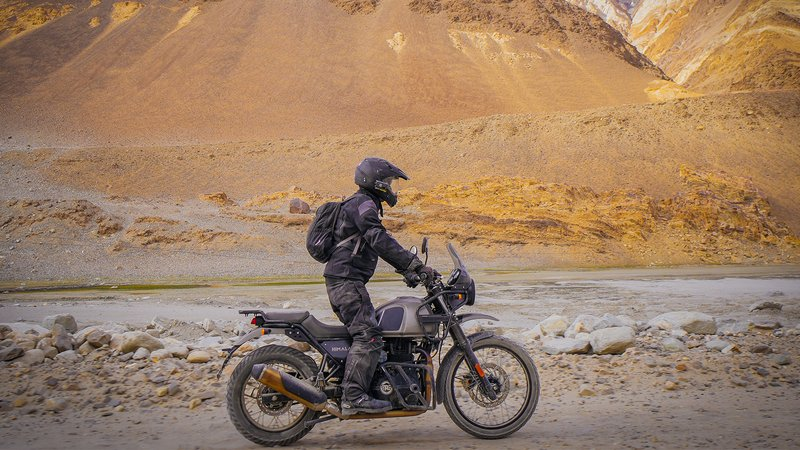
| Key Takeaways:Train the body six weeks before the trip, so that core and back strength can carry the whole ride.Hours in one posture do more harm than any single bad road, so frequent breaks and an upright handlebar set-up protect the spine.Treat the first 48 hours in Leh as part of the ride, not time lost from it; the body needs that rest to cope with thin air.Mild stiffness is normal; numbness, weakness or pain shooting into a leg is not and needs a doctor. |
No one would sign up for a marathon after months of sitting at a desk. Yet every summer, riders across India attempt something close to it on a Ladakh bike trip: long days in the saddle, rough mountain roads and thinning air. The motorcycle usually copes. The rider’s back, neck and lungs are often far less ready. So most of them eventually end up with the need of slip disc treatment.
This article explains why the journey is so demanding, what causes back pain after long bike rides, why the neck suffers too, and how to prepare in the weeks before.
Why is a Ladakh bike trip so hard on the body?
A Ladakh bike trip stacks three physical loads on top of each other: long hours in the saddle, rough terrain and thin air. The Leh-Manali highway alone runs 428 km and crosses high passes such as Tanglang La, at 17,482 ft. Here is what each load does:
| Load | What it does to the body |
| Hours in the saddle | Holds the spine in one position until the muscles tire |
| Rough roads | Sends repeated jolts through the seat into the lower back |
| Thin air | Leaves tired muscles with less oxygen and raises the risk of altitude sickness |
Many riders handle each load on its own at home. Ladakh asks the body to handle all three at once, often for a week or more.
Why do riders get back pain after a long bike ride?
Back pain after long bike rides builds from hours in one fixed posture, and the type of motorcycle influences the location of strain. In a survey of 2,124 motorcyclists, 58.4% reported pain in at least one part of the spine while riding, and the researchers concluded that spinal pain depends on the type of motorcycle.
Bike riding lower back pain usually comes from a mix of:
- Riding long stretches without breaks, so the same muscles hold the posture for hours
- A slouched position, often worse with a heavy backpack
- Weak core muscles that tire before the day’s riding is done
- A riding position set by the bike’s design, which varies from model to model
This is why long distance riding back pain often appears on day two or three of a trip rather than on day one.
What causes motorcycle riding neck pain and hand numbness?
Motorcycle riding neck pain comes from holding the head up against the helmet’s weight and the wind for hours. The hands further carry a quieter risk, as constant pressure from the handlebar can squeeze a nerve at the wrist. Case reports in the Journal of Neurology describe riders whose hand muscles weakened without any warning, tingling or pain.
The researchers recommend adjusting the handlebar and riding position to each rider. On the road, it also helps if you:
- Change grip position every 60 to 90 minutes
- Wear padded gloves and keep the grip relaxed
- Roll the shoulders and turn the neck gently at every stop
How does altitude make the physical strain worse?
Altitude adds a second, invisible load: less oxygen for muscles that are already working hard. Acute mountain sickness usually begins 6 to 12 hours after arrival, and climbing too fast is the biggest risk factor a traveller can control.
Ladakh’s official tourism advisory sets clear rules for new arrivals:
- Complete rest on the first day
- Do only light walks in Leh on the second day
- 3 to 4 litres of water a day, with ORS
- No alcohol or smoking in the first 48 hours
What does good Ladakh bike trip preparation look like?
Good Ladakh bike trip preparation starts about six weeks before departure and continues on the road. A simple timeline:
| When | What to do |
| Six weeks before | Core and back strengthening (planks, bridges, bird dogs) three to four days a week |
| Two to four weeks before | Practice rides of four to five hours on the same bike and gear |
| Before leaving | Set the handlebar for an upright reach; strap luggage to the bike, not the back |
| On the road | Stop every 60 to 90 minutes to stretch; drink water at every stop |
The core work matters because weak core muscles leave people more prone to poor posture and lower back pain. Riders with diabetes, heart or lung conditions should also follow CDC advice and talk to a doctor before travelling to high altitude.
When does back pain after a ride need medical attention?
Stiffness that settles within a day or two is normal fatigue. Pain that spreads down a leg, or comes with numbness or weakness, can point to a nerve problem such as a slipped disc. The NI Direct government health guide advises:
- See a doctor if painkillers are not helping or the pain is no better after a month
- Go to an emergency department for back pain with numbness around the bottom or genitals, trouble controlling the bladder or bowels, or loss of feeling in one or both legs
Persistent disc symptoms need a specialist’s assessment. The same guide notes some evidence that manual therapies can ease lower back pain, so treatment often combines guided exercise with hands-on care.
Conclusion
A Ladakh bike trip tests the rider as much as the motorcycle. Six weeks of strength work, a properly set-up bike, regular breaks and two unhurried days of rest in Leh turn the hardest parts of the journey into manageable ones. Start the core routine this week, and treat any pain that travels down a leg as a reason to stop and get checked. Riders who come home with that leg pain still there weeks later should get it assessed rather than ride through the next trip. A specialist can tell whether the lower back is the source and whether L4-L5 disc bulge treatment is what the symptoms call for.
