

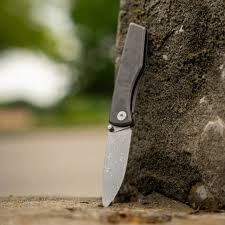
Most people shop for a folding knife by comparing headline numbers: steel type, blade length, hardness, maybe grind geometry. Those matter, but they are not what makes a knife pleasant or irritating to live with. The hardware is what you actually touch – the lock, the detent, the clip, the pivot. Get those wrong and you own a knife with excellent steel that you quietly stop reaching for.
If you already carry a folder, this is the layer worth studying, and the layer hardest to judge from a product page. Here is what to look for and why it matters in the pocket.
Lock Types, Honestly Compared
Every lock is a compromise between strength, convenience, cost and ease of closing one-handed. There is no best one, only the one that fits how you use a knife.
Back Lock
A spring-loaded bar pivots on a pin in the handle spine, dropping a tooth into a notch in the blade tang. The Spyderco Delica is the classic example; the Buck 110 is the ancestor most Americans have handled. Back locks are strong in both directions, ambidextrous by nature, and nearly free of blade play when properly fitted. The downside is closing: you need a second hand or a practiced grip, and your fingers pass near the edge path. Spyderco’s mid-lock placement makes one-handed closing manageable, but never as casual as a liner lock.
Liner Lock
A leaf cut into one steel liner springs sideways behind the blade tang. Cheap to produce, easy to close one-handed, and everywhere under $60. The quality spread is enormous. A good liner lock engages 30 to 50 percent across the tang, stays stable under torque, and disengages without your thumb crossing the closing edge. A poor one either catches at the very edge of the tang (early lockup, which can slip later) or slams all the way across on day one (late lockup, with nowhere to go as it wears). Check where the lockbar sits when new; if it is already at the far side, that knife has spent its adjustment budget.
Frame Lock
Same idea, but the lockbar is milled from a thick titanium or steel handle slab rather than a thin internal liner. Chris Reeve’s Sebenza popularized it, and it is now standard on mid-price titanium folders. More mass behind the lock means more resistance to lateral force, and grip pressure reinforces engagement rather than fighting it. The tradeoffs: frame locks are the most likely to give you lock stick, they are usually right-hand-only in practice, and a hard grip can make closing harder than it should be. A steel insert at the contact face solves galling and wear.
Axis-Style Bar Lock
A spring-tensioned crossbar rides in slots in both liners and drops behind a ramped tang. Benchmade’s Axis lock is the reference version; the patent has expired, so similar crossbar locks now appear under other names. This is the most ergonomic lock in common use: fully ambidextrous, closed without any finger entering the blade path, and the same spring provides the detent and lets the blade fall open when you pull the bar. The weaknesses are mechanical – the omega springs are small and can break, and the slots wear over long service. Both are repairable, but it is more moving parts than a liner lock has.
Slip Joint
No lock at all. A backspring holds the blade open by friction and geometry. Every Victorinox Swiss Army Knife works this way, as do traditional American patterns. Slip joints are light, legal where locking knives are restricted, and for the cutting most people actually do – packages, food, cord, tape – the absence of a lock is a non-issue. The rule is simple: do not put force into the spine.
Button Lock
A spring-loaded plunger drops into a hole or notch in the tang, released by a button on the handle. Once found mostly on automatics, button locks have spread through manual folders. They are fast, ambidextrous and satisfying to run. Watch two things: the button must be shrouded enough that a pocket or a hard grip cannot press it, and the plunger-to-tang fit decides whether you get solid lockup or a little play.
LockOne-hand closeAmbidextrousMain weakness Back lockAwkwardYesFingers near edge path when closing Liner lockEasyUsually notWide quality spread; wear over time Frame lockEasyRarelyLock stick; grip can fight release Crossbar / Axis-styleVery easyYesSmall springs, more parts Slip jointTwo handsYesNo lock; spine force closes it Button lockEasyYesAccidental release if poorly shrouded Lock Rock and Lock Stick
Lock rock is vertical blade play with the lock engaged. Open the knife, grip the handle, and try to move the tip up and down. Any perceptible click means the lock face and the tang are not mating cleanly – usually a bad contact angle on a liner or frame lock, a worn pin on a back lock. Side-to-side play can sometimes be tuned out with pivot adjustment, but vertical play in a locked blade is a warranty conversation.
Lock stick is the opposite: the lockbar grabs the tang and will not release without a hard push. Most common on new titanium frame locks, where raw titanium galls against hardened steel, it often improves over a few hundred cycles as the surfaces polish each other. If closing takes two hands out of the box, that is a defect, not a break-in period.
Deployment: How the Blade Actually Gets Out
Opening method is a fit question more than a quality question, but the differences are larger than they look on a spec sheet.
- Thumb stud. The default. Fast once learned, but height, placement and whether it is single or dual-sided decide if it works for you. A left-handed user with a single-sided stud is out of luck.
- Thumb hole. Spyderco’s round hole is the best-known version: genuinely ambidextrous, good in gloves, large contact patch. Some find the wrist motion less natural than a stud.
- Flipper tab. A tang extension you press or pull. With a tuned detent and bearings it is the fastest manual deployment there is. Kershaw’s assisted SpeedSafe models add a torsion bar that takes over partway through the arc, which is why entry-price Kershaw flippers often open harder than knives costing five times as much. The tab sits proud of the spine when open, which some users feel as a hot spot.
- Front flipper. A small ridge on the top front of the blade, pushed with the thumb. Low-profile, but it demands a tuned detent and some technique, and it is the least forgiving option with dry hands or gloves.
- Nail nick. Two-handed by design, found on traditional patterns and slip joints. Slow, but nothing to snag and nothing to break.
When comparing candidates in EDC knife reviews, pay attention to how the opening motion is described rather than to speed claims. A knife that opens on the first try every time beats one that is faster when it works.
Detent Strength: The Small Part That Sets the Whole Feel
The detent is a ball bearing seated in the lockbar that drops into a shallow dimple in the blade tang when closed. It keeps the blade shut in your pocket, and on a flipper it provides the resistance that stores energy for deployment.
Detent tension is why two knives with identical steel and bearings feel completely different. Too weak and the blade creeps open in a pocket and the flipper stalls halfway. Too strong and you get a thumb stud you have to fight and a lockbar that resists disengaging. Flipper knives run heavier detents on purpose; thumb-stud knives run lighter ones. If a knife opens sluggishly with a stud but the pivot feels smooth when you flick the blade by hand, the detent is the culprit – and fixing it means touching lockbar geometry.
Pocket Clips: The Part That Decides If You Carry It
More knives get retired over clips than over blades. What to check:
- Deep carry vs standard. A deep carry clip hides all but a small loop of the handle – more discreet, less likely to snag a seatbelt. Standard clips leave about half an inch showing, are easier to grab, and are often gentler on pocket hems.
- Tip-up vs tip-down. Tip-up lets you draw and open in one motion and is now the default. Tip-down is slower but keeps the edge away from the pocket opening. Many knives are drilled for both.
- Left-hand compatibility. Look for a second set of clip holes on the opposite scale. Plenty of good designs are right-side only, which is a hard limit for left-handed carry.
- Clip screws and hardware. T6 or T8 Torx is standard. Check whether screws thread into steel liners or directly into the handle material – threads in soft aluminum or G10 strip eventually. Blue thread locker prevents the slow loosening that ends with a lost clip.
- Tension and shape. Too much tension shreds pocket hems; too little and the knife shifts or falls out when you sit down. Wider, rounded clips spread pressure better than narrow strips.
Pivots: Washers or Bearings
Phosphor bronze washers are the traditional choice: thin, tough, tolerant of grit, easy to clean. They do not glide as freely as bearings, which is exactly why they suit anyone working in dust, sawdust or drywall. A contaminated washer pivot still works – you flush it and move on.
Caged ball bearings give the drop-shut action flipper knives depend on, but they are fussier about grit and pivot tension, and reassembly means keeping small parts in order. Match the pivot to your environment: bearings for office and general carry, washers for dirty work.
Maintenance is the same short routine for both. Blow out debris, dry fully, one drop of light lubricant at the pivot, cycle the blade twenty times, wipe the excess. Check pivot and clip screws every few months; if the pivot keeps loosening, a little thread locker is the fix. Model-specific teardown guidance is worth reading before you take anything apart, and resources like Knife Knowledge cover the quirks generic advice misses.
A Hardware-First Buying Checklist
- Does the lock close one-handed, in the grip you actually use?
- Any vertical blade play when locked open?
- Where does the lockbar sit on the tang when new – early, centered, or already far across?
- Does the lock release cleanly, or does it stick?
- Can you deploy it ten times in a row with cold or gloved hands?
- Is the detent strong enough that the blade will not creep open in a pocket?
- Is the clip on the side you need, in the orientation you want?
- Do the clip screws thread into metal, and is the hardware a common Torx size?
- Washers or bearings, and does that match where you work?
- Are replacement parts and warranty service available for this brand?
Blade steel determines how often you sharpen. Hardware determines whether the knife stays in your pocket long enough to need sharpening. If your last folder disappeared into a drawer, the reason is almost certainly somewhere on this list rather than on the spec sheet.
