

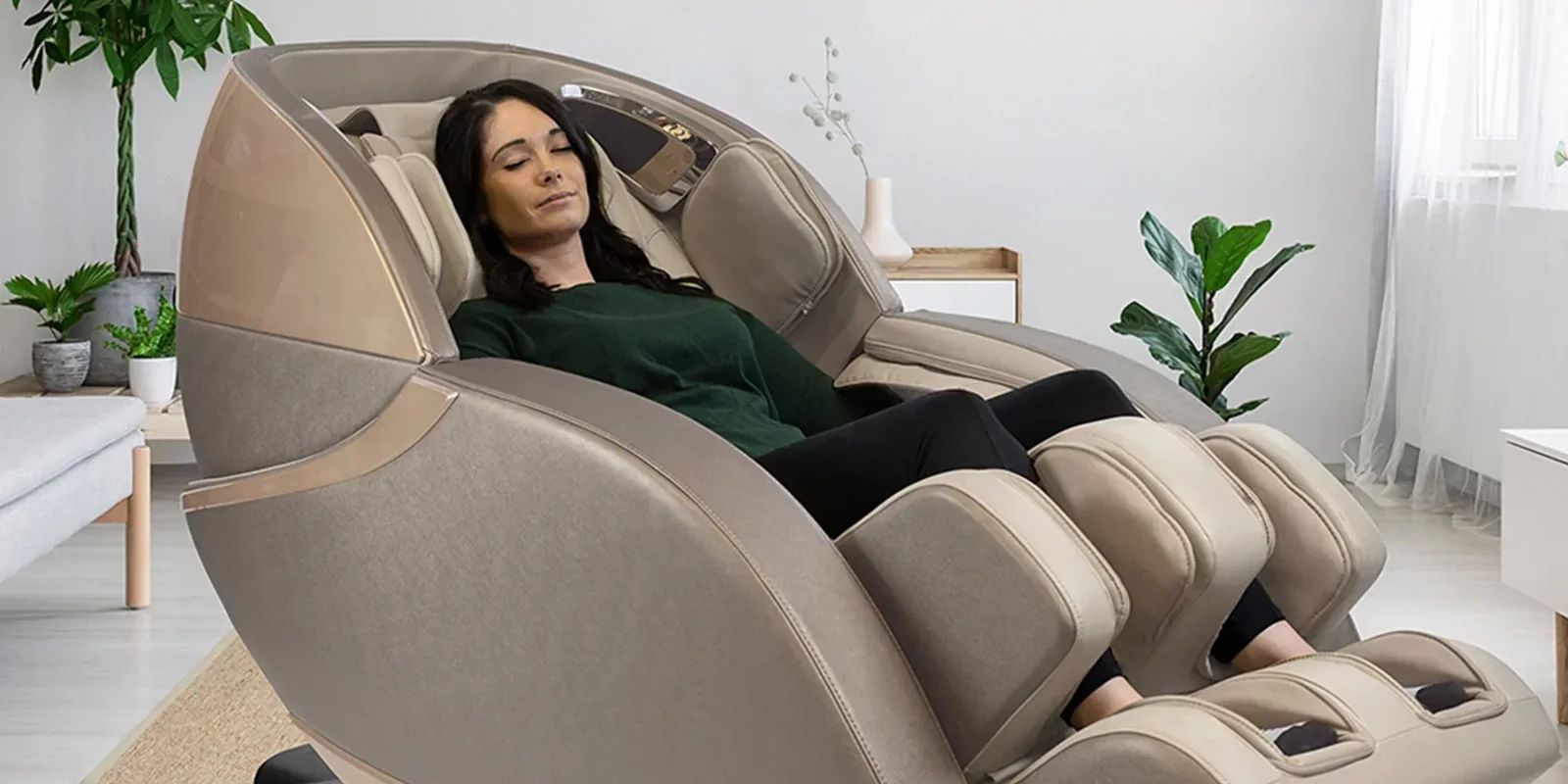
The world of massage chairs has evolved a great deal, and now, with each passing day, a new technology and a new feature have been introduced. Therefore, when you begin to buy your very first massage chair, it is essential to become aware of all these massage chair technologies available in the market.
Terms such as 2D, 3D, 4D, SL-Track, body scanning, and zero gravity may sound impressive, but what do they mean in practical terms? A Massage Chair combines these technologies to create a more customised experience, but a higher number does not always mean a better chair. Track design can affect coverage, body scanning can influence roller positioning, and full-body features can change how much of the body is addressed. Understanding what each technology actually does can help you choose more confidently.
How Does Massage Chair Technology Actually Work?
One of the very first aspect that needs to be understood about these massage chairs is how each technological update and feature works differently. This allows you to choose the chair in accordance with your needs.
Users can usually adjust programs, intensity, speed, and other settings to create an experience that suits their preferences.
What Are Massage Rollers?
Massage rollers are the mechanical components that move along the chair’s track to reproduce different massage movements. Depending on the model, rollers can move in different directions, speeds, and patterns.
Some systems also allow the rollers to adjust their depth. This can change how firmly the rollers press against the body. Programs may combine movements such as kneading, tapping, rolling, or other patterns to create different sensations.
Why Does Roller Movement Matter?
The roller mechanism has a major influence on how a massage chair feels. Its movement determines how closely the chair can reproduce different massage techniques and how much control users have over pressure.
For example, someone who prefers a deeper massage may want adjustable roller depth, while another person may prefer a gentler, simpler setting. This is why it is useful to look beyond the number attached to the technology.
What Is the Difference Between 2D, 3D and 4D Massage Chairs?
The main difference between these technologies is how the rollers move and how much control the system provides.
| Technology | General Difference | Best for |
| 2 D | Basic two-dimensional roller movement | Users seeking simpler massage functionality |
| 3 D | Adds adjustable roller depth | Users wanting more control over pressure |
| 4 D | Adds more sophisticated control over movement and speed | Users seeking a more dynamic massage experience |
What Does a 3D Massage Chair Do?
A 3D massage chair adds adjustable depth to the roller movement. In addition to travelling along the track, the rollers can move closer to or farther from the body.
This gives users greater control over massage pressure. Depending on the chair, users may be able to adjust intensity or select a program designed for different pressure levels.
What Does a 4D Massage Chair Do?
A 4D massage chair generally builds on 3D movement by offering more sophisticated control over roller speed and movement. This can make the rollers feel less mechanical and create a more dynamic massage pattern.
However, 4D does not automatically mean that every chair will provide a better experience. Features and performance vary between manufacturers and models. The quality of the mechanism, available adjustments, programming, and overall chair design should all be considered.
Does a Full Body Massage Chair Provide Better Coverage?
A full body massage chair is designed to address more areas than a chair focused primarily on the back. Depending on the model, it may incorporate features for the shoulders, hips, arms, legs, calves, and feet.
What Areas Can a Full Body Massage Chair Cover?
Coverage varies, but a full-body model may include:
- Neck and shoulders
- Upper and lower back
- Hips
- Arms
- Calves
- Feet
Some chairs use air compression in areas such as the arms, calves, and feet, while rollers may focus primarily on the back and lower body.
Why Should Buyers Check the Actual Coverage?
The phrase “full body” can describe different combinations of features. One model may provide extensive foot and calf massage, while another may focus more heavily on the back and shoulders.
Instead of relying only on the words “full body,” check exactly which areas the chair covers and how it covers them. Look at the track length, roller path, airbag placement, and foot and calf mechanisms. This provides a clearer picture of what you will actually experience.
What Is Body Scanning in a Massage Chair?
Body scanning uses sensors or programmed measurements to identify body positioning. The chair can then adjust massage movements or roller positioning to suit the user’s proportions better.
Why Can Body Scanning Be Useful?
Body scanning can help with roller positioning and shoulder detection. This can be useful because people have different heights, shoulder positions, and body proportions.
By identifying key areas, the chair can position its massage movements more consistently rather than relying on a single fixed setting.
Is Body Scanning Enough to Guarantee a Better Massage?
No. Body scanning is only one part of the overall experience. A chair with scanning technology may still not be the right choice if its roller system, track design, comfort, or adjustability does not suit your needs.
Consider body scanning alongside the massage mechanism, coverage, controls, and overall comfort.
What Are SL-Track and Zero Gravity Features?
Two other terms shoppers often encounter are SL-Track and zero gravity. They describe different aspects of a massage chair.
What Is an SL-Track?
The track determines the path along which the massage rollers travel. An SL-style track combines different curves to extend roller movement beyond the back and toward areas such as the glutes and upper legs, depending on the chair design.
This can provide broader coverage than a chair whose rollers are limited to a shorter back-focused path.
What Does Zero Gravity Do?
Zero gravity is primarily a reclining and positioning feature, not a massage mechanism. The chair reclines the user into a position designed to distribute body weight more evenly across the chair.
This position can also help create a comfortable setup for the massage. However, zero gravity itself does not determine how the rollers move or what massage technique the chair provides.
Which Massage Chair Features Matter Most?
There is no single feature that is best for every buyer. Your priorities should determine which specifications deserve the most attention.
If you want more adjustable pressure, look for:
- 3D or 4D roller technology
- Adjustable intensity
- Manual controls
If you want broader coverage, consider:
- Track length
- Full-body coverage
- Foot and calf features
- Air compression
If you want a more personalised experience, look for:
- Body scanning
- Adjustable programmes
- User controls
- Intensity settings
If space is limited, check:
- Overall chair dimensions
- Reclining clearance
- Space-saving design
- Wall clearance requirements
Technology Should Solve a Problem
The most useful massage chair feature is the one that improves the experience for the person using it. A 4D mechanism may appeal to someone who wants greater control over roller movement, while another buyer may care more about full-body coverage, foot massage, or compact room placement.
Technology should support your priorities rather than make the specification sheet look more advanced.
Titan Chair offers massage chair models incorporating different generations of massage technology and configurations, allowing shoppers to compare features according to their preferred massage experience and available space.
Choosing Technology That Fits Your Massage Needs
Massage chair technology is not about choosing the biggest number on a specification sheet. A 4D system may be useful if you want more dynamic roller movement, while a full-body system may matter more if broad coverage is your priority.
The better approach is to identify the type of massage, coverage, comfort, and control you want first. Then compare technologies based on how well they support those needs. By understanding features such as 3D and 4D rollers, body scanning, track systems, and zero gravity, you can make a more informed decision when comparing available massage chairs from established manufacturers such as Titan Chair.
