

What Are Mobile Proxies?
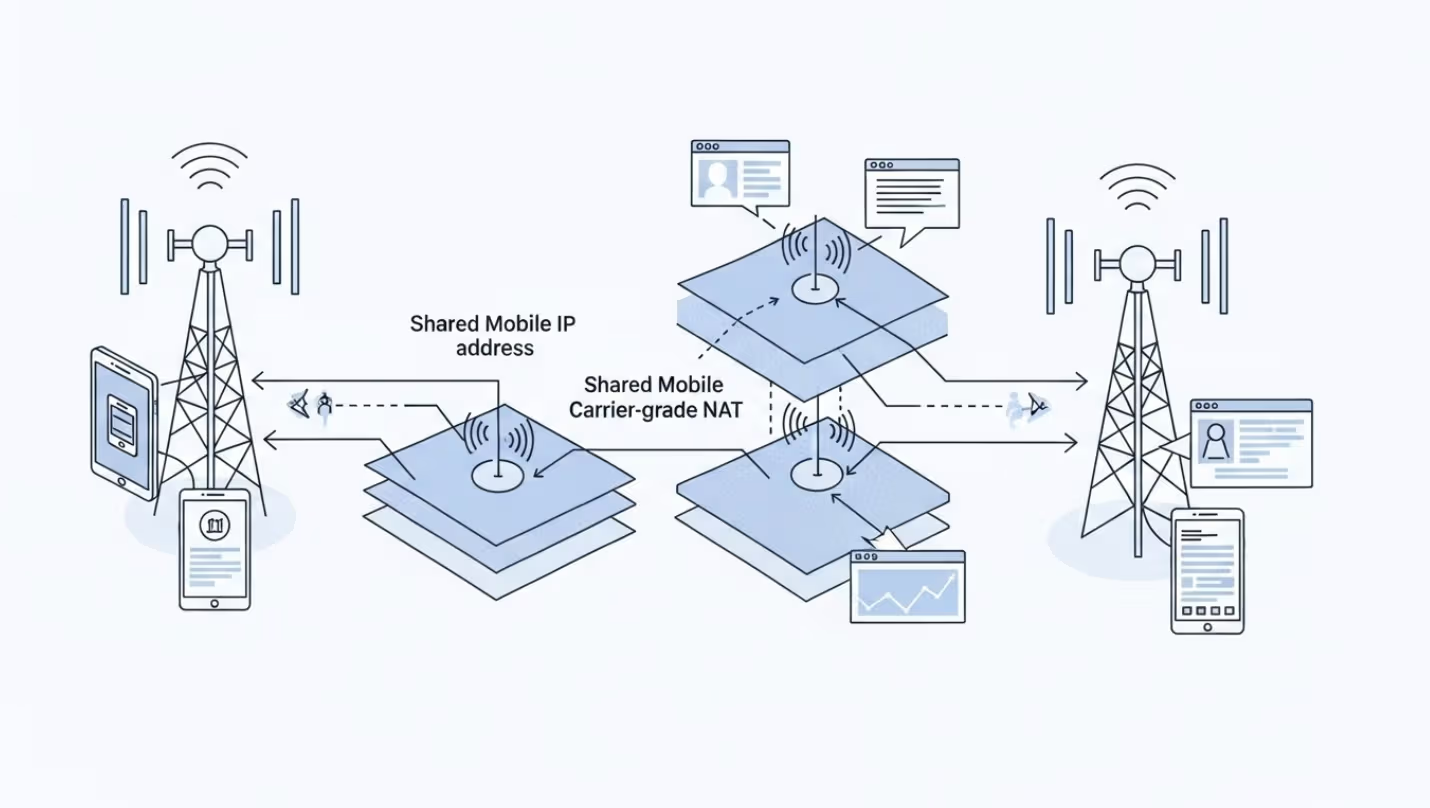
Mobile proxies are proxy servers that route internet traffic through IP addresses assigned to mobile devices and cellular networks. Instead of connecting to a website directly from your regular home or office connection, mobile proxies your request is sent through a mobile proxy first. The website then sees the mobile network’s IP address rather than your original IP. Because these addresses come from real cellular networks, mobile proxies can provide a more natural browsing profile compared with many traditional data-center proxies.
How Mobile Proxies Work
A mobile proxy typically uses a mobile device, SIM card, or specialized infrastructure connected to a cellular network. When you access a website through the proxy, your request travels through the proxy connection before reaching its destination. The response is then routed back through the same system. Depending on the provider, the IP address may be shared among multiple users or rotated automatically after a certain period.
Mobile networks can assign IP addresses dynamically, which means the address associated with a connection may change over time. This rotation can be useful for legitimate activities that require access from different network addresses or locations. The exact behavior depends on the mobile carrier, proxy provider, location, and configuration.
Why Mobile Proxies Are Different
One of the main advantages of mobile proxies is that their IP addresses originate from cellular networks. Websites commonly receive traffic from mobile users, so a mobile IP can appear more similar to ordinary consumer traffic than an IP address hosted in a commercial data center. This distinction makes mobile proxies useful for certain testing, research, advertising, and location-based applications.
Mobile proxies can also provide access to IP addresses associated with specific countries or regions. For businesses operating internationally, this can help with legitimate regional testing, such as checking how a website displays prices, language, advertisements, or other location-dependent content.
Common Uses of Mobile Proxies
There are several legitimate reasons businesses and individuals may use mobile proxies. One common application is web testing. Developers and QA teams can test websites from different mobile-network environments to identify regional or connectivity issues. This can be particularly useful when a website behaves differently depending on the visitor’s IP location.
Another use is market research. Companies may need to understand how search results, advertisements, or publicly available web content differ between regions. Mobile proxies can provide additional perspectives without relying exclusively on one internet connection.
Mobile proxies are also sometimes used for advertising verification. Digital marketing teams can check whether advertisements are being displayed correctly in particular markets and whether localized campaigns are functioning as intended. This can help businesses identify incorrect targeting or placement.
Mobile Proxies for SEO Research
SEO professionals may use proxies as part of legitimate search-engine and competitor research. Search results can vary depending on location, language, device, and other factors. Using appropriately configured proxy connections can help an SEO team examine publicly available search results from different geographic markets.
For example, an international company may want to compare how its website appears to users in several countries. Mobile proxies can provide another way to perform these checks while reducing dependence on a single IP address. However, automated querying should always comply with the terms and technical requirements of the websites and search engines being accessed.
Types of Mobile Proxies
Mobile proxies can generally be categorized according to how the IP address is managed. Rotating mobile proxies automatically change the IP address at defined intervals or based on connection requirements. They can be useful when a project requires multiple mobile-network addresses over time.
Static mobile proxies, sometimes called sticky sessions, maintain the same IP for a specified period. This can be useful when a session needs consistency rather than frequent changes.
Another distinction is whether the proxy is shared or dedicated. Shared mobile proxies may be used by multiple customers, while dedicated access is generally assigned to one customer or account. Dedicated options can provide greater control, although they may cost more.
Benefits of Mobile Proxies
A major benefit of mobile proxies is their association with real cellular networks. They can also offer geographic flexibility, allowing users to conduct location-specific research and testing. In addition, rotating configurations can provide access to different IP addresses without requiring users to manually change their connection.
For businesses, these features can support international website testing, advertising verification, market research, and other legitimate online operations. Mobile proxies may also be useful when a project needs to reproduce the browsing conditions experienced by mobile-network users.
Limitations to Consider
Mobile proxies are not suitable for every situation. They are often more expensive than conventional data-center proxies because maintaining mobile-network infrastructure can be costly. Connection speeds may also vary depending on cellular coverage, network congestion, and the provider’s infrastructure.
Reliability can differ considerably between providers as well. Before selecting a service, users should consider factors such as available locations, IP rotation methods, bandwidth limits, connection stability, authentication options, and customer support.
Privacy and security are also important. A reputable provider should clearly explain how its infrastructure operates and how customer traffic is handled. Users should avoid providers that offer unclear sourcing or questionable IP addresses.
Choosing the Right Mobile Proxy Provider
When comparing mobile proxy services, start by identifying your actual requirements. Consider which countries or cities you need, whether you require rotating or sticky sessions, how much bandwidth your project consumes, and how many simultaneous connections are necessary.
It is also important to examine the provider’s reputation and transparency. Look for clear information about its network, pricing, usage policies, and support. Testing a service with a small project before committing to a larger plan can help determine whether its speed and reliability meet your expectations.
Final Thoughts on Mobile Proxies
Mobile proxies provide internet connections through cellular-network IP addresses and can be valuable for legitimate web testing, market research, advertising verification, and international SEO research. Their biggest advantage is the ability to work with IP addresses associated with mobile networks, while rotation and geographic options can provide additional flexibility. However, performance, cost, and reliability vary between providers. Choosing a transparent and reputable service, using it responsibly, and respecting the rules of websites and platforms being accessed are essential for getting the most value from mobile proxies.
